How Long Does It Take a Factory to Build a Car Exactly
How long does it take a factory to build a car? The answer ranges from 18 to 35 hours of actual assembly time on the production line. However, the full car manufacturing process spans several days when you factor in all the manufacturing stages, quality checks, and factory workflow steps. From raw metal to a finished vehicle, every phase plays a key role in determining car assembly time and overall factory production time.
Have you ever stood in front of a brand-new car and thought about how it got here? The journey from raw metal to a shiny finished vehicle is fascinating. How long does it take a factory to build a car? The short answer is surprising. Most assembly lines complete a single vehicle in under an hour of active work. But the full picture is much more detailed and interesting.
When you look at the entire car manufacturing process, things get more complex. Each vehicle goes through many manufacturing stages over the course of several days. Robots weld the body. Humans install the engine. Workers fit the interior piece by piece. Every step adds to the total car building time. Understanding this process gives you a new appreciation for every vehicle on the road.
In this article, we break down the entire factory production time from start to finish. We will look at each stage of the production line, compare different brands, and explore what speeds up or slows down vehicle assembly. Whether you are curious about automotive manufacturing or just love cars, this guide has something for you. Let us dive into the fascinating world of car factory floors.
Key Takeaways
- Average Build Time: Most factories take between 18 and 35 hours of actual assembly to complete a single vehicle.
- Multiple Stages Matter: The car manufacturing process includes body shop, paint shop, and final assembly, each with its own timeline.
- Automation Speeds Things Up: Modern automotive manufacturing relies heavily on robots and automation to boost manufacturing efficiency.
- Brand Differences Exist: Different car factories have varying production cycle lengths based on complexity and model.
- External Factors Count: Supply chain issues, factory location, and model complexity all affect vehicle build time.
- From Factory to You: The full journey from raw materials to a car on a dealership lot takes days, not hours.
📑 Table of Contents
- How Long Does It Take a Factory to Build a Car? The Full Breakdown
- The Car Manufacturing Process Step by Step
- How Long Does Each Stage of Car Production Take
- What Affects Factory Production Time
- How Different Car Brands Compare in Build Speed
- The Role of Automation and Robotics in Modern Car Factories
- From Factory Floor to Your Driveway
- Common Mistakes That Slow Down Factory Production
- Expert Insights on Modern Car Factory Timelines
- Key Takeaways
- Conclusion
How Long Does It Take a Factory to Build a Car? The Full Breakdown
The question of how long does it take a factory to build a car does not have one simple answer. It depends on the vehicle type, the factory, and the manufacturing methods used. However, we can break the process into clear phases that make the timeline easy to understand.
On a modern assembly line, the actual hands-on work of putting a car together takes roughly 18 to 35 hours. This is called the car assembly time. But this number only covers the final stages. Before a vehicle reaches the assembly line, hundreds of hours of preparation happen behind the scenes. Parts are sourced, stamped, forged, and machined long before they ever reach the factory floor.
So when people ask about factory production time, they usually mean the time from when a bare body enters the plant to when a finished car rolls off the end. That full journey typically takes two to five days. Let us look at each phase in detail to understand where all that time goes.
The Assembly Line in Action
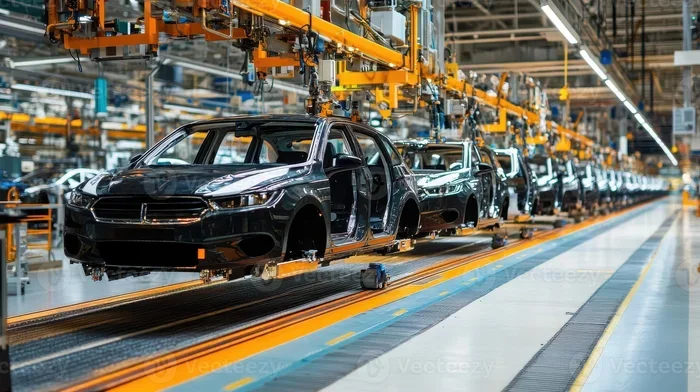
The assembly line is the heart of any car factory. This is where the magic happens. A bare car body moves slowly along a conveyor system. At each station, workers or robots add a specific component. The production line moves at a carefully calibrated pace. If the line moves too fast, quality suffers. If it moves too slow, factory output drops.
Most modern plants use a production line that moves at about one vehicle every 60 to 90 seconds. That means a single factory can produce hundreds of cars every day. The manufacturing efficiency of these systems is remarkable. Each station has a specific job, and every worker or robot knows exactly what to do. This division of labor is what keeps car production speed high.
The Car Manufacturing Process Step by Step
Building a car is not one single task. It is a series of carefully coordinated steps. Each manufacturing stage has its own timeline, its own team, and its own quality standards. Let us walk through the main phases of the car manufacturing process.
Stage 1: Stamping and Body Shop
The first major phase happens in the body shop. Large sheets of steel or aluminum enter the plant. Giant stamping presses crush these flat sheets into car parts. Doors, hoods, roofs, and body panels all take shape here. This stamping process is fast but requires enormous precision.
Once the parts are stamped, robots weld them together into a complete body structure. This happens in the body shop, which is often the loudest and hottest area of the plant. The welded body then moves to quality checks. Workers inspect every seam and joint. Any defect here can cause serious problems later in the vehicle assembly process.
Stage 2: Paint Shop
After the body is welded and cleaned, it enters the paint shop. This is a critical phase in the car construction timeline. The body goes through multiple coating stages. First, it gets a primer coat to prevent rust. Then it receives the base color coat. Finally, a clear coat adds shine and protection.
Each coat needs time to dry. Modern paint shops use infrared booths that speed up drying. Still, the paint process adds significant time to the overall car building time. The paint shop also uses massive amounts of water and energy. Environmental controls are strict, which adds to the complexity of this stage.
Stage 3: Final Assembly
Final assembly is where the production line really comes alive. The painted body enters this stage and begins picking up all the moving parts. The engine goes in first. Then the transmission, axles, and suspension components. Workers install the dashboard, seats, doors, windows, and wiring harness.
This is the most labor-intensive phase of automotive manufacturing. Hundreds of different parts must be installed in the correct order. Each station on the assembly line has a specific task. A common mistakes section at each station helps workers catch errors before they move on. The entire final assembly process takes about 18 to 35 hours of active work.
Stage 4: Quality Inspection and Testing
Before a car leaves the factory, it must pass rigorous inspections. The vehicle drives onto a test track built into the factory. Engineers check the brakes, engine, lights, and electronics. Every car gets a thorough inspection to ensure it meets safety and quality standards.
This quality control phase is non-negotiable. No car skips it, no matter how fast the production cycle is. If a problem is found, the car goes back for repairs. This step adds time but guarantees that every vehicle leaving the automotive plant is safe and reliable.
How Long Does Each Stage of Car Production Take
Now that we have covered the main phases, let us look at the specific timelines. Understanding how long each stage takes helps explain the full factory production time.
The stamping and body shop phase takes the least time per vehicle. A single body moves through this area in about 3 to 4 hours. The welding robots work at incredible speed, completing a full body in roughly 20 minutes.
The paint shop adds about 4 to 6 hours to the vehicle build time. Drying times between coats are the main factor here. Some factories use waterborne paints that dry faster, which can shorten this phase.
Final assembly is the longest phase. It takes 18 to 35 hours of active work spread across the production line. The vehicle moves slowly from station to station. Each stop adds a specific component or system.
The quality inspection and testing phase adds another 1 to 2 hours. Every car must complete a full test drive on the factory track before it is approved.
When you add all these phases together, the total factory production time from raw body to finished car is roughly two to five days. Of course, many vehicles are already built in advance and stored in factory yards, waiting for shipment.
What Affects Factory Production Time
The car assembly time can vary quite a bit depending on several factors. Understanding these variables helps explain why some factories are faster than others.
Vehicle Complexity
A simple sedan builds faster than a luxury SUV. More features mean more parts, more installation steps, and more quality checks. A basic mass production model with standard features can move through the factory quickly. A vehicle with advanced technology, premium materials, and complex systems takes longer.
Electric vehicles add another layer of complexity. The battery pack installation requires specialized equipment and safety protocols. This can extend car building time by several hours compared to a traditional gasoline model.
Factory Location and Setup
Where a factory is located matters more than you might think. Plants in regions with strong local supply chains can get parts faster. This reduces delays on the production line. Factories in remote areas may face longer lead times for components.
The age and design of the factory also play a role. Newer plants are built with the latest automation technology. Older facilities may rely more on manual labor. Both approaches can produce quality vehicles, but the manufacturing efficiency can differ significantly.
Supply Chain and Parts Availability
Even the best automotive plant cannot build a car without parts. Supply chain disruptions can halt production lines entirely. A missing component means the assembly line stops until it arrives. This is one of the biggest threats to maintaining a steady car production speed.
Smart factories maintain large inventories of critical parts. This buffer helps them weather short supply disruptions. But major shortages, like the chip crisis of recent years, can cause significant delays in factory workflow and extend overall vehicle build time.
Model Changeovers and Customization
Factories often build multiple models on the same production line. Switching between models requires retooling and adjustments. This changeover time reduces the total number of vehicles a factory can produce in a day.
Customized orders also slow things down. A customer who wants a specific color, trim level, or feature package requires extra attention during vehicle assembly. Standard models roll off the line faster than heavily customized ones.
How Different Car Brands Compare in Build Speed
Not all car factories operate at the same pace. Different brands use different approaches to automotive manufacturing, and this affects how fast vehicles come off the line.
| Brand | Typical Assembly Time | Daily Output | Key Factor |
|---|---|---|---|
| Toyota | 20-25 hours | 1,000+ units | Lean manufacturing system |
| Tesla | 18-22 hours | 800-1,200 units | Heavy automation |
| Ford | 22-30 hours | 900-1,100 units | Mixed manual and robotic |
| BMW | 25-35 hours | 600-800 units | Premium customization |
| Honda | 18-24 hours | 1,000+ units | Efficient production line design |
As you can see from the table, there is a wide range in car assembly time across brands. Toyota and Honda lead in mass production efficiency thanks to their lean manufacturing systems. Tesla relies heavily on robots to maintain a fast car production speed. BMW takes longer because of the extensive customization options and premium materials involved.
The daily output numbers tell an important story too. High-volume factories can produce over a thousand vehicles per day. Luxury brands with lower volumes take more time per vehicle but focus on detail and craftsmanship. Both approaches have their place in the automotive manufacturing world.
The Role of Automation and Robotics in Modern Car Factories
Automation has transformed automotive manufacturing over the past few decades. Robots now handle many tasks that humans used to do by hand. Welding, painting, and heavy lifting are all increasingly automated. This shift has dramatically improved manufacturing efficiency across the industry.
Robots do not get tired. They do not need breaks. They can work 24 hours a day if needed. This consistency keeps the production line moving at a steady pace. Modern car factories use thousands of robots working in coordination.
However, automation has its limits. Many tasks still require human skill and judgment. Installing the interior, routing wiring, and performing quality inspections all benefit from human hands. The best factories balance automation with skilled labor to achieve the best factory production time without sacrificing quality.
Looking ahead, artificial intelligence and machine learning are poised to make factories even faster. Predictive maintenance systems can spot problems before they cause downtime. Smart factory workflow systems adjust the production line speed in real time based on demand. The future of car manufacturing process automation looks very promising.
From Factory Floor to Your Driveway
Once a car leaves the factory, it still has a journey ahead. Finished vehicles are transported to distribution centers. From there, they are shipped to dealerships around the world. This logistics phase can add days or even weeks to the total time between factory completion and customer delivery.
Some factories are located far from major markets. A car built in Japan might take weeks to reach a buyer in Europe. Shipping by sea is cost-effective but slow. Air freight is fast but expensive. Most automakers use a combination of both methods to balance cost and speed.
The digital age has also changed how people buy cars. Many customers now configure and order their vehicles online. This means the factory builds the car to match the exact specifications chosen. Custom orders take slightly longer than standard inventory. But they also mean the customer gets exactly the vehicle build time and features they want.
Understanding the full journey from factory floor to driveway gives you a new perspective on every car you see. Each vehicle represents hours of skilled work, advanced technology, and careful coordination. The next time you wonder about how long does it take a factory to build a car, remember that the answer goes far beyond the assembly line hours.
Common Mistakes That Slow Down Factory Production
Even the best-run car factory can experience slowdowns. Certain mistakes are common across the industry and can significantly extend factory production time.
Underestimating changeover time is a frequent error. When a factory switches from building one model to another, the setup takes longer than planned. This reduces daily output and can create bottlenecks on the production line.
Poor inventory management is another culprit. If parts are not delivered to the assembly line on time, workers stand idle. Every minute of idle time costs the factory money and reduces factory output.
Skipping quality checks might seem like a shortcut, but it always backfires. Defective vehicles discovered late in the process require costly rework. This adds hours to the car assembly time and can delay entire production batches.
Finally, ignoring worker fatigue leads to mistakes and slowdowns. Automotive manufacturing is physically demanding work. Factories that do not schedule adequate breaks and rotations see productivity drop over long shifts. Smart factories invest in their workers because happy, well-rested employees build better cars faster.
Expert Insights on Modern Car Factory Timelines
Industry experts agree that manufacturing efficiency is the key to competitive factory production time. According to automotive consultants, the plants that perform best share several common traits. They invest heavily in worker training. They maintain equipment meticulously. They use data analytics to identify bottlenecks in the production cycle.
One expert insight worth noting is the concept of takt time. Takt time is the rate at which a finished product needs to be completed to meet customer demand. Factories calculate takt time for each model they produce. This number drives every decision on the assembly line. If demand increases, takt time decreases. The factory must find ways to speed up without sacrificing quality.
Another valuable insight comes from the trend toward flexible manufacturing. Many modern plants are designed to switch between models quickly. This flexibility allows factories to respond to market changes faster. It also helps them manage production cycle disruptions caused by supply chain issues or sudden demand spikes.
Key Takeaways
- Average Assembly Time: Most factories complete a vehicle in 18 to 35 hours of active assembly line work.
- Full Production Timeline: The total car manufacturing process from raw body to finished vehicle takes two to five days.
- Stages Add Up: Stamping, welding, painting, final assembly, and quality testing each contribute to the overall car building time.
- Brand Differences Matter: High-volume manufacturers build faster than luxury brands due to mass production methods and lower customization.
- Automation Is Key: Robots and automation systems dramatically improve manufacturing efficiency and car production speed.
- External Factors Count: Supply chain issues, factory location, and model complexity all affect factory production time.
- Quality Is Non-Negotiable: Skipping inspections saves time short-term but causes costly problems long-term.
Conclusion
So how long does it take a factory to build a car? The answer is more nuanced than most people realize. A single vehicle spends roughly 18 to 35 hours on the assembly line. But the full car manufacturing process spans multiple days when you include all the manufacturing stages. From stamping and welding to painting and final assembly, every step matters.
The factory production time also depends on many factors. Vehicle complexity, factory location, supply chain health, and automation levels all play a role. Different brands achieve different car assembly times based on their manufacturing philosophy and target market.
What is clear is that building a car is an incredible feat of coordination and engineering. Thousands of parts come together in a precise sequence. Hundreds of workers and robots collaborate on every production line. The result is a complex machine that takes us places every day.
Next time you see a car, take a moment to appreciate the journey it took to get there. From raw steel to a finished vehicle on a production line, every hour of car construction counts. Understanding the car manufacturing process makes you a smarter buyer and a more informed car enthusiast.
Frequently Asked Questions
How long does the average car factory take to build one vehicle?
The actual assembly time on the production line ranges from 18 to 35 hours for most vehicles. However, the complete car manufacturing process from raw body to finished car takes about two to five days when you include all stages like stamping, welding, painting, and quality testing.
Why do some car factories build vehicles faster than others?
Several factors affect car production speed. High-volume manufacturers use lean manufacturing methods and heavy automation. Luxury brands spend more time on customization and premium materials. Factory location, supply chain efficiency, and the complexity of the model all play a role in determining factory production time.
What is the fastest car factory in the world?
Tesla’s Fremont factory is often cited as one of the fastest due to its heavy use of automation and robotics. However, companies like Toyota and Honda also achieve remarkable speeds through their efficient lean manufacturing systems. The fastest assembly line depends on the model being built and the level of customization involved.
Does building an electric vehicle take longer than a gas car?
It can. Electric vehicles require battery pack installation, which involves specialized equipment and safety protocols. This can add several hours to the vehicle build time. However, EVs have fewer moving parts in some areas, which can offset the extra time spent on the battery system during vehicle assembly.
What happens if a defect is found during car production?
If a defect is found, the vehicle is pulled from the production line and sent back for repairs. This extends the car building time for that specific unit. Quality inspections at multiple stages are designed to catch defects early, but some issues only appear during final testing on the factory track.
How has car factory production time changed over the decades?
Production times have decreased significantly thanks to automation, better manufacturing efficiency, and improved factory workflow design. Early automotive manufacturing took weeks per vehicle. Modern assembly line systems can complete a car in under two days from start to finish. Advances in robotics and AI continue to push car production speed even higher.