Is Driving a Forklift Difficult Here Is What to Expect
Driving a forklift is not as hard as most people think. With proper forklift training and a little practice, anyone can learn to operate one safely. This guide covers what to expect, the key skills you need, and how to get your forklift certification quickly and confidently.
Key Takeaways
- Forklift driving is learnable: Most people pick it up within a few days of training and practice.
- Certification is required: You need proper forklift certification to operate one legally in most workplaces.
- Safety comes first: Understanding forklift stability and load capacity prevents most accidents.
- Different forklift types exist: Counterbalance forklifts, reach forklifts, and others each handle differently.
- Common mistakes are avoidable: Speeding, poor load positioning, and skipping pre-checks cause most issues.
- Training is short: A full forklift training program can be completed in just a few days.
- Hands-on practice matters: Real-world forklift driving lessons build the confidence you need on the job.
📑 Table of Contents
- What It Is Really Like to Drive a Forklift
- How Hard Is It to Learn Forklift Driving?
- Types of Forklifts and What You Need to Know
- Forklift Safety Rules You Must Follow
- Common Mistakes Beginners Make with Forklift Driving
- How to Get Started with Forklift Training
- Key Takeaways
- Frequently Asked Questions
- Conclusion
What It Is Really Like to Drive a Forklift
So, you are wondering whether driving a forklift is difficult. Maybe you just got a job offer at a warehouse. Or perhaps you are curious about a career in material handling. Either way, you are in the right place.
The honest answer is that forklift driving is easier than most people expect. It is not like learning to drive a car on a busy highway. A forklift moves slowly. It has a tight turning radius. And the controls are pretty straightforward once you sit behind the wheel.
That said, forklift operation does require respect. These machines can weigh several tons. They carry heavy loads at height. And they operate in busy environments full of pedestrians and other equipment. So while the learning curve is gentle, the responsibility is real.
Think of it this way. Riding a bicycle is simple, right? But riding a bicycle in heavy traffic takes awareness and skill. Forklift driving works the same way. The basics are easy. The real challenge is staying safe and confident in a working environment.
In this article, we will walk you through everything you need to know. We will cover what the job feels like, how hard the training is, and what mistakes to avoid. By the end, you will have a clear picture of what to expect.
How a Forklift Actually Works
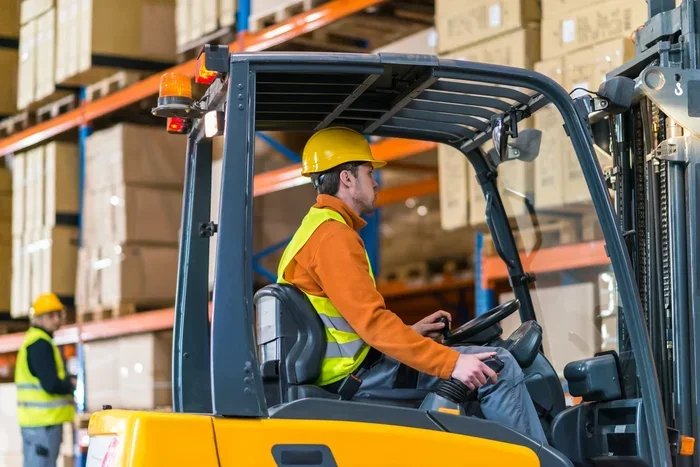
A forklift is a powered industrial truck designed to lift and move materials. It uses a hydraulic system to raise and lower the forks. The driver sits in a cab and controls the machine with a steering wheel, brake, accelerator, and lift levers.
Most forklifts run on either diesel, gasoline, or electricity. Electric forklifts are common indoors because they produce no fumes. Diesel and gas models are often used outdoors where ventilation is better.
The front forks do the lifting. They slide into a pallet or skid from the front. This is very different from a crane, which grabs loads from above or the side. Forklift operation is all about front-entry lifting and careful balance.
What Makes Forklift Driving Different from Car Driving
There are big differences between driving a car and driving a forklift. Understanding these differences helps you prepare for what is ahead.
- Speed: Forklifts move much slower than cars. Most operate at 5 to 8 miles per hour.
- Steering: Forklifts steer from the rear wheels. This means the back end swings wide on turns.
- Balance: A forklift has a three-point suspension. The machine balances on the front wheels and the center of gravity of the load.
- Visibility: You often drive a forklift in reverse. The load blocks your forward view.
- Environment: Forklifts operate on warehouse floors, construction sites, and docks. These are not open roads.
These differences do not make forklift driving harder. They just make it different. Once you understand them, everything clicks into place.
How Hard Is It to Learn Forklift Driving?
Let us get straight to the point. Is driving a forklift difficult to learn? The short answer is no. Thousands of people earn their forklift license every year, and most find the process manageable and even enjoyable.
The training itself is hands-on and practical. You will not spend weeks reading textbooks. Instead, you will spend most of your time actually operating the machine. This makes learning fast and engaging.
The Typical Training Timeline
Most forklift training programs last between one and three days. Here is a general breakdown of what to expect.
- Classroom instruction: You learn the basics of forklift safety, machine components, and load dynamics. This usually takes a few hours.
- Demonstration: An instructor shows you how to operate the forklift properly.
- Practice time: You get behind the wheel and practice driving, lifting, and stacking.
- Written test: You answer questions about forklift operation and safety rules.
- Skills test: You perform real-world tasks like stacking pallets and navigating a course.
After you pass both the written and skills tests, you receive your forklift certification. This card proves you are trained and authorized to operate a forklift.
Who Can Learn to Drive a Forklift?
Almost anyone can learn forklift driving. You do not need a special background or advanced education. Here are some basic requirements in most places.
- You must be at least 18 years old.
- You need a valid form of identification.
- You should have basic English reading skills for safety manuals.
- Some employers may require a valid driver’s license.
Physical fitness matters too. You need good eyesight, reasonable hearing, and the ability to climb in and out of the cab. But beyond that, the barrier to entry is low. Forklift training is designed for people of all experience levels.
Why Some People Find It Challenging
While forklift driving is not inherently hard, some people do find certain aspects tricky at first.
- Rear steering: Getting used to the back end swinging wide takes practice.
- Load visibility: Driving in reverse with a tall load can feel awkward at first.
- Spatial awareness: Judging distances with a load raised takes time to master.
- Confidence: Nervous beginners sometimes overthink simple movements.
The key is to take your time during training. A good instructor will walk you through every step. And remember, everyone feels clumsy at the start. That is completely normal.
Types of Forklifts and What You Need to Know
Not all forklifts are the same. Different forklift types have different controls, sizes, and uses. Knowing the basics helps you understand what kind of forklift driving you will be doing.
Counterbalance Forklift
The counterbalance forklift is the most common type. It has a heavy weight in the back to balance the load in the front. You can drive it on flat surfaces both indoors and outdoors.
This is the forklift most beginners learn on. The controls are standard across most counterbalance models. Once you learn one, you can operate most others with ease.
Reach Truck
A reach forklift is designed for narrow aisles. It has an extendable boom that lets you grab pallets deep inside racking. These are common in cold storage and high-density warehouses.
Reach trucks are trickier to drive than counterbalance models. The boom extends and retracts, which changes the machine’s center of gravity. Extra forklift training is usually required for this type.
Other Common Forklift Types
Here are a few other forklift types you might encounter in the workplace.
- Pallet Jack: A small, manual or electric device for moving pallets on the ground.
- Order Picker: A lift that raises the operator to grab items from high shelves.
- Telehandler: A telescopic forklift used on construction sites for reaching high and far.
- Rough Terrain Forklift: Built with large tires for outdoor use on uneven ground.
Each type requires specific forklift certification. You cannot operate a reach truck with a counterbalance license, for example. Always check which type your job requires.
Comparison Table: Common Forklift Types
| Forklift Type | Best For | Indoor/Outdoor | Difficulty Level |
|---|---|---|---|
| Counterbalance | General warehouse use | Both | Easy |
| Reach Truck | Narrow aisle storage | Indoor | Moderate |
| Pallet Jack | Short-distance pallet moves | Both | Very Easy |
| Order Picker | Item picking from height | Indoor | Moderate |
| Telehandler | Construction and outdoor | Outdoor | Moderate to Hard |
Forklift Safety Rules You Must Follow
Forklift safety is the most important part of operating any forklift. These machines are powerful, and when used incorrectly, they can cause serious injuries. Following the rules is not optional.
Pre-Operation Checks
Before you start any forklift operation, you must perform a walk-around inspection. This is a standard safety practice that every operator follows.
- Check the tires for damage or low pressure.
- Test the horn, lights, and backup alarm.
- Inspect the forks for cracks or bends.
- Check the hydraulic hoses for leaks.
- Verify the fluid levels (oil, coolant, battery water).
- Test the brakes and steering.
Skipping pre-operation checks is one of the most common forklift mistakes. Always take the two minutes to inspect your machine. It could save your life.
Operating Safety Guidelines
Once you are on the machine, these safety rules apply at all times.
- Wear your seatbelt. This is non-negotiable. In a rollover, the seatbelt keeps you inside the cab.
- Keep the load low while driving. Raise the forks only when stacking or unstacking.
- Slow down on turns. Speed is a leading cause of forklift tip-overs.
- Sound the horn at intersections. Alert pedestrians and other drivers to your presence.
- Never exceed the rated load capacity. Overloading is the number one cause of forklift accidents.
- Keep a safe distance from edges, ramps, and dock areas.
OSHA Forklift Regulations
In the United States, OSHA forklift regulations set the legal standards for forklift operation. OSHA requires that all forklift operators be trained and certified. They also mandate refresher training every three years.
These rules exist for a reason. Forklift safety is not just a company policy. It is a legal requirement. Employers who skip training put their workers and their business at serious risk.
Quick Tips for Staying Safe
Here are some quick forklift safety tips that experienced operators swear by.
- Always look in the direction you are traveling.
- Use your mirror when reversing.
- Keep the cab door closed while operating.
- Never raise a person on the forks unless you are using an approved work platform.
- Stop and reassess if your visibility is blocked.
These habits become second nature over time. But in the beginning, you need to be intentional about them.
Common Mistakes Beginners Make with Forklift Driving
Everyone makes mistakes when they start forklift driving. The goal is to avoid the ones that cause real problems. Here are the most common errors beginners make.
Mistake 1: Driving Too Fast
Speed is the enemy of forklift stability. A forklift has a high center of gravity when a load is raised. Going too fast, especially around corners, can cause the machine to tip over. Always drive at a safe, controlled speed.
Mistake 2: Ignoring the Load Center
Every forklift has a rated capacity based on a specific load center. If your load is off-center or uneven, the effective capacity drops. Overloading a forklift even slightly can lead to a tip-over or a dropped load.
Mistake 3: Skipping Pre-Checks
We mentioned this above because it is so important. Some operators skip the walk-around inspection because they are in a rush. This is a dangerous habit that can lead to equipment failure on the job.
Mistake 4: Poor Load Positioning
Driving with the load too high is a major risk. The load should always be tilted back and kept as low as possible during travel. A high, unstable load is the top cause of forklift accidents.
Mistake 5: Not Watching for Pedestrians
Warehouses and docks are busy places. Pedestrians walk between forklift lanes every day. Failing to yield, not using the horn, and driving with blocked visibility puts everyone at risk.
Common Mistakes at a Glance
| Mistake | Why It Is Dangerous | How to Avoid It |
|---|---|---|
| Driving too fast | Loss of control and tip-overs | Follow posted speed limits |
| Overloading | Tip-over and equipment damage | Know your load capacity |
| Skipping pre-checks | Equipment failure during operation | Always do a walk-around |
| High load while driving | Reduced stability and visibility | Keep load low during travel |
| Ignoring pedestrians | Serious injury or fatality | Use horn and mirrors constantly |
Expert Insights on Avoiding Mistakes
Experienced forklift operators will tell you the same thing: slow down and stay aware. Most accidents are not caused by equipment failure. They are caused by human error. Taking your time and staying focused makes all the difference.
If you make a mistake during training, do not get discouraged. That is how learning happens. The important thing is that you recognize the error and correct it. Over time, safe habits replace old mistakes.
How to Get Started with Forklift Training
Ready to start your forklift driving journey? Here is a step-by-step guide on how to get your forklift certification and begin operating a forklift safely.
Step 1: Choose the Right Training Program
Look for a training provider that is OSHA-compliant and offers both classroom and hands-on instruction. Many community colleges, vocational schools, and private training companies offer forklift training courses.
Make sure the program covers the specific type of forklift you want to operate. A counterbalance forklift course is different from a reach truck course. Choose the one that matches your job requirements.
Step 2: Complete the Classroom portion
The classroom portion covers forklift safety rules, machine anatomy, load dynamics, and OSHA regulations. This is where you learn the theory behind safe forklift operation. It is usually completed in a single day or even a half-day session.
Step 3: Get Hands-On Practice
This is the part most people enjoy the most. You will get behind the wheel and practice driving, lifting, stacking, and unstacking pallets. A qualified instructor will guide you and give you real-time feedback.
Do not worry if you feel clumsy at first. That is completely normal. Within a few hours of practice, most people feel much more comfortable.
Step 4: Pass the Tests
You will need to pass both a written knowledge test and a practical skills test. The written test covers safety rules and machine knowledge. The skills test evaluates your ability to operate the forklift safely in real-world scenarios.
Step 5: Receive Your Certification
Once you pass both tests, you receive your forklift certification card. This card is valid for three years. After that, you will need to complete a refresher course to renew it.
How Much Does Forklift Training Cost?
The cost of forklift training varies depending on the provider and the type of forklift. On average, you can expect to pay between $150 and $500 for a complete certification program. Some employers will cover the cost for you, so it is always worth asking.
Keep in mind that the investment pays for itself quickly. Forklift operators are in high demand, and certified operators earn more than uncertified ones.
Can You Get Trained Online?
Some programs offer online forklift training for the classroom portion. However, hands-on practice must be done in person. Be wary of any program that claims you can get fully certified online without any practical training. That is not OSHA-compliant and will not be accepted by most employers.
Key Takeaways
- Forklift driving is learnable: Most people pick it up within a few days of training and practice.
- Certification is required: You need proper forklift certification to operate one legally in most workplaces.
- Safety comes first: Understanding forklift stability and load capacity prevents most accidents.
- Different forklift types exist: Counterbalance forklifts, reach forklifts, and others each handle differently.
- Common mistakes are avoidable: Speeding, poor load positioning, and skipping pre-checks cause most issues.
- Training is short: A full forklift training program can be completed in just a few days.
- Hands-on practice matters: Real-world forklift driving lessons build the confidence you need on the job.
Frequently Asked Questions
Do I need a driver’s license to drive a forklift?
No, a regular driver’s license is not required to operate a forklift. Instead, you need a forklift certification from an approved training program. This certification proves you have been trained in safe forklift operation and forklift safety rules.
How long does it take to get certified?
Most people complete their forklift training and earn certification within one to three days. The exact timeline depends on the program and the type of forklift you are training on. Both classroom and hands-on practice are included in this short timeframe.
Can I drive a forklift if I have never operated heavy equipment before?
Absolutely. Forklift driving is designed for beginners. The training starts from the basics and builds up your skills step by step. Many first-time operators feel nervous at first, but they quickly gain confidence with hands-on practice and a supportive instructor.
Is forklift driving a good career choice?
Yes, forklift operation is a solid career path. Warehouses, distribution centers, construction sites, and manufacturing plants all need certified operators. The demand for skilled forklift operators continues to grow, and certified operators often earn competitive wages.
What is the difference between a forklift license and a forklift certification?
In most cases, these terms mean the same thing. Your forklift certification card is proof that you have completed an approved training program. There is no separate government-issued “forklift license” in the United States. Your certification card from an OSHA-compliant training provider is all you need.
Do I need to renew my forklift certification?
Yes, forklift certification is valid for three years. After that, you must complete a refresher training course to stay certified. This ensures your forklift safety knowledge stays current and that you are aware of any updated regulations or best practices.
Conclusion
So, is driving a forklift difficult? The answer is a clear no. With the right forklift training, a little hands-on practice, and a commitment to safety, anyone can learn to operate a forklift confidently. The training is short, the skills are practical, and the career opportunities are real.
Forklift driving is not about being the strongest or the bravest. It is about being careful, aware, and well-trained. Follow the safety rules, respect the machine, and you will do just fine.
If you are considering a career in material handling or warehouse operations, now is a great time to start. Look up a local forklift training program, sign up for a course, and take the first step toward a rewarding career. Your forklift certification is closer than you think.