Does Cadillac Require Premium Gas or Can You Use Regular
Does Cadillac require premium gas? The answer depends on your specific model and engine type. Many modern Cadillac vehicles come with a premium fuel requirement due to their turbocharged engines and high compression ratios. However, some models can run on regular unleaded without causing damage. Using the wrong fuel type may lead to reduced engine performance or even engine damage over time. This guide breaks down everything you need to know about Cadillac fuel requirements, costs, and safe alternatives.
Key Takeaways
- Most Cadillac models with turbocharged engines require premium gasoline to perform at their best and avoid engine knock.
- Some older or naturally aspirated Cadillac models can safely use regular unleaded without harming the engine.
- Using regular gas in a premium-required Cadillac may void your warranty and cause long-term damage.
- The cost difference between premium and regular gas adds up over time, so consider your annual mileage before deciding.
- Always check your owner’s manual for the official fuel recommendation for your specific Cadillac model.
- In an emergency, you can use regular gas once without major consequences, but switch back to premium as soon as possible.
- Electric Cadillac models like the Lyriq do not use gasoline at all, eliminating this debate entirely.
📑 Table of Contents
Does Cadillac Require Premium Gas?
If you own a Cadillac or are thinking about buying one, you have probably wondered about the fuel type question. Does Cadillac require premium gas? The short answer is: it depends on the model and the engine. Some Cadillac vehicles absolutely need premium gasoline to run correctly. Others can handle regular unleaded just fine.
This is a question that comes up a lot among Cadillac owners and shoppers. Premium gas costs more than regular, and nobody wants to spend extra money if they do not have to. On the other hand, you do not want to risk damaging your engine by using the wrong fuel. Let us walk through everything you need to know about Cadillac fuel requirements in a clear and simple way.
We will cover which models need premium fuel, what happens if you use regular gas, and how much money you can save by making smart fuel choices. By the end of this guide, you will have a clear answer for your specific Cadillac.
The Short Answer
Most modern Cadillac models with turbocharged engines do require premium gasoline. The premium fuel requirement is listed in the owner’s manual and on a sticker inside the fuel door. These engines are designed to run on higher octane rating fuel, which helps prevent engine knock and delivers the best engine performance.
However, some Cadillac models, especially older ones or those with naturally aspirated engines, can run perfectly well on regular unleaded gasoline. The key is knowing which category your vehicle falls into.
Why This Matters for Your Wallet and Your Engine
Using the wrong fuel type in your Cadillac can lead to real consequences. Premium gas typically costs 30 to 50 cents more per gallon than regular. Over a year of driving, that difference can add up to several hundred dollars. But the cost of fuel is not the only thing to think about.
Using a lower octane rating fuel than your engine needs can cause engine knock, which is a knocking or pinging sound from the combustion chamber. Over time, this can lead to serious engine damage. On the flip side, using premium gas when your engine does not need it is just wasted money. So getting this right matters for both your car and your bank account.
Understanding Premium vs Regular Gasoline
Before we dive into specific Cadillac models, let us clear up the basics. Not everyone understands the difference between premium and regular gasoline. This section breaks it down in simple terms so you can make informed decisions about your fuel type.
What Is Premium Gasoline?
Premium gasoline is a higher-octane fuel, typically rated at 91 or 93 octane. The octane rating measures how well the fuel resists premature ignition, also known as engine knock. Premium fuel burns more slowly and evenly in the combustion chamber, which is important for engines with high compression ratios.
Cadillac vehicles with turbocharged engines and high-performance V8 engines often have high compression ratios. These engines compress the air-fuel mixture more tightly, which creates more power. But tighter compression also means the mixture is more likely to ignite too early, causing knock. Premium fuel helps prevent this problem.
What Is Regular Unleaded Gasoline?
Regular unleaded gasoline is typically rated at 87 octane. It is the most common and affordable fuel type at the pump. Regular gas works well for most standard engines with lower compression ratios. It does not have the same knock resistance as premium fuel, but for engines designed to run on it, that is perfectly fine.
For many drivers, regular unleaded is the go-to choice because of its lower cost. But if your Cadillac engine is built for premium fuel, regular gas may not provide the right conditions for optimal combustion.
Octane Rating Explained Simply
The octane rating is the number you see at the gas pump. Here is a quick breakdown:
- 87 octane — Regular unleaded. Standard fuel for most everyday engines.
- 89 octane — Mid-grade fuel. Sometimes called “plus” or “choice.”
- 91 octane or higher — Premium gasoline. Required for high-performance and turbocharged engines.
Think of octane rating as a measure of fuel stability. Higher octane means the fuel is less likely to ignite prematurely. For a Cadillac with a turbocharged V6 engine, premium fuel provides the stability needed for smooth, powerful performance.
Which Cadillac Models Need Premium Fuel?
Not all Cadillacs are the same when it comes to fuel requirements. Some models absolutely demand premium gas, while others give you the flexibility to choose. Let us look at the major Cadillac lineup and their fuel recommendation details.
Cadillac Sedans and Their Fuel Needs
The Cadillac CT4 and CT5 are popular luxury sedans. The CT4 comes with a turbocharged 2.0-liter four-cylinder engine that requires premium gasoline. The CT5 offers both a turbocharged 2.0-liter engine and a powerful 3.0-liter twin-turbo V6, both of which need premium fuel.
The Cadillac CT6 is a full-size luxury sedan that has offered both turbocharged and V8 engine options. The twin-turbo V8 version in the CT6-V definitely requires premium gas. Even the standard turbocharged inline-six in the CT6 needs premium fuel to deliver its best performance.
Cadillac SUVs and Trucks
The Cadillac XT5 is one of the brand’s best-selling SUVs. It comes with a turbocharged V6 engine and requires premium gasoline. The XT6, which is a three-row SUV, also uses a turbocharged V6 and needs premium fuel.
The Cadillac Escalade is a full-size luxury SUV available with a powerful V8 engine. The Escalade requires premium gasoline to handle the demands of its large-displacement engine. The Escalade-V, the high-performance version, absolutely demands premium fuel for optimal power delivery.
The Cadillac XT4 is a compact luxury SUV. It comes with a turbocharged 2.0-liter engine and requires premium gasoline. Even though it is the smallest Cadillac SUV, its turbocharged engine still needs the higher octane fuel.
Electric and Hybrid Cadillac Models
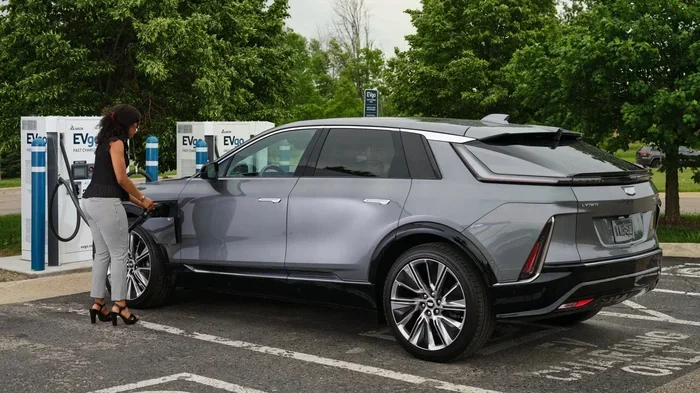
The Cadillac Lyriq is the brand’s all-electric SUV. It does not use gasoline at all, so the premium vs. regular debate does not apply. The Cadillac Celestiq, the brand’s ultra-luxury flagship, is also fully electric. If you drive one of these electric models, you can skip the gas pump entirely.
Currently, Cadillac does not offer any hybrid models that use a combination of gas and electric power. So for now, the premium gas question applies only to gasoline-powered Cadillacs.
Quick Reference Table
| Cadillac Model | Engine Type | Fuel Required |
|---|---|---|
| CT4 | Turbocharged 2.0L I4 | Premium |
| CT5 | Turbocharged 2.0L I4 / 3.0L Twin-Turbo V6 | Premium |
| CT6 | Turbocharged I6 / V8 | Premium |
| XT4 | Turbocharged 2.0L I4 | Premium |
| XT5 | Turbocharged V6 | Premium |
| XT6 | Turbocharged V6 | Premium |
| Escalade | V8 | Premium |
| Escalade-V | Supercharged V8 | Premium |
| Lyriq | Electric | N/A |
What Happens If You Put Regular Gas in a Cadillac?
This is one of the most common questions Cadillac owners ask. What really happens if you fill up with regular unleaded instead of premium? Let us look at the short-term and long-term effects.
Engine Knock and Performance Issues
The most immediate effect of using regular gas in a premium-required Cadillac is engine knock. Engine knock happens when the air-fuel mixture ignites too early or unevenly in the combustion chamber. You might hear a ticking, pinging, or knocking sound, especially under load or during acceleration.
Modern Cadillacs have knock sensors that can detect this problem and adjust the engine timing to prevent damage. However, these adjustments come at a cost. Your engine will likely lose power and feel less responsive. You might notice a drop in engine performance during hard acceleration or when towing.
Long-Term Effects on Your Engine
Occasionally using regular gas in a pinch is not going to destroy your engine overnight. But consistently running low-octane fuel in a premium-required engine can cause cumulative damage over time.
The engine knock can wear down piston rings, cylinder walls, and spark plugs faster than normal. It can also cause carbon buildup in the combustion chamber. Over months and years, this can lead to expensive repairs that could have been avoided by simply using premium fuel.
Using the wrong fuel type can also void your Cadillac warranty. If your owner’s manual clearly states premium fuel is required and you damage your engine by using regular gas, the dealer may refuse to cover repairs under warranty.
Can You Use Regular Gas in an Emergency?
Yes, in a genuine emergency, you can put regular gas in your Cadillac once without causing immediate harm. The knock sensors will adjust the engine timing to compensate. But as soon as you can, fill up with premium fuel. Do not make a habit of it.
If you accidentally filled up with regular gas, do not panic. Just drive gently, avoid heavy acceleration, and get to the nearest station to fill up with premium. One tank of regular gas is unlikely to cause lasting damage.
Premium vs Regular: The Cost Comparison
Cost is a big factor in the premium vs. regular gas debate. Let us look at the numbers and help you decide if the extra expense is worth it for your Cadillac.
Price Difference Breakdown
Prices vary by region, but here is a general idea of the cost difference between premium and regular gasoline:
- Regular unleaded averages around $3.00 to $3.50 per gallon nationwide.
- Premium gasoline averages around $3.50 to $4.20 per gallon nationwide.
- The difference is typically about $0.30 to $0.70 per gallon.
That might not sound like much per fill-up, but it adds up over time. If your Cadillac has a 20-gallon tank and you fill up once a week, the extra cost of premium gas could be $20 to $50 per week, or $1,000 to $2,600 per year.
Annual Fuel Cost Analysis
Let us do a simple comparison. Assume you drive 15,000 miles per year and your Cadillac gets 22 miles per gallon on average.
| Fuel Type | Price Per Gallon | Gallons Per Year | Annual Fuel Cost |
|---|---|---|---|
| Regular Unleaded | $3.25 | 682 | $2,216 |
| Premium Gasoline | $3.75 | 682 | $2,558 |
| Difference | $0.50 | — | $342 |
As you can see, using premium gas costs about $342 more per year in this example. That is real money. But remember, this is just a comparison for when a Cadillac model can safely use regular gas. For models that require premium, the real question is whether you can use regular at all without consequences.
Is Premium Gas Worth It for Your Cadillac?
For models that require premium fuel, the answer is yes. The engine performance and protection are worth the extra cost. These engines are engineered to run on premium gas, and using the correct fuel ensures they last as long as possible.
For models that merely recommend premium fuel (some Cadillacs list premium as a recommendation, not a requirement), you have more flexibility. You can use regular gas and save money, but you might notice a slight drop in performance and fuel efficiency.
The fuel efficiency difference is worth noting. Premium gas often allows the engine to run more efficiently, which can partially offset the higher price per gallon. In some cases, the fuel cost savings from better mileage can narrow the gap between premium and regular.
Expert Recommendations and Final Thoughts
So what do the experts say about Cadillac fuel requirements? Let us wrap up with some practical advice from mechanics, Cadillac dealers, and experienced owners.
What Cadillac Dealers Say
Most Cadillac dealers will tell you the same thing: follow the fuel recommendation in your owner’s manual. If it says premium fuel is required, use premium. If it says premium is recommended, you have a choice.
Dealers also emphasize that modern turbocharged engines are more sensitive to fuel quality than older naturally aspirated engines. The higher pressures and temperatures inside a turbocharged engine make the octane rating of your fuel more important than ever.
Quick Tips for Cadillac Owners
- Always check the fuel door sticker or owner’s manual for your specific model’s fuel requirement.
- Keep premium gas in your routine if your model requires it. Skipping it to save money can cost you more in repairs later.
- Use the top-tier gasoline brands like Shell, Chevron, or Costco, which have better detergent additives that keep your engine clean.
- Do not mix fuel grades regularly. Stick with one consistent gasoline grade for the best results.
- Track your fuel costs in a spreadsheet or app to see how much premium gas is really costing you each year.
- Consider fuel rewards programs at gas stations that can help offset the higher cost of premium gasoline.
Common Mistakes to Avoid
Here are some mistakes Cadillac owners commonly make when it comes to fuel:
- Assuming all Cadillacs need premium gas. Some models do not. Always check your specific vehicle.
- Using regular gas to save money on a premium-required model. The short-term savings are not worth the potential long-term engine damage.
- Ignoring the owner’s manual. The manual has the definitive answer for your vehicle’s fuel type needs.
- Thinking mid-grade gas is a good compromise. For most premium-required Cadillacs, mid-grade gas (89 octane) is still not enough.
- Not considering total ownership costs. The cost of premium gas is part of the cost of owning a luxury vehicle, and it should be factored into your budget.
Expert Insights
According to automotive engineers, the trend in the industry is toward smaller, turbocharged engines that deliver more power with better fuel efficiency. This means more Cadillac models will likely continue to require premium gas in the future. The compression ratios in modern engines are getting higher, which makes high-octane fuel even more important.
Mechanics also point out that using the correct fuel is one of the simplest ways to maintain your Cadillac’s longevity. It costs a little more at the pump, but it helps protect a significant investment in your vehicle. Think of premium gas as an insurance policy for your engine.
If you are still unsure about your specific model, visit your local Cadillac dealer and ask the service team. They can look up the exact fuel recommendation for your VIN and give you personalized advice.
Final Thoughts
So, does Cadillac require premium gas? For most models on the road today, the answer is yes. The turbocharged engines and high-performance V8s that make Cadillacs so exciting also demand premium fuel to operate at their best. Using the correct fuel type protects your engine, maintains warranty coverage, and delivers the smooth, powerful driving experience you expect from a luxury vehicle.
If your model allows regular gas, you can save money without worry. But if premium is required, embrace it as part of the ownership experience. The engine performance, fuel efficiency, and peace of mind that come with using the right fuel are well worth the extra cost.
Take a moment to check your owner’s manual, look at the fuel door sticker, and know exactly what your Cadillac needs. Making the right fuel choice is one of the easiest ways to keep your luxury vehicle running strong for years to come.
Frequently Asked Questions
Can I use regular gas in a Cadillac that requires premium?
You can use regular gas in an emergency, but it is not recommended for regular use. Modern Cadillacs have knock sensors that adjust engine timing to prevent damage, but you may experience reduced engine performance and engine knock. Over time, consistently using regular gas in a premium-required engine can lead to engine damage and may void your warranty.
What happens if I accidentally put regular gas in my Cadillac?
One tank of regular gas will not cause immediate harm. Your Cadillac’s knock sensors will adjust the engine timing to compensate. Simply drive gently and fill up with premium gas as soon as you can. You should not notice any lasting damage from a single mistake.
Does the Cadillac XT5 require premium gas?
Yes, the Cadillac XT5 requires premium gasoline. It comes equipped with a turbocharged V6 engine that has a high compression ratio and needs the higher octane rating of premium fuel to perform correctly and avoid engine knock.
Is premium gas really better for luxury cars like Cadillac?
Yes, premium gas is better for luxury cars with turbocharged or high-performance engines. The higher octane rating prevents premature ignition, reduces engine knock, and allows the engine to deliver its full power and fuel efficiency. For Cadillac models designed for premium fuel, using the correct grade ensures optimal performance and engine longevity.
How much more does premium gas cost than regular?
Premium gas typically costs $0.30 to $0.70 more per gallon than regular unleaded. For a Cadillac owner who drives 15,000 miles per year, this can add up to $300 to $500 or more in extra fuel costs annually. However, this cost is necessary for premium-required models to protect the engine and maintain warranty coverage.
Do all Cadillac SUVs require premium gas?
Most Cadillac SUVs, including the XT4, XT5, XT6, and Escalade, require premium gasoline due to their turbocharged or V8 engines. However, if Cadillac releases future hybrid or mild-hybrid models, some may have different fuel requirements. Always check the owner’s manual or the fuel door sticker for your specific model.
=== CONCLUSION ===
Does Cadillac require premium gas? For the vast majority of Cadillac models, the answer is yes. The brand’s turbocharged engines and high-performance V8s are built to run on premium gasoline, and using the correct fuel is essential for protecting your engine and getting the best performance. While you can use regular gas in an emergency, making it a habit can lead to costly repairs and void your warranty.
If your specific Cadillac model allows regular fuel, you have the flexibility to save money at the pump. But for premium-required models, the extra cost is a worthwhile investment in your vehicle’s health and longevity. Always check your owner’s manual, follow the fuel recommendation, and choose the right fuel type for your Cadillac. Your engine — and your wallet — will thank you in the long run.