How Many Catalytic Converters Does a 4-Cylinder Have
A standard 4-cylinder car has one catalytic converter, though some vehicles may have two depending on the exhaust setup. The catalytic converter plays a critical role in reducing harmful emissions and keeping your engine running clean. Understanding your catalytic converter count helps with maintenance, replacement planning, and avoiding costly repairs.
If you drive a car with a 4-cylinder engine, you might wonder about the parts that keep it running smoothly. One of the most important components in your exhaust system is the catalytic converter. It works behind the scenes to clean up the gases your engine produces. But here is the question many car owners ask: how many catalytic converters does a 4-cylinder have?
The answer is simpler than you might think. Most 4-cylinder vehicles come with just one catalytic converter. However, there are exceptions. Some cars use a dual exhaust system that adds a second converter. And certain high-performance or luxury models may have an even more complex setup. In this guide, we will walk through everything you need to know about catalytic converters in 4-cylinder engines. You will learn how they work, where they are located, what happens when they fail, and how to keep them in great shape.
Key Takeaways
- Most 4-cylinder engines use one catalytic converter: This is the standard setup for the majority of cars on the road today.
- Some vehicles have two converters: Dual exhaust systems or performance setups may include a second catalytic converter.
- Location matters: The converter sits between the exhaust manifold and the muffler in the exhaust system.
- Failure signs are clear: Reduced fuel economy, rattling noises, and the check engine light all point to converter problems.
- Replacement cost varies: Expect to pay between $500 and $2,500 depending on your vehicle model and converter type.
- Regular maintenance helps: Keeping your engine tuned prevents premature converter failure.
- 4-cylinder engines are common: They power a huge portion of modern cars, from economy hatchbacks to sporty sedans.
📑 Table of Contents
- What Is a Catalytic Converter and Why Does It Matter?
- How Many Catalytic Converters Does a 4-Cylinder Engine Have?
- Where Is the Catalytic Converter Located on a 4-Cylinder Car?
- Signs Your Catalytic Converter Is Failing
- How Much Does It Cost to Replace a Catalytic Converter?
- How to Extend the Life of Your Catalytic Converter
- Common Mistakes Car Owners Make With Catalytic Converters
- How a 4-Cylinder Engine Compares to Other Engine Types
- When to Seek Professional Help
- Final Thoughts
What Is a Catalytic Converter and Why Does It Matter?
Before we dive into the numbers, let us talk about what a catalytic converter actually does. Think of it as your car’s air filter for exhaust gases. When your engine burns fuel, it creates harmful gases like carbon monoxide, nitrogen oxides, and hydrocarbons. The catalytic converter transforms these dangerous pollutants into less harmful substances like carbon dioxide, nitrogen, and water vapor.
This process happens through a series of chemical reactions inside the converter. Inside the shell, there is a honeycomb structure coated with precious metals like platinum, palladium, and rhodium. These metals act as catalysts, meaning they speed up chemical reactions without being consumed themselves. The result is cleaner exhaust fumes leaving your tailpipe.
Without a working catalytic converter, your car would release much more pollution into the air. It would also fail emissions tests in most states. And driving with a damaged or missing converter can lead to serious fines in many areas. So this small part plays a huge role in both environmental protection and legal compliance.
How Does a Catalytic Converter Work?
The catalytic converter sits in your exhaust system between the exhaust manifold and the muffler. Exhaust gases flow from the engine through the manifold and into the converter first. Inside, the honeycomb substrate provides a large surface area for the chemical reactions to take place.
There are two main stages in the conversion process. The first stage reduces nitrogen oxides by breaking them into nitrogen and oxygen. The second stage oxidizes carbon monoxide and hydrocarbons, turning them into carbon dioxide and water. Oxygen sensors located before and after the converter help monitor this process. They send data to your car’s computer to ensure everything is working properly.
If any of these sensors detect a problem, your check engine light will likely come on. This is your first clue that something might be wrong with the converter or the sensors themselves. Paying attention to this warning can save you from bigger problems down the road.
How Many Catalytic Converters Does a 4-Cylinder Engine Have?
The short answer is one. The vast majority of 4-cylinder cars come equipped with a single catalytic converter. This is the standard configuration for most sedans, hatchbacks, SUVs, and trucks with a 4-cylinder engine. Whether you drive a compact car or a larger vehicle, the single converter setup is the norm.
However, the number can change based on your specific vehicle design. Let us look at the different scenarios where a 4-cylinder engine might have more than one converter.
Single Converter Setup
The single converter setup is by far the most common. Almost all standard 4-cylinder cars use this configuration. The converter is typically located close to the engine, connected directly to the exhaust manifold. From there, the cleaned exhaust gases travel through the rest of the exhaust system, including the resonator and muffler, before exiting through the tailpipe.
This setup is simple, efficient, and cost-effective. It works perfectly for the exhaust flow produced by a 4-cylinder engine. Most economy cars, family sedans, and compact SUVs fall into this category. If you own a 4-cylinder hatchback or a standard sedan, there is a very good chance you have just one converter.
Dual Converter Setup
Some 4-cylinder vehicles use a dual exhaust system. In these setups, the engine has two exhaust headers instead of one. Each header connects to its own catalytic converter. This means a 4-cylinder engine with a dual exhaust system will have two converters.
Dual exhaust systems are more common in performance-oriented 4-cylinder cars. They help improve exhaust flow, which can boost horsepower and torque. The second converter also helps reduce back pressure, allowing the engine to breathe more efficiently. Cars like certain sporty sedans and hot hatchbacks often feature this setup.
When Does a 4-Cylinder Have More Than Two Converters?
In rare cases, a 4-cylinder engine might have more than two catalytic converters. This usually happens in vehicles with very strict emissions standards or complex exhaust routing. Some European luxury cars and hybrid vehicles use additional converters to meet tight pollution regulations.
Hybrid cars are a good example. Many hybrid vehicles use a combination of a gasoline engine and an electric motor. The gasoline portion often has a specialized converter setup to meet ultra-low emissions targets. If you are curious about how hybrid systems interact with your converter, you can read more about when a hybrid switches to gas to understand the full picture.
Where Is the Catalytic Converter Located on a 4-Cylinder Car?
Knowing where your catalytic converter is located helps with maintenance and troubleshooting. On most 4-cylinder cars, the converter sits near the front of the vehicle, close to the engine. It is usually bolted to the exhaust manifold or just a few inches downstream from it.
The exact position varies by car model and engine layout. Front-wheel-drive cars with transverse-mounted engines often have the converter positioned lower and closer to the front bumper. Rear-wheel-drive cars with longitudinal engines may place it slightly further back and higher under the vehicle.
In a dual exhaust setup, you will find one converter on each side of the vehicle, near each exhaust header. The converters connect to pipes that merge into a single rear section before reaching the muffler and tailpipe.
Can You See the Catalytic Converter?
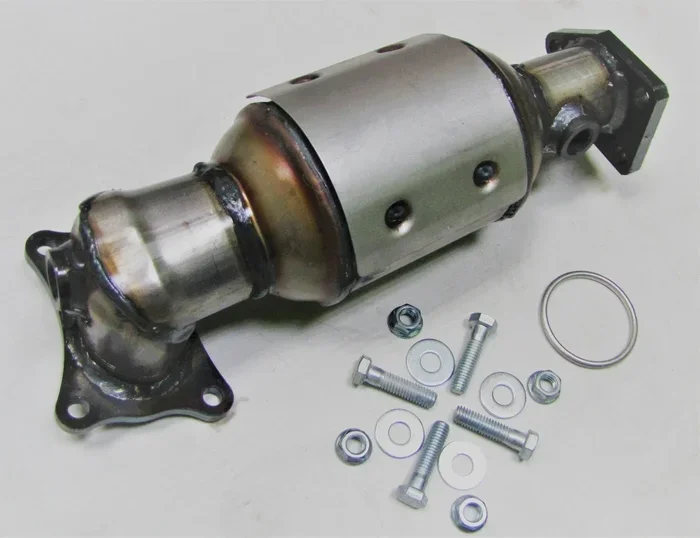
In most cars, you can spot the catalytic converter by looking under the vehicle near the front. It is usually a round or oval-shaped metal component, about the size of a small oil pan. It connects to the exhaust pipes with flanged bolts and gaskets.
The converter often feels warm to the touch after driving because it is processing hot exhaust gases. Some converters are covered by a heat shield, which is a thin metal plate that prevents heat from reaching nearby plastic components or fuel lines.
If you are ever underneath your car for maintenance, take a moment to locate the converter. Familiarizing yourself with its position makes it much easier to spot leaks, rust, or damage during routine inspections.
Signs Your Catalytic Converter Is Failing
Catalytic converters do not last forever. Over time, they can become clogged, contaminated, or physically damaged. Recognizing the early signs of failure can save you from a much bigger repair bill later. Here are the most common symptoms to watch for.
Reduced Engine Performance
A clogged catalytic converter restricts exhaust flow. This creates back pressure that makes your engine work harder. You might notice sluggish acceleration, especially when stepping on the gas pedal. Your engine may feel like it is struggling to breathe, particularly at higher speeds or under heavy load.
Poor Fuel Economy
When your converter is failing, your engine often compensates by burning more fuel. The oxygen sensors may send incorrect readings to the engine computer, causing a rich fuel mixture. If you notice you are visiting the gas station more often than usual, a failing converter could be the culprit.
Rattling Noise
A rattling sound from underneath your car is a classic sign of converter trouble. Inside the converter, the honeycomb structure can break apart over time. These broken pieces rattle around inside the shell, especially when you are idling or accelerating. This noise tends to get louder as the damage progresses.
Check Engine Light
The check engine light is one of the most reliable warning signs. When the oxygen sensors detect that the converter is not working efficiently, they trigger the light. You can use an OBD-II scanner to read the error codes. Common codes related to converter issues include P0420 and P0430, which indicate catalyst efficiency below threshold.
Rotten Egg Smell
A healthy catalytic converter converts hydrogen sulfide into odorless sulfur dioxide. When the converter fails, hydrogen sulfide passes through unprocessed. This creates a strong rotten egg smell coming from your exhaust. If you notice this odor inside or around your car, get the converter checked right away.
Failed Emissions Test
If your car fails an emissions inspection, a bad catalytic converter is often the reason. The converter simply cannot clean the exhaust gases properly anymore. This is a common issue in older vehicles or cars with high mileage. Regular emissions testing can catch converter problems early before they become expensive repairs.
How Much Does It Cost to Replace a Catalytic Converter?
The cost of replacing a catalytic converter can vary quite a bit. The price depends on your vehicle make and model, the type of converter needed, and whether you choose an original equipment manufacturer (OEM) part or an aftermarket alternative.
Average Replacement Costs
For most 4-cylinder vehicles, you can expect to pay between $500 and $2,500 for a full replacement. The converter part itself ranges from $200 to $1,500, while labor typically adds another $100 to $1,000 depending on the complexity of the installation. Cars with a single converter setup are generally less expensive to repair than those with dual converters.
Luxury and performance vehicles often cost significantly more to replace. Some European cars have converters that cost over $2,000 for the part alone. This is because they use more precious metals and meet stricter emissions standards. The catalytic converter replacement cost for a standard 4-cylinder sedan usually falls in the lower to mid-range of the spectrum.
Why Are Catalytic Converters So Expensive?
The high cost comes from the precious metals used inside the converter. Platinum, palladium, and rhodium are all rare and expensive metals. Even small amounts of these metals drive up the manufacturing cost. Additionally, the specialized manufacturing process required to create the honeycomb substrate adds to the price.
Another factor is the rising demand for these metals in other industries, particularly in electronics and jewelry. This competition drives prices higher, which directly affects the cost of catalytic converters across all vehicle types.
Can You Drive Without a Catalytic Converter?
Technically, yes. Your car will still run without a catalytic converter. However, it is not a good idea for several reasons. First, your vehicle will produce significantly more harmful emissions. Second, it will fail emissions testing in most states and countries. Third, driving without a converter is illegal in many places and can result in hefty fines.
Some people remove their converters to gain a slight performance boost or to fix a rattling noise. But this is illegal in most jurisdictions and can trigger the check engine light. Modern cars with oxygen sensors are designed to work with a converter in place. Removing it often causes the engine to run poorly.
How to Extend the Life of Your Catalytic Converter
The good news is that you can take simple steps to keep your catalytic converter healthy for many years. Most converters last between 70,000 and 100,000 miles with proper care. Here are some practical tips to help them last even longer.
Keep Your Engine Properly Tuned
An engine that is running poorly puts extra stress on the catalytic converter. Misfiring spark plugs, faulty fuel injectors, and rich fuel mixtures all send unburned fuel into the exhaust system. This unburned fuel can overheat and damage the converter. Regular engine tune-ups are one of the best ways to protect your converter.
Use the Right Fuel
Always use the fuel grade recommended by your vehicle manufacturer. Lower-quality fuel can contain contaminants that damage the converter over time. If your car requires premium fuel, do not switch to regular to save money. The long-term cost of converter damage far outweighs any short-term fuel savings.
Fix Oil and Coolant Leaks Promptly
Oil and coolant that enter the combustion chamber and exhaust system can coat the inside of the converter. This buildup restricts exhaust flow and reduces efficiency. If you notice any leaks under your car or see blue or white smoke from the exhaust, have them repaired immediately.
Avoid Short Trips When Possible
Short trips that do not allow the engine to fully warm up can cause moisture to build up inside the converter. Over time, this moisture can lead to rust and internal damage. Whenever possible, combine short errands into longer trips to give your engine and converter time to reach operating temperature.
Address Check Engine Lights Quickly
Never ignore a check engine light. Many issues that trigger this warning can damage the catalytic converter if left unchecked. Oxygen sensor failures, misfires, and fuel system problems all put extra strain on the converter. Prompt diagnosis and repair can prevent minor issues from becoming major expenses.
Common Mistakes Car Owners Make With Catalytic Converters
Even well-meaning car owners can make mistakes that shorten the life of their catalytic converter. Here are some common errors to avoid.
- Ignoring small engine problems: A minor misfire today can destroy a converter tomorrow. Always address engine issues promptly.
- Using cheap fuel additives: Some fuel system cleaners contain harsh chemicals that can damage the converter’s internal coating. Stick with reputable brands or follow your manufacturer’s recommendations.
- Driving with a known exhaust leak: An exhaust leak near the converter can allow unfiltered gases to escape and cause additional damage to the converter substrate.
- Delaying replacement: A failing converter will only get worse over time. Delaying replacement can lead to complete blockage, which can damage the engine itself.
- Buying the cheapest replacement part: Ultra-cheap aftermarket converters may not meet emissions standards and can fail within months. Investing in a quality part saves money in the long run.
How a 4-Cylinder Engine Compares to Other Engine Types
To put things in perspective, it helps to compare 4-cylinder engines with other common engine configurations. Most 4-cylinder cars use a single converter, while larger engines often need more.
6-cylinder engines, whether inline or V-shaped, typically use one or two converters depending on the exhaust layout. V6 engines with dual exhaust systems commonly have two converters. 8-cylinder engines, found in trucks and performance cars, often have two or more converters to handle the increased exhaust volume.
3-cylinder engines, like those found in some economy cars, follow the same pattern as 4-cylinder engines and usually have a single converter. You can read more about 3-cylinder cars and their exhaust systems to understand how cylinder count affects converter needs.
The general rule is simple: each exhaust bank typically needs its own catalytic converter. Since most 4-cylinder engines have a single exhaust bank, they only need one converter. This makes them simpler and less expensive to maintain compared to engines with multiple banks.
When to Seek Professional Help
While some car maintenance tasks are DIY-friendly, catalytic converter work is best left to professionals. The converter is located in a hard-to-reach spot under the vehicle, and improper installation can lead to exhaust leaks or engine damage.
A certified mechanic can properly diagnose converter issues using specialized tools like OBD-II scanners and exhaust gas analyzers. They can also recommend the right replacement part for your specific vehicle. If you notice any of the warning signs discussed earlier, schedule an appointment with your trusted mechanic as soon as possible.
Before visiting the shop, you can do a few things to prepare. Note any symptoms you have observed, including when they occur and how often. Check your maintenance records to see when the converter was last inspected. This information helps the mechanic make a faster and more accurate diagnosis.
Also, keep in mind that some 4-cylinder hatchback models and compact SUVs have converter access panels that make inspection easier. Ask your mechanic if your vehicle has this feature, as it can save time and reduce labor costs during diagnosis.
Final Thoughts
The answer to how many catalytic converters a 4-cylinder engine has is straightforward: one in most cases. The single converter setup is the standard for the vast majority of 4-cylinder vehicles on the road today. Whether you drive a daily commuter or a sporty hatchback, understanding your converter’s role helps you take better care of your car.
Regular maintenance, prompt attention to warning signs, and quality fuel choices all contribute to a longer-lasting converter. When replacement does become necessary, knowing what to expect in terms of cost and process helps you make informed decisions. Your catalytic converter works hard every day to keep your car running clean and your local air quality healthy. Give it the attention it deserves, and it will serve you well for many miles to come.
Take a moment to learn about your specific vehicle’s exhaust system. Check your owner’s manual or consult with a trusted mechanic to confirm your converter setup. This small bit of knowledge can save you time, money, and headaches in the long run.
Frequently Asked Questions
Can a 4-cylinder car have two catalytic converters?
Yes, some 4-cylinder cars with dual exhaust systems have two catalytic converters. This setup is more common in performance-oriented vehicles and certain SUV models. The dual converter design improves exhaust flow and helps meet strict emissions standards.
How long does a catalytic converter last on a 4-cylinder car?
A catalytic converter typically lasts between 70,000 and 100,000 miles on a 4-cylinder vehicle. With proper maintenance and regular engine tune-ups, some converters last even longer. Fuel quality, driving habits, and engine health all play a role in determining lifespan.
What happens if I drive with a bad catalytic converter?
Driving with a bad converter can cause reduced engine performance, poor fuel economy, and failed emissions tests. In severe cases, a completely clogged converter can overheat and damage the engine. It is best to address converter problems as soon as they are detected.
Is it illegal to drive without a catalytic converter?
Yes, in most places it is illegal to drive a car without a catalytic converter. Vehicles are required to have functioning emissions control equipment by law. Driving without a converter can result in fines, failed inspections, and potential vehicle impoundment.
Can a clogged catalytic converter cause engine misfires?
Yes, a severely clogged converter creates back pressure that can cause engine misfires and poor performance. The restricted exhaust flow makes it harder for the engine to expel gases efficiently. This can lead to rough idling, hesitation during acceleration, and increased emissions.
Are aftermarket catalytic converters as good as OEM ones?
Quality aftermarket converters can be a good alternative to OEM parts, but they vary widely in quality. Some aftermarket converters use fewer precious metals, which can reduce their effectiveness and lifespan. Always choose a reputable brand and check local emissions regulations before purchasing an aftermarket converter.
=== CONCLUSION ===
A standard 4-cylinder car has one catalytic converter, and that single unit does a big job keeping your exhaust clean and your engine running efficiently. Understanding how your converter works, where it is located, and what signs of failure to watch for empowers you as a car owner. Regular maintenance, quality fuel, and prompt attention to warning signals go a long way in extending the life of this critical component.
Whether your vehicle has a single converter or a dual setup, knowing the basics helps you make smarter decisions about repairs and replacements. The next time you see a mechanic or notice a strange sound under your car, you will know exactly what to ask about. Stay proactive with your car care, and your catalytic converter will keep doing its job for many miles ahead.