Are Tire Rotations Worth the Money Heres What Experts Say
Tire rotations are one of the simplest and most affordable ways to keep your tires healthy and your car safe. Experts agree that regular tire rotations can extend tire life by thousands of miles and save you serious money. Skipping this maintenance task may lead to uneven wear, poor handling, and expensive replacements.
Key Takeaways
- Saves Money Long-Term: Regular rotations prevent premature tire wear and delay costly replacements.
- Improves Safety: Even tread depth means better traction and shorter braking distances.
- Boosts Fuel Efficiency: Properly maintained tires reduce rolling resistance and save gas.
- Simple and Fast: A tire rotation takes about 15 to 30 minutes at most shops.
- Affordable Service: Most rotations cost between $25 and $75, far less than new tires.
- Follow the Manual: Check your owner’s manual for the recommended rotation interval.
📑 Table of Contents
- Are Tire Rotations Worth the Money? Heres What Experts Say
- What Happens When You Skip Tire Rotations
- How Often Should You Rotate Your Tires
- The Cost of Tire Rotations vs. The Cost of Replacing Tires
- Different Tire Rotation Patterns Explained
- Do Tire Rotations Really Make a Difference? Expert Insights
- Common Tire Rotation Mistakes to Avoid
- When Tire Rotations Are Not Enough
- Final Verdict: Are Tire Rotations Worth It?
Are Tire Rotations Worth the Money? Heres What Experts Say
You hear it at every oil change. The service advisor recommends a tire rotation. And you wonder, is this really necessary? Or is it just a way for shops to pad the bill? The honest answer is that tire rotations are one of the most worthwhile maintenance jobs you can do for your vehicle.
Tire rotations involve moving each tire to a different position on your car. This helps ensure even wear across all four tires. Uneven wear is the number one killer of tire lifespan. And replacing tires is not cheap. A full set can easily cost $400 to $800 or more.
So let us break this down. We will look at what happens when you skip rotations, how much they cost, what experts recommend, and whether the investment truly pays off. By the end, you will know exactly if tire rotations are worth your hard-earned money.
What Happens When You Skip Tire Rotations
Every time you drive, your tires wear down. But they do not wear down evenly. The front tires carry more weight. They also handle steering and braking. This means the front tires wear faster than the rear tires on most vehicles.
Without regular tire rotations, you end up with tires that wear at completely different rates. Here is what can go wrong.
Uneven Tire Wear
This is the most obvious problem. The front tires become bald on the outside edges while the rear tires still have plenty of tread. You might not notice it at first. But over time, the difference becomes significant.
Uneven wear means you cannot use all four tires for the full lifespan. You end up replacing tires in pairs instead of all at once. That costs more money in the long run.
Poor Handling and Safety Risks
Tires with different tread depths behave differently on the road. Your car might pull to one side. Braking distances can increase. Wet road performance drops significantly when tread is worn unevenly.
Tire safety should always be a top priority. Worn tires are more prone to blowouts and punctures. A simple rotation could prevent a dangerous situation on the highway.
Reduced Fuel Efficiency
Worn tires create more rolling resistance. Your engine has to work harder to keep you moving. This means you burn more fuel. A set of evenly worn, properly maintained tires can actually improve your gas mileage by a small but meaningful amount.
If you drive a hybrid car, you already care about fuel efficiency. Skipping tire rotations works against everything your hybrid stands for. Some drivers even ask, are hybrids reliable after 100k miles? Part of that reliability comes down to consistent maintenance, including tire care.
How Often Should You Rotate Your Tires
The general rule is every 5,000 to 7,500 miles. But the exact interval depends on your vehicle, driving habits, and tire type. The best place to start is your owner’s manual.
Follow Your Vehicles Maintenance Schedule
Most manufacturers recommend rotating tires at the same interval as oil changes. This makes it easy to remember. Every time you get your oil changed, ask for a rotation too.
Some vehicles have specific rotation requirements. All-wheel-drive vehicles, for example, need more frequent rotations. The power distribution to all four wheels causes different wear patterns compared to front-wheel-drive or rear-wheel-drive cars.
Signs You Need a Rotation Sooner
Do not wait for the mileage mark if you notice these signs:
- Vibration in the steering wheel at highway speeds
- Visible uneven wear on the tread surface
- The car pulling to one side while driving straight
- Reduced traction on wet or icy roads
- Unusual tire noise, especially humming or thumping
Catching these early can save you from more expensive repairs. A quick visit to a local Chevrolet dealership or any tire shop can catch uneven wear before it becomes a serious problem.
The Cost of Tire Rotations vs. The Cost of Replacing Tires
This is where the math really matters. Let us compare the costs side by side.
What Does a Tire Rotation Cost?
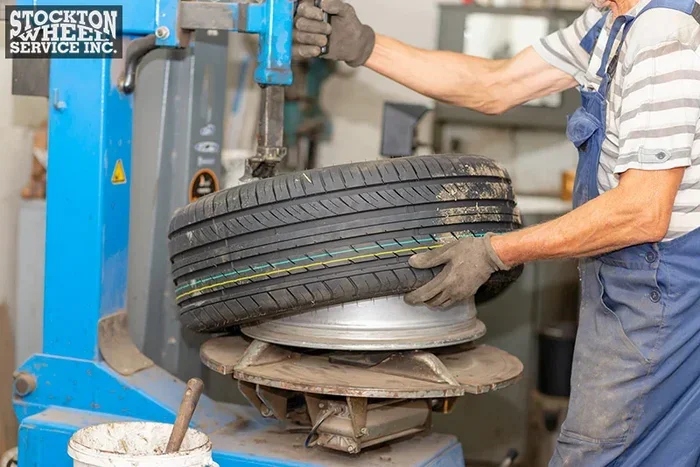
A standard tire rotation typically costs between $25 and $75. Many shops include it for free with an oil change or other service package. The actual procedure takes about 15 to 30 minutes. A technician lifts the car, removes the wheels, and moves each tire to a new position based on the correct rotation pattern.
What Does a Full Tire Replacement Cost?
A full set of four tires can range from $400 to $1,200 or more. That does not include mounting, balancing, or disposal fees for the old tires. Add in wheel alignment if needed, and you are looking at $600 to $1,500 easily.
Even replacing just two tires costs $200 to $600. That is a big jump from a $30 rotation.
The Real Savings
Let us say a set of tires normally lasts 50,000 miles. With regular rotations, they might last 60,000 miles or more. That is an extra 10,000 miles out of the same set. At an average cost of $600 for a full set, that is about $100 saved per rotation cycle.
Over the life of a vehicle, those savings add up. Most drivers go through two to three sets of tires in 10 years. Regular tire rotations could save you $200 to $500 or more in tire replacements over that period.
Think of it this way. You spend $30 to $50 on a rotation every 5,000 miles. Over 60,000 miles, that is roughly $360 to $720 total. But you avoid replacing tires years earlier than needed. The return on investment is clear.
Different Tire Rotation Patterns Explained
Not all rotation patterns are the same. The right pattern depends on your drivetrain and whether your tires are directional or non-directional.
Front-Wheel-Drive Vehicles
For FWD cars, the front tires move straight to the rear. The rear tires move to the front but switch sides. This cross-pattern helps balance the wear caused by the front tires doing most of the work.
Rear-Wheel-Drive Vehicles
RWD vehicles use the opposite pattern. The rear tires move straight to the front. The front tires cross to the rear. This compensates for the extra wear the rear tires experience from acceleration and weight transfer.
All-Wheel-Drive and Four-Wheel-Drive Vehicles
AWD and 4WD systems send power to all four wheels. This creates more uniform wear, but not uniform enough to skip rotations. A rearward cross pattern is common for these vehicles.
Directional Tires
Directional tires have a tread pattern designed to roll in one direction only. You can only switch the front and rear tires on the same side. This limits your rotation options but still provides the benefits of even wear.
If you are unsure which pattern applies to your car, a quick search for a local Chevrolet dealership or any tire professional can help. They will know the right pattern for your specific vehicle and tire type.
Do Tire Rotations Really Make a Difference? Expert Insights
We asked certified automotive technicians and tire specialists what they think. The consensus is clear. Yes, tire rotations absolutely make a difference.
What the Professionals Say
Most tire manufacturers recommend rotations as part of the standard maintenance plan. Brands like Michelin, Goodyear, and Bridgestone all include rotation guidelines in their warranty terms. In fact, failing to rotate your tires regularly can void the tire warranty in some cases.
Certified mechanics consistently report seeing the difference between well-maintained and neglected tires. A set of tires that has been rotated regularly can look nearly new at 50,000 miles. A set that has never been rotated might be worn down to the wear bars at 35,000 miles.
The Long-Term Value
Experts also point out that tire rotations work best when combined with other maintenance steps. Wheel alignment, tire balancing, and proper inflation all play a role in tire health.
Think of tire rotations as part of a bigger picture. They are not a magic fix. But they are a simple, affordable step that amplifies the benefits of every other tire maintenance practice you follow.
Some drivers wonder if long-distance driving changes the equation. If you frequently take long highway trips, your tires experience more sustained wear. Regular rotations become even more important in those cases. And if you drive a hybrid for those long distances, you are already ahead on fuel savings. Maintaining your tires properly ensures those savings are not undermined by poor tire health.
Common Tire Rotation Mistakes to Avoid
Even something as simple as a tire rotation can go wrong if you are not careful. Here are the most common mistakes drivers make.
Skipping the Alignment Check
If your wheels are out of alignment, rotating the tires will not fix the problem. You will still have uneven wear. Get an alignment check at least once a year or whenever you notice pulling or vibration.
Ignoring Tire Pressure
Underinflated or overinflated tires wear unevenly regardless of rotation. Check your tire pressure at least once a month. Use the recommended PSI listed on the driver’s side door jamb.
Using the Wrong Rotation Pattern
Not all patterns work for all vehicles. Putting directional tires on the wrong side or using a forward cross on a RWD vehicle can cause more harm than good. When in doubt, trust a professional.
Forgetting About the Spare Tire
Some rotation patterns include the spare tire, especially on full-size spares. Check your owner’s manual to see if your spare should be included in the rotation cycle.
Avoiding these mistakes ensures that every rotation counts. You get the full benefit without wasting time or money.
When Tire Rotations Are Not Enough
Sometimes tires need more than just a rotation. Here are signs that something deeper is going on.
- Feathering: The tread wears more on one side of each tread block. This usually indicates a toe alignment problem.
- Cupping: Scalloped dips in the tread. This often means worn suspension components or unbalanced tires.
- One-Side Wear: The inside or outside edge wears much faster. This points to camber misalignment.
- Center Wear: The middle of the tread wears faster than the edges. This means the tire is consistently overinflated.
- Edge Wear: Both edges wear faster than the center. The tire is underinflated.
Any of these issues require more than a rotation. You may need an alignment, suspension repair, or even new tires. A professional inspection at a local Chevrolet dealership or tire shop can identify these problems early.
Final Verdict: Are Tire Rotations Worth It?
The answer is a resounding yes. Tire rotations are worth every penny. They are affordable, quick, and they deliver measurable results. You get longer-lasting tires, better safety, improved fuel economy, and fewer surprises at the repair shop.
Skipping tire rotations is a false economy. You save $30 to $50 today but risk spending hundreds or even thousands more down the road. Uneven wear leads to premature replacements. Worn tires compromise your safety on the road.
Make tire rotations a non-negotiable part of your vehicle maintenance schedule. Pair them with oil changes. Check your tire pressure regularly. Get alignments when needed. These small habits add up to big savings and a safer driving experience.
Your tires are the only part of your car that touches the road. Everything else, from braking to steering to stability, depends on them. Treat them well, and they will treat you well in return.
Frequently Asked Questions
How much does a tire rotation cost on average?
A standard tire rotation costs between $25 and $75 at most shops. Many dealerships and quick-lube places include it for free with an oil change or other service package. It is one of the cheapest maintenance services you can get.
Can I rotate my tires myself?
Yes, if you have the right tools and know the correct rotation pattern for your vehicle. You will need a jack, jack stands, and a lug wrench. However, most people prefer to have a professional handle it. It takes about 15 to 30 minutes at a shop, and the technicians know the right pattern for your drivetrain.
What happens if I never rotate my tires?
Your front tires will wear much faster than your rear tires on most vehicles. You will likely need to replace the front tires years before the rears. This means buying tires in pairs instead of all four at once. It also means higher long-term costs and reduced safety from uneven tread depth.
Does tire rotation affect alignment?
No, a tire rotation does not change your alignment. However, if your alignment is off, rotating the tires will not fix the uneven wear. It is best to check alignment regularly and get it corrected before rotating tires for the best results.
How long does a tire rotation take?
A tire rotation typically takes 15 to 30 minutes. Some shops can do it in as little as 10 minutes if they are busy and experienced. It is one of the fastest maintenance services available.
Are tire rotations covered under warranty?
Some tire manufacturers include free rotations as part of their warranty program. Others require you to pay for rotations yourself but still honor the warranty. Check your tire warranty documentation or ask at the local Chevrolet dealership where you purchased the tires. Keeping records of all rotations helps protect your warranty.
=== CONCLUSION ===
Tire rotations are a small investment with big returns. They keep your tires wearing evenly, improve your safety on the road, and save you money by extending the life of your tires. Every expert and tire manufacturer agrees on this simple truth. Do not skip them.
Make tire rotations part of your regular maintenance routine. Set a reminder every 5,000 to 7,500 miles. Pair it with your oil change to make it easy to remember. Your wallet, your safety, and your tires will all thank you.