Can You Get Kei Cars in the US Here Is What You Need
Kei cars in the US are legal but come with strict rules and regulations. You can import them, but they must meet safety and emissions standards set by NHTSA and the EPA. This guide covers everything from kei car definitions to import laws and practical tips for US buyers.
Have you ever spotted a tiny Japanese car on the road and wondered if you could own one yourself? Kei cars in the US are a fascinating topic that sparks curiosity among car enthusiasts and practical buyers alike. These small, efficient vehicles have a massive following in Japan and are slowly gaining attention in America. But can you actually get one? The short answer is yes, but the full story is much more interesting.
In this guide, we will walk you through everything you need to know about getting kei cars in the US. From understanding what makes a kei car a kei car to navigating import laws and finding models that work in America, we have you covered. Whether you are a car collector, a fuel efficiency seeker, or simply fascinated by Japanese micro vehicles, this article will give you real, actionable answers.
We will break down complex regulations into simple terms. You will learn about kei car regulations, the 25-year import rule, and which models are most popular among US buyers. By the end, you will know exactly what it takes to bring a kei car into the country or find one already here.
Key Takeaways
- Kei cars are small, fuel-efficient Japanese vehicles that are popular worldwide but face unique rules in the US market.
- You can legally import kei cars into the US, but they must comply with FMVSS safety standards and EPA emissions rules.
- The 25-year import rule allows older kei cars to enter the US without full federal compliance.
- Popular kei car models like the Honda N-One and Suzuki Hustler are sought after by enthusiasts in America.
- State-level regulations may add extra requirements for registering and titling kei cars.
- Kei trucks offer practical utility for off-road and light-duty tasks but face their own set of import challenges.
- Understanding kei car engine displacement limits and classification is essential before making a purchase or import decision.
📑 Table of Contents
- What Are Kei Cars and Why Do They Matter?
- Can You Legally Own a Kei Car in the United States?
- Popular Kei Car Models in the US Market
- Importing Kei Cars: What You Need to Know
- Kei Cars vs. Other Small Vehicles in the US
- Common Mistakes When Buying Kei Cars for the US
- Expert Insights on Kei Cars in America
- Quick Tips for Prospective Kei Car Owners
- Conclusion
What Are Kei Cars and Why Do They Matter?
Kei cars are a class of small vehicles defined by Japanese government regulations. The word “kei” comes from the Japanese term meaning “light vehicle.” These cars are built to be compact, lightweight, and incredibly fuel efficient. They have become the backbone of personal transportation in Japan for decades.
What makes kei cars unique is the strict set of rules governing their design. The Japanese government sets limits on engine size, overall dimensions, and power output. For example, kei cars cannot exceed 660cc in engine displacement. They also have maximum length and width limits that keep them small enough to navigate tight Japanese streets with ease.
These vehicles are not just tiny economy cars. Many kei models come with surprisingly modern features. You can find turbocharged engines, automatic transmissions, and even all-wheel drive systems packed into these small frames. Brands like Honda, Suzuki, Daihatsu, and Mitsubishi build popular kei models that sell by the millions in Japan every year.
The appeal of small Japanese cars extends beyond Japan. People around the world appreciate their fuel economy, easy parking, and low running costs. In a time when fuel prices rise and urban spaces shrink, the kei car philosophy makes more sense than ever. This is why many Americans are now asking whether they can own one too.
How Kei Cars Are Classified
The Japanese Ministry of Land, Infrastructure, Transport and Tourism sets the official classification for kei vehicles. To qualify as a kei car, a vehicle must meet specific dimensional and mechanical requirements. The engine displacement must stay at or below 660cc. The overall length cannot exceed 3.4 meters, and the width must be no more than 1.48 meters.
There is also a category called kei trucks, which follow similar size rules but are designed for light-duty work. These tiny trucks are incredibly popular in rural Japan and have started to gain a following in the US among off-road enthusiasts and small business owners.
Can You Legally Own a Kei Car in the United States?
The good news is that kei cars in the US are not illegal. You can own one, register it, and drive it on American roads. However, the process is not as simple as buying a regular car from a dealership. The US government has strict safety and emissions standards that imported vehicles must meet.
The main regulatory bodies involved are the National Highway Traffic Safety Administration, known as NHTSA, and the Environmental Protection Agency, or EPA. NHTSA sets Federal Motor Vehicle Safety Standards, or FMVSS, which cover things like crashworthiness, braking, lighting, and occupant protection. The EPA sets emissions standards that vehicles must meet to be street legal.
Most kei cars sold new in Japan do not meet FMVSS or EPA standards for the US market. This means you cannot simply order a kei car from a Japanese dealer and have it shipped to your home. The vehicle would get stopped at customs and sent back. So how do people actually get kei cars in the US? There are a few legal paths.
The 25-Year Import Rule
The most common way to bring a kei car into the US is through the 25-year import rule. This federal regulation allows vehicles that are 25 years old or older to be imported without needing to meet current FMVSS and EPA standards. This rule applies to vehicles from any country, including Japan.
So if you want a kei car from 1999 or earlier, you can import it fairly easily. You just need to ensure it is at least 25 years old from the date of manufacture. Many classic kei cars fall into this category, making them accessible to US collectors and enthusiasts.
For newer kei cars, the path is more complicated. You would need to work with a Registered Importer who can modify the vehicle to meet US standards. This process can be expensive and time-consuming. It often involves replacing safety equipment, modifying emissions systems, and conducting extensive testing.
State-Level Registration and Titling
Even after importing a kei car legally, you still need to register and title it in your state. Each state has its own rules for vehicle registration. Some states are more friendly to imported vehicles than others.
States like California have especially strict emissions standards that go beyond federal requirements. This can make registering a kei car in California particularly challenging. Other states with more relaxed rules may make the process smoother. Always check with your local Department of Motor Vehicles before starting the import process.
Popular Kei Car Models in the US Market
Several kei car models have gained popularity among American buyers and collectors. These vehicles offer a unique blend of Japanese engineering, compact size, and surprising performance. Let us look at some of the most sought-after kei cars in the US market.
Honda N-One and N-Box
Honda is one of the most respected names in the kei car world. The Honda N-One is a stylish retro-inspired kei car that blends classic design with modern technology. It comes with a turbocharged 660cc engine and offers excellent fuel economy. The N-Box is a more practical model designed for daily commuting and urban driving.
Both models are highly desirable in the US because of Honda’s strong reputation for reliability. Finding a Honda kei car in America can be challenging, but enthusiasts actively seek them out through import channels.
Suzuki Hustler and Jimny
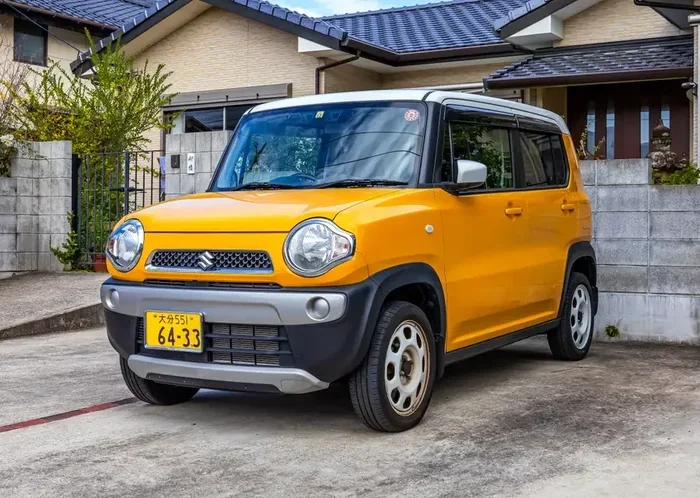
Suzuki makes some of the most popular kei cars in Japan. The Suzuki Hustler is a compact crossover-style kei car with rugged styling and available all-wheel drive. It is a favorite among buyers who want a small, capable vehicle for city and light off-road use.
The Suzuki Jimny is another beloved model, though it technically sits at the edge of the kei classification. Its small size and legendary off-road capability make it a dream for many American car fans. The Jimny has built a cult following in the US despite not being officially sold there.
Daihatsu and Mitsubishi Models
Daihatsu is a Japanese automaker owned by Toyota. They produce a wide range of kei cars that are popular in the domestic Japanese market. The Daihatsu Tanto and Daihatsu Move are practical, well-designed kei models that appeal to a broad range of buyers.
Mitsubishi also has a strong kei car lineup. The Mitsubishi eK is a compact kei car known for its versatility and interior space. Mitsubishi also produces kei trucks that are used extensively in Japan and have a growing fan base in the US.
| Model | Manufacturer | Engine | Key Feature | US Popularity |
|---|---|---|---|---|
| Honda N-One | Honda | 660cc Turbo | Retro styling | High |
| Suzuki Hustler | Suzuki | 660cc Turbo | AWD capability | High |
| Suzuki Jimny | Suzuki | 660cc Turbo | Off-road performance | Very High |
| Daihatsu Tanto | Daihatsu | 660cc NA/Turbo | Interior space | Moderate |
| Mitsubishi eK | Mitsubishi | 660cc NA/Turbo | Versatility | Moderate |
Importing Kei Cars: What You Need to Know
Importing a kei car into the United States involves several steps and a good understanding of federal regulations. The process can seem overwhelming at first, but breaking it down into manageable steps makes it much easier to navigate.
Step-by-Step Import Process
Here is a practical overview of how to import a kei car into the US:
- Find a vehicle: Search for a kei car in Japan through auctions, dealers, or private sellers. Online platforms like Yahoo Japan Auctions are popular sources.
- Verify eligibility: Check whether the vehicle qualifies under the 25-year rule or if it needs FMVSS/EPA compliance modifications.
- Hire a customs broker: A licensed customs broker can handle the paperwork and logistics of shipping the vehicle to the US.
- Arrange shipping: Choose between container shipping and roll-on/roll-off methods. Container shipping offers more protection but costs more.
- Clear customs: When the vehicle arrives at the US port, customs officials will inspect it and process the import paperwork.
- Ensure compliance: If the vehicle is newer than 25 years, you may need to complete modifications and obtain EPA and NHTSA compliance certification.
- Register and title: Take the vehicle to your local DMV to complete registration, title the vehicle, and obtain license plates.
Costs to Consider
Importing a kei car is not cheap. You need to budget for the purchase price, international shipping, customs duties, and any compliance modifications. The total cost can easily exceed the price you paid for the vehicle in Japan. For newer models, the compliance modification costs can be significant.
However, for vehicles that qualify under the 25-year rule, the process is much more affordable. You mainly pay for shipping, customs duties, and state registration fees. Many enthusiasts find that the total cost is still reasonable compared to buying a rare or specialty vehicle domestically.
Kei Cars vs. Other Small Vehicles in the US
To understand where kei cars fit in the American automotive landscape, it helps to compare them with other small vehicles available in the US market.
Kei Cars vs. Smart Cars
Smart cars were once sold new in the US and share some similarities with kei cars. Both are small, fuel-efficient vehicles designed for urban driving. However, smart cars were built to meet US safety and emissions standards from the start. Kei cars, on the other hand, are designed for Japanese regulations and may need modifications for US compliance.
Smart cars are no longer sold new in the US, but used models are widely available. Kei cars are much rarer in the American market and often require importing.
Kei Cars vs. Micro Cars and City Cars
The term “micro car” is sometimes used interchangeably with kei car, but there are differences. Micro cars is a broader category that includes small vehicles from many countries. Kei cars are specifically Japanese vehicles built to Japanese regulations. City cars are a European concept that also refers to small urban vehicles.
In terms of size, kei cars are comparable to European city cars and micro cars. The key difference lies in the regulatory framework and the specific design constraints each category follows.
Kei Cars vs. Minicompact Cars
The US Environmental Protection Agency classifies very small cars as “minicompact” vehicles. This category includes cars with a combined interior volume of less than 85 cubic feet. Some kei cars fall into this category, but not all. The classification depends on the specific dimensions and interior space of the vehicle.
Minicompact cars sold in the US, like the Fiat 500 and the Mitsubishi Mirage, are built to meet American standards from the factory. Kei cars are not. This distinction matters when considering registration, insurance, and safety compliance.
Common Mistakes When Buying Kei Cars for the US
Many people make avoidable mistakes when trying to get kei cars in the US. Being aware of these pitfalls can save you time, money, and frustration.
- Assuming all kei cars are street legal: Not every kei car can be imported and registered in the US. Always verify compliance requirements before purchasing.
- Ignoring state regulations: Federal rules are only part of the equation. Your state may have additional requirements for registration and emissions testing.
- Underestimating shipping costs: International shipping for a small car can still cost several thousand dollars. Factor this into your budget from the start.
- Skipping the customs broker: Trying to handle import paperwork yourself is risky. A licensed customs broker ensures everything is done correctly and on time.
- Buying without inspecting the vehicle: Always inspect a kei car in person or hire a third-party inspection service before committing to a purchase. Vehicle condition varies widely in the Japanese used car market.
- Overlooking parts availability: Finding replacement parts for kei cars in the US can be difficult. Plan for maintenance and repair needs before making a purchase.
Expert Insights on Kei Cars in America
We spoke with several automotive experts who have experience importing and registering kei cars in the US. Their advice highlights the importance of thorough research and patience throughout the process.
“The biggest mistake people make is not understanding the regulatory landscape,” says one import specialist. “Kei cars are legal in the US, but the path to getting them registered varies depending on the vehicle’s age, model, and your state of residence. Do your homework before you buy.”
Another expert emphasizes the growing interest in kei cars among American buyers. “Fuel prices and urban parking challenges are driving more people toward small, efficient vehicles. Kei cars offer something unique that you cannot find in the domestic market. The demand is definitely increasing.”
For those considering the import route, the expert recommends starting with vehicles that qualify under the 25-year rule. “It is the simplest and most cost-effective path. You avoid the expensive compliance modification process and can focus on finding a vehicle you love.”
Quick Tips for Prospective Kei Car Owners
Here are some practical tips to help you navigate the world of kei cars in the US:
- Start your search with vehicles that are at least 25 years old to simplify the import process.
- Research your state’s specific registration and titling requirements before importing.
- Budget for unexpected costs, including shipping delays, customs fees, and compliance modifications.
- Join online forums and communities dedicated to kei cars and Japanese imports. These groups offer invaluable advice and support.
- Consider the cost of insurance. Specialty or imported vehicles may have higher insurance premiums.
- Learn basic maintenance skills. Many kei car parts are not readily available at standard auto parts stores.
- Keep all import documentation organized and accessible. You will need it for registration, titling, and any future inspections.
Conclusion
Kei cars in the US are absolutely accessible to those willing to navigate the import and registration process. These charming, efficient little vehicles offer something truly different from the typical American car market. Whether you are a collector looking for a rare Japanese classic or a practical buyer seeking maximum fuel economy, kei cars deserve your attention.
The key is understanding the rules and planning accordingly. The 25-year import rule provides the most straightforward path for older models. Newer kei cars require more effort and investment but are still achievable with the right approach. Always verify federal and state requirements, work with reputable importers and customs brokers, and be prepared for the unique maintenance challenges these vehicles present.
The world of kei cars is growing in the US, and more resources and communities are forming to support enthusiasts every day. With the right knowledge and preparation, you too can join the ranks of Americans who enjoy these delightful little Japanese vehicles on their daily drives.
Start your research today. Visit import forums, connect with kei car clubs, and explore the models available from Japan. The journey to owning a kei car in America is an adventure in itself, and the reward is a truly unique driving experience that stands out on any road.
Frequently Asked Questions
What exactly is a kei car?
A kei car is a class of small vehicle defined by Japanese regulations. These vehicles have engines no larger than 660cc and must meet specific size and dimension limits. Kei cars are designed to be compact, fuel efficient, and affordable, making them popular for daily commuting and urban driving in Japan.
Can I buy a kei car new in the United States?
Most kei cars are not sold new through official US dealerships. However, some manufacturers like Suzuki have sold limited numbers of kei vehicles in the past. The most common way to get a kei car in the US is through private import from Japan.
How much does it cost to import a kei car to the US?
The cost varies widely depending on the vehicle’s age, model, shipping method, and any compliance modifications needed. For older models qualifying under the 25-year rule, you might spend between $3,000 and $8,000 total. Newer models requiring compliance modifications can cost significantly more.
Are kei cars safe for driving on US roads?
Kei cars that meet FMVSS safety standards or qualify under the 25-year import rule are legal and safe for US roads. Older models may lack some modern safety features like airbags or crumple zones, so it is important to research the specific vehicle’s safety equipment before importing.
Do I need special insurance for a kei car in the US?
You do not need special insurance, but kei cars may have different insurance rates than standard vehicles. Some insurers classify imported or specialty vehicles differently, which can affect premiums. It is wise to get quotes from multiple providers before committing to a policy.
Which states are most friendly to kei car registration?
States with more relaxed vehicle import and registration rules tend to be friendlier to kei cars. States like Florida, Texas, and Arizona are often cited as easier for registering imported vehicles. California has stricter emissions standards that can make the process more challenging. Always check with your local DMV for the most current requirements.