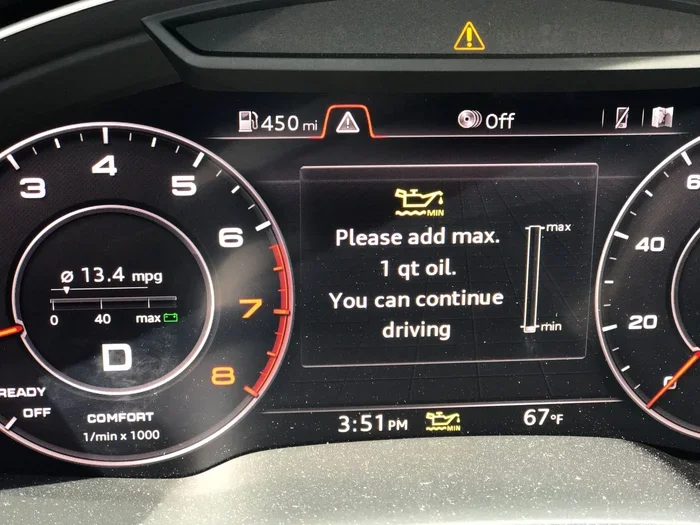
How Far Can You Drive on Minimum Oil in an Audi Find Out
Driving on minimum oil in an Audi is risky and can cause serious engine damage. Most Audi models can only go about 50 to 100 miles on critically low oil before the engine suffers harm. Checking your oil level regularly and responding fast to warning lights can save you from expensive repairs and keep your Audi running smoothly.
You are cruising down the road in your Audi, and suddenly the dashboard lights up with an oil warning. Your heart drops. How far can you actually drive on minimum oil in an Audi? This is a question every Audi owner should know the answer to. Running your engine on low oil is one of the fastest ways to cause serious and expensive damage. Many drivers ignore the warning signs, hoping they can make it to the next petrol pump. But the truth is, your Audi engine needs oil to survive. Without enough oil, metal parts grind against each other, heat builds up, and the engine can seize completely.
In this guide, we will walk you through everything you need to know about driving on minimum oil in an Audi. You will learn how far you can go, what happens when oil runs low, the warning signs to watch for, and how to prevent costly repairs. Whether you drive an Audi A4, Audi Q5, or any other model, this article will help you protect your engine and keep your car running strong for years to come.
Key Takeaways
- Minimum oil means danger: Driving on low oil can cause engine overheating and permanent damage.
- Distance is limited: Most Audis can only travel 50 to 100 miles on minimum oil before problems start.
- Warning signs matter: Oil pressure lights, engine noise, and dashboard alerts tell you something is wrong.
- Prevention is easy: Regular oil checks and timely changes keep your Audi engine healthy.
- Cost of neglect: Ignoring low oil can lead to engine replacement costs running into lakhs.
- Use the right oil: Always use the oil type recommended by Audi for your specific model.
📑 Table of Contents
- Understanding Your Audi Oil System
- What Happens When Oil Is Low in an Audi
- How Far Can You Actually Drive on Minimum Oil?
- Warning Signs Your Audi Oil Level Is Too Low
- Tips to Avoid Oil-Related Engine Damage in Your Audi
- How to Check and Top Up Oil in Your Audi
- Common Mistakes Drivers Make with Low Oil
- How Far Can You Drive on Minimum Oil in an Audi: The Bottom Line
Understanding Your Audi Oil System
Before we talk about distance, let us understand how your Audi oil system works. The engine oil in your Audi serves a very important purpose. It lubricates all the moving parts inside the engine. It reduces friction, cools down hot components, and keeps everything running smoothly. Without enough oil, your engine is basically running dry. And that is a recipe for disaster.
How Oil Level Affects Engine Performance
Your Audi engine has specific oil capacity requirements. Most Audi models need between 5 and 7 litres of oil depending on the engine size. When the oil level drops below the minimum mark on the dipstick, the oil pump struggles to circulate oil properly. This means some parts of the engine do not get the lubrication they need. Even a short drive on minimum oil can cause wear and tear on critical engine components.
Audi uses different types of oil for different models. Some Audis require synthetic oil, while others use semi-synthetic or conventional oil. Always check your owner manual to find the recommended oil type for your specific Audi model. Using the wrong oil can also lead to low oil pressure and engine problems.
Oil Pressure and Warning Systems
Modern Audis come equipped with advanced warning systems. The oil pressure sensor monitors the oil level in real time. When the oil drops too low, a warning light appears on your dashboard. Never ignore this light. Some Audi models also have an oil level display in the instrument cluster. This makes it even easier to monitor your oil status while driving.
What Happens When Oil Is Low in an Audi
Driving with low oil is like running a machine without enough fuel. The consequences can be severe and fast. Let us break down what actually happens inside your Audi engine when the oil level drops too low.
Increased Friction and Heat
Oil acts as a cushion between moving engine parts. When oil is low, metal surfaces rub against each other directly. This creates extreme friction. Friction generates heat. Soon, your engine temperature starts rising beyond safe limits. Over time, this heat can warp engine components and cause irreversible damage.
Engine Wear and Tear
Without proper lubrication, your engine parts wear out much faster. The pistons, crankshaft, camshaft, and valve train all depend on oil to function smoothly. When oil is insufficient, these parts start grinding. Even a few kilometres of driving on low oil can accelerate engine wear significantly. The damage builds up over time and may not be visible right away.
Risk of Engine Seizure
The worst-case scenario is a seized engine. When oil is completely gone, the engine stops working. The metal parts lock up due to extreme heat and friction. A seized engine means a very expensive repair or even a full engine replacement. This is why it is so important to never drive on minimum oil for longer than necessary.
How Far Can You Actually Drive on Minimum Oil?
This is the big question. How far can you really go when your Audi is running on minimum oil? The honest answer is, it depends on several factors. But the general rule is simple: do not push it.
Distance Estimates for Different Situations
In most cases, an Audi can travel between 50 and 100 kilometres on minimum oil before the engine starts showing signs of stress. However, this number can vary widely based on driving conditions, engine type, and how low the oil actually is.
- City driving: Stop-and-go traffic puts more stress on the engine. You may only get 30 to 50 kilometres on low oil in city conditions.
- Highway driving: Steady speeds are slightly less stressful, but the engine still suffers without proper lubrication.
- Hot weather: High temperatures cause oil to break down faster, reducing its effectiveness even more.
- Cold weather: Cold oil is thicker and does not flow as well, which can also cause problems.
Some drivers report getting up to 150 kilometres on minimum oil without immediate issues. But that does not mean the engine is fine. Internal damage can be happening silently, and you may not notice it until the problem becomes serious. It is always better to refill oil as soon as you notice the level is low.
Why You Should Never Push the Limits
It can be tempting to drive just a little further to reach the nearest petrol station or service centre. But every kilometre you drive on minimum oil increases the risk of engine damage. Even a short 10-kilometre drive on critically low oil can cause premature wear on engine bearings and other components. The cost of a tow truck is always less than the cost of an engine rebuild.
Warning Signs Your Audi Oil Level Is Too Low
Your Audi gives you several warning signs when the oil level drops. Learning to recognise these signs early can save you from major engine problems.
Dashboard Warning Lights
The most obvious sign is the oil warning light on your dashboard. This light can look like an oil can symbol or simply say “check oil.” If this light comes on, pull over safely as soon as possible and check your oil level. Some Audis also show a “low oil level” message on the digital display.
Unusual Engine Noises
When oil is low, you may hear knocking or ticking sounds coming from the engine. These noises happen because the parts are not getting enough lubrication. Any unusual engine noise should be taken seriously and checked right away.
Burning Oil Smell
If you smell something burning while driving, it could be oil leaking onto hot engine parts. This is a clear sign that your oil level is too low or there is an oil leak. Stop the car and check the oil level immediately.
Decreased Performance
Low oil can cause your Audi to feel sluggish or less responsive. The engine may struggle to accelerate or may feel rough while idling. These performance drops are often early signs of oil-related problems.
Tips to Avoid Oil-Related Engine Damage in Your Audi
Preventing oil-related damage is much easier and cheaper than fixing it. Here are some simple tips to keep your Audi engine healthy and well-lubricated.
Check Your Oil Regularly
Make it a habit to check your oil level at least once a month. You can do this easily at home with the dipstick. Your Audi should be parked on a flat surface when you check the oil. If the oil level is below the minimum mark, add oil right away. Use the oil type recommended by Audi for your specific model.
Follow the Recommended Oil Change Schedule
Audi recommends changing your engine oil every 10,000 to 15,000 kilometres, depending on the model and driving conditions. Sticking to this schedule ensures your engine always has fresh, clean oil. Old oil breaks down and loses its lubricating properties, which can contribute to low oil pressure and engine wear.
Watch for Oil Leaks
If you notice oil spots under your parked Audi, you may have an oil leak. Common causes include worn gaskets, loose oil pans, or damaged seals. Getting leaks fixed early prevents your oil level from dropping unexpectedly. Regular inspections at a trusted service centre can help catch leaks before they become serious.
Keep a Spare Oil Bottle in Your Trunk
It is always smart to keep a small bottle of the right oil in your car. If you notice your oil level is low while driving, you can top it up safely. This simple habit can save you from being stranded or causing engine damage. Just make sure to add oil only when the engine is cool and the car is parked on a flat surface.
Get Professional Help When Needed
If you are ever unsure about your oil level or notice any warning signs, visit a qualified mechanic or an Audi service centre. Professional technicians can diagnose oil-related issues accurately and recommend the right solution. Regular maintenance at a trusted service centre keeps your Audi in top shape and prevents costly repairs down the road.
Taking care of your car also means keeping it clean inside and out. Removing unwanted items from your car glass can improve visibility and safety, especially when you are driving to get your oil checked. A clean car reflects a well-maintained car owner.
Also, if you are in the market for a new or used Audi, it helps to understand the price range and what to look for. Audi models in the 30 lakh range offer a great balance of luxury and performance, and knowing what to expect in terms of maintenance costs is key. Similarly, if you are looking at engine options, 2000cc cars in India often include popular Audi models that balance power and efficiency.
How to Check and Top Up Oil in Your Audi
Knowing how to check and top up your Audi oil is a basic skill every car owner should have. It takes just a few minutes and can save you from serious engine problems.
- Park your Audi on a flat surface and turn off the engine. Wait a few minutes for the oil to settle.
- Open the hood and locate the dipstick. It usually has a bright handle.
- Pull out the dipstick and wipe it clean with a cloth or paper towel.
- Insert the dipstick back fully, then pull it out again to read the oil level.
- Check the marks on the dipstick. The oil level should be between the minimum and maximum marks.
- If the oil is low, remove the oil filler cap on top of the engine and add the recommended oil slowly.
- Re-check the level after adding oil and make sure it is within the safe range.
Always use the grade of oil recommended in your Audi owner manual. Using the wrong oil grade can affect engine performance and may even trigger warning lights. When in doubt, consult your Audi dealer or a trusted mechanic for guidance.
Common Mistakes Drivers Make with Low Oil
Many drivers make mistakes when they notice their oil is low. Avoiding these common errors can save your engine and your wallet.
- Ignoring the warning light: Some drivers assume the light will go away on its own. It will not. The light means your oil is dangerously low.
- Overfilling the oil: Adding too much oil can be just as harmful as too little. Excess oil can cause foaming and reduce lubrication effectiveness.
- Using the wrong oil type: Not all oils are the same. Using the wrong grade can lead to poor engine performance and increased wear.
- Delaying oil changes: Skipping scheduled oil changes leads to old, degraded oil that does not protect your engine properly.
- Assuming the oil level will stay the same: Oil levels naturally drop over time. Regular checks are essential, not just when the light comes on.
Another thing to keep in mind is that certain Audi models are known for higher oil consumption. If you own one of these models, you may need to check and top up oil more frequently. Staying proactive about your oil levels is the best way to avoid unexpected engine problems.
How Far Can You Drive on Minimum Oil in an Audi: The Bottom Line
So, how far can you drive on minimum oil in an Audi? The safest answer is as little as possible. Most Audi models should not be driven more than 50 to 100 kilometres on critically low oil. Beyond that, the risk of engine damage increases significantly. The distance you can safely travel depends on your driving style, road conditions, engine type, and how low the oil actually is.
The best approach is simple: check your oil regularly, respond quickly to warning signs, and top up or change your oil as needed. Your Audi engine is a precision machine that deserves proper care and attention. Taking a few minutes to check your oil level can save you from thousands of rupees in repair costs and keep your Audi running smoothly for many years.
Remember, your car is a significant investment. Whether you are driving a used Audi or a brand-new model, maintaining proper oil levels is one of the easiest and most effective ways to protect that investment. Do not wait for the warning light to become a warning sign of engine failure. Take action today and keep your Audi engine healthy for the long road ahead.
Frequently Asked Questions
Can I drive 50 km on minimum oil in my Audi?
Yes, in most cases you can drive about 50 kilometres on minimum oil, but it is not recommended. Even a short distance on critically low oil can cause wear on engine components. Always refill oil as soon as you notice the level is low.
What happens if I drive an Audi with no oil at all?
Driving with no oil will cause the engine to seize within minutes. The metal parts grind against each other without any lubrication, causing catastrophic and often irreversible damage. A seized engine usually requires a full replacement, which is extremely expensive.
How often should I check my Audi oil level?
You should check your Audi oil level at least once a month. It is also a good idea to check before long trips. Regular checks help you catch low oil early and prevent engine damage.
What type of oil does my Audi need?
The oil type depends on your specific Audi model and engine. Most modern Audis require synthetic oil. Always refer to your owner manual or consult an Audi service centre to find the correct oil grade for your car.
Is it safe to add oil while the engine is hot?
It is safer to add oil when the engine is cool or has been turned off for a few minutes. Hot oil can cause burns, and the level reading may be inaccurate. Wait a few minutes after turning off the engine before checking or adding oil.
Can low oil cause the check engine light to come on?
Yes, low oil can trigger the check engine light or the oil pressure warning light. These lights are designed to alert you when something is wrong with your engine lubrication system. Never ignore these warnings.