When a Car Wont Start but Clicks And How to Fix It
A car that clicks but won’t start usually points to a weak battery, corroded terminals, or a failing starter motor. This guide walks you through every common cause, DIY fix, and preventive step so you can solve the problem fast. You will learn how to diagnose the issue, save money on repairs, and avoid future starting headaches.
Key Takeaways
- A single loud click often means a dead battery or bad starter motor.
- Rapid clicking usually signals low battery voltage and weak electrical power.
- Corroded battery terminals are one of the easiest and most common causes to fix.
- You can test your battery voltage at home with a simple multimeter.
- Jump-starting your car is a quick temporary fix, but it does not solve the root cause.
- Replacing a faulty starter relay is affordable and often solves the clicking problem.
- Regular battery maintenance can prevent most starting issues before they happen.
📑 Table of Contents
Why Does Your Car Make a Clicking Sound But Won’t Start?
There is nothing more annoying than turning your key or pressing the start button and hearing nothing but a click. Your car won’t start but clicks, and you are left standing in the driveway wondering what went wrong. The good news is that this is one of the most common car problems, and it usually has a simple explanation.
The clicking sound you hear is your car telling you something is wrong with the starting system. It could be as simple as a dead battery or as complex as a failing starter motor. Either way, understanding the click sound is the first step toward fixing it. This article breaks down every possible cause and gives you clear steps to get back on the road.
Whether you are a complete beginner or a seasoned driver, this guide will help you figure out what is going on under the hood. Let us dive into the most common reasons your engine will not crank but you still hear that telltale clicking noise.
Understanding the Clicking Noise
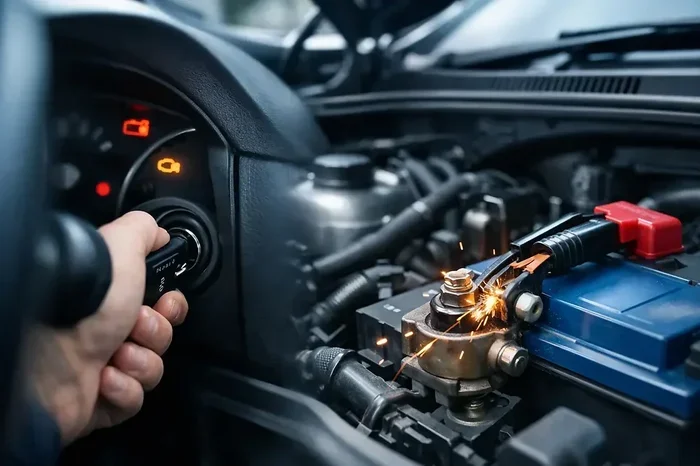
Not all clicks are the same. The type of click sound your car makes can point you directly to the problem. A single loud click usually means the starter motor is trying to engage but cannot. Rapid clicking, on the other hand, often means your battery voltage is too low to power the starter.
Here is how to tell the difference:
- Single click: The starter relay fires, but the motor does not turn. This often points to a bad solenoid or a seized engine.
- Rapid clicking: The starter motor keeps trying to engage but keeps failing. This is almost always a dead battery or weak electrical connections.
The Most Common Culprits Behind a Car That Won’t Start
Now that you know what the clicking means, let us look at the top reasons your car won’t start but clicks. These causes cover the vast majority of cases drivers encounter every day.
Dead or Weak Battery
The dead battery is the number one reason cars click but do not start. Your battery provides the electrical power needed to crank the engine. When the charge drops too low, the starter motor simply cannot get enough energy to turn the engine over.
Common reasons a battery dies include:
- Leaving lights on overnight
- Extreme cold weather reducing battery power
- An old battery that has reached the end of its life
- A parasitic draw draining power when the car is off
If you notice your dim headlights or slow power windows before the clicking started, the battery is likely the culprit. A multimeter test can confirm this quickly. A healthy battery should read around 12.6 volts when the engine is off.
Corroded Battery Terminals
Even if your battery is fully charged, corroded battery terminals can block the electrical current from reaching the starter motor. The white or blueish powdery substance on your terminals is battery corrosion, and it creates resistance in the electrical connections.
This is one of the easiest problems to fix. A simple cleaning with baking soda and water can restore the connection. Here is what to do:
- Disconnect the negative cable first, then the positive.
- Mix baking soda with a little water to form a paste.
- Apply the paste to the terminals and let it fizz.
- Scrub gently with a wire brush until the corrosion is gone.
- Reconnect the positive cable first, then the negative.
After cleaning, try starting your car again. You might be surprised how often this simple fix solves the entire problem.
Faulty Starter Motor
The starter motor is the electric motor that actually turns your engine to start it. Over time, these motors wear out, especially in older vehicles. When the starter motor fails, you will hear a click sound but the engine will not crank.
Signs of a bad starter motor include:
- A single click every time you turn the key
- Clicking that gets faster but the engine still does not turn
- The starter engages sometimes but not always
- A grinding noise when you try to start the car
Replacing a starter motor can cost between $200 and $450 depending on your vehicle. It is a job a mechanic can do in about an hour, so it is not the most expensive repair on this list.
Bad Starter Relay
The starter relay acts as a switch that sends power from the battery to the starter motor. When this relay goes bad, the clicking noise you hear is the relay trying to engage but failing. A faulty starter relay is a cheap and easy fix compared to replacing the entire starter motor.
A bad starter relay can also cause intermittent starting problems. Your car might start fine one day and refuse to start the next. This inconsistency is a classic sign of a failing relay.
Electrical Issues That Cause Clicking but No Start
Beyond the battery and starter, several electrical issues can cause your car to click but not start. These problems are less obvious but just as important to address.
Loose or Damaged Wiring
The wiring harness connects all the electrical components in your car. If a wire becomes loose, frayed, or damaged, the electrical current cannot flow properly to the starter motor. This is especially common in older vehicles where electrical connections degrade over time.
Look for any visible damage to wires near the battery and starter. A loose ground strap is another frequent offender. The ground strap connects the engine to the car’s chassis, and without a solid ground, the starter motor cannot get the power it needs.
Ground Strap Problems
The ground strap might be a small cable, but it plays a huge role in your car’s electrical system. A corroded or loose ground strap can cause all kinds of starting problems, including the dreaded clicking noise.
To check your ground strap:
- Locate the cable between the engine block and the car body
- Inspect it for rust, corrosion, or fraying
- Clean the connection points with a wire brush
- Tighten the bolts securely
This simple inspection can sometimes solve a car won’t start but clicks problem in minutes.
Parasitic Draw
A parasitic draw happens when something in your car continues to drain the battery even after you turn off the engine. Common causes include a glove box light that stays on, a faulty alternator, or an aftermarket accessory wired incorrectly.
If your battery keeps dying and you hear clicking every time you try to start, a parasitic draw could be the hidden cause. A mechanic can perform a parasitic draw test to find the exact source of the power drain.
How to Diagnose the Problem Yourself
You do not need to be a mechanic to figure out why your car won’t start but clicks. With a few basic tools and some patience, you can narrow down the cause before you ever visit a repair shop.
Testing Battery Voltage
A multimeter test is the easiest way to check if your battery has enough charge. Set your multimeter to DC voltage and touch the probes to the battery terminals. A reading of 12.6 volts means a full charge. Anything below 12.0 volts means your battery needs charging or replacing.
Quick Tip: If your battery reads above 12.4 volts but your car still clicks, the problem is likely not the battery itself. Check the electrical connections and the starter relay instead.
Checking the Starter Motor
To test the starter motor, you can use a simple method called a “strike test.” Have someone turn the key while you gently tap the starter motor with a wrench. If the engine starts after the tap, your starter motor has a dead spot and needs replacement.
Warning: Be careful when doing this test. Keep your hands clear of moving parts and belts. Safety always comes first.
Inspecting the Ignition Switch
The ignition switch is the component that sends the signal to engage the starter. When it fails, you might hear a click sound but the starter motor never receives the signal to turn. A failing ignition switch can also cause your key fob battery to not register properly in push-button start vehicles.
Signs of a bad ignition switch include:
- The dashboard lights flicker when you turn the key
- The car starts intermittently
- You need to wiggle the key to get it to start
Step-by-Step Fixes You Can Do at Home
Some causes of a car won’t start but clicks problem are easy to fix yourself. Here are the most common DIY solutions that can save you time and money.
Jump-Starting Your Car
If your dead battery is the cause, jumper cables are your best friend. You need another vehicle or a portable jump starter to get the job done.
Follow these steps carefully:
- Place both cars close together but do not let them touch.
- Connect the red clamp to the positive terminal of your dead battery.
- Connect the other red clamp to the positive terminal of the working battery.
- Connect the black clamp to the negative terminal of the working battery.
- Connect the last black clamp to an unpainted metal surface on your car.
- Start the working car and let it run for a few minutes.
- Try starting your car.
Once your car starts, drive it for at least 20 minutes to recharge the battery. If the car dies again soon after, your battery may need replacing.
Cleaning Battery Terminals
As mentioned earlier, battery corrosion is a sneaky cause of starting problems. A quick cleaning can often restore full power to the starter motor. Keep a wire brush and some baking soda in your trunk for emergencies.
Replacing the Starter Relay
A faulty starter relay is an inexpensive part and easy to swap out. You can usually find the relay in your fuse box under the hood. Check your owner’s manual for the exact location. Replacement costs are typically under $20 for the part alone.
When to Call a Professional
Not every problem is a DIY fix. If you have checked the battery, cleaned the terminals, and tested the starter relay, but your car still clicks and will not start, it is time to call a mechanic. Complex issues like a seized engine or internal starter motor damage require professional tools and expertise.
Expert Insight: A good mechanic will perform a full electrical system inspection to pinpoint the exact problem. This usually costs between $50 and $100 for the diagnostic fee, which is well worth avoiding guesswork.
Preventing Future Starting Problems
The best way to deal with a car won’t start but clicks situation is to prevent it from happening in the first place. A few simple habits can keep your starting system healthy for years.
Regular Battery Maintenance
Check your battery terminals every few months for signs of battery corrosion. Clean them if you see any buildup. Also, have your battery tested during every oil change. Most auto parts stores offer free battery voltage testing.
Watch for Warning Signs
Your car usually gives you clues before a starting problem becomes a full breakdown. Pay attention to these warning signs:
- Dim headlights when the engine is off
- Slow power window operation
- A clicking sound that gets faster each time you try to start
- The engine cranks slowly before it starts
- Your key fob battery needs frequent replacement
Catching these signs early can save you from being stranded. Replace weak batteries before they fully die, and keep jumper cables in your trunk at all times.
Protect Your Battery in Extreme Weather
Both extreme heat and extreme cold can shorten your battery’s life. In cold climates, consider using a battery blanket or charger during winter months. In hot climates, make sure your battery is securely mounted to reduce vibration damage.
Conclusion
A car won’t start but clicks is a frustrating experience, but it is almost always a solvable problem. The most common causes are a dead battery, corroded battery terminals, a bad starter motor, or a failing starter relay. By understanding the type of click sound you hear and following the diagnostic steps in this guide, you can often identify and fix the issue yourself.
Remember to check your battery voltage first, clean any battery corrosion, and inspect your electrical connections. These simple steps solve the majority of clicking problems. When DIY fixes are not enough, a professional mechanic can perform a thorough electrical system inspection to get you back on the road.
Take action today. Do not let a simple clicking noise leave you stranded. With the right knowledge and a few basic tools, you have the power to fix this problem and prevent it from happening again.
Frequently Asked Questions
Why does my car click but not start when I turn the key?
The clicking sound usually means the starter motor is trying to engage but cannot get enough power. The most common reason is a dead battery or corroded battery terminals. Check your battery voltage first, and clean the terminals if you see any white or blue buildup.
Can a bad alternator cause a car to click but not start?
Yes, a failing alternator can cause a parasitic draw that drains your battery over time. If your battery keeps dying and your car clicks when you try to start, the alternator may not be charging the battery properly. A mechanic can test your alternator with a simple multimeter test.
How much does it cost to replace a starter motor?
The cost to replace a starter motor typically ranges from $200 to $450, including parts and labor. The starter relay is much cheaper, often under $20 for the part. Getting a proper diagnosis first can save you from replacing parts you do not actually need.
Is it safe to jump-start a car that clicks but won’t start?
Yes, jump-starting is safe when done correctly. Always connect the jumper cables in the right order and make sure both cars are turned off. If the car starts after a jump, drive it for at least 20 minutes to recharge the battery voltage. If it dies again quickly, the battery likely needs replacement.
What should I do if cleaning the battery terminals does not fix the clicking?
If cleaning the terminals does not solve the problem, the next step is to test the starter relay and starter motor. A faulty starter relay is a common and inexpensive fix. If the relay is working fine, the starter motor itself may need replacement. At this point, it is a good idea to call a professional mechanic for a full electrical system inspection.
How can I prevent my car from clicking and not starting in the future?
Regular battery maintenance is the best prevention. Clean your terminals every few months, test your battery voltage during oil changes, and watch for warning signs like dim headlights or slow cranking. Keep jumper cables in your trunk, and replace your battery every 3 to 5 years to avoid unexpected failures.