Can You Check Tire Pressure on the Dashboard Right Now
Yes, you can check tire pressure on the dashboard using your vehicle’s Tire Pressure Monitoring System (TPMS). Most modern cars display real-time tire pressure readings directly on the dashboard screen or through warning lights. This guide covers everything you need to know about reading, interpreting, and acting on your dashboard tire pressure data to stay safe and save fuel.
Key Takeaways
- Dashboard TPMS displays: Most newer vehicles show tire pressure readings directly on the dashboard or info screen.
- Warning lights alert you: A TPMS warning light tells you when pressure is too low or too high.
- Manual checks still matter: Dashboard readings are helpful but a physical tire pressure gauge gives the most accurate results.
- Low pressure affects safety: Driving on underinflated tires can reduce fuel efficiency and increase blowout risk.
- Resetting TPMS is simple: You can often reset the system yourself after fixing tire pressure issues.
- Temperature affects readings: Cold weather can cause temporary pressure drops that trigger dashboard warnings.
- Regular monitoring saves money: Keeping tires at the right pressure extends tire life and improves driving safety.
📑 Table of Contents
- Can You Check Tire Pressure on the Dashboard Right Now?
- What Is a Tire Pressure Monitoring System?
- Understanding Your Dashboard Tire Pressure Display
- Why Dashboard Tire Pressure Monitoring Matters
- Common Dashboard Tire Pressure Symbols and What They Mean
- How to Check Tire Pressure Using Your Dashboard
- When Dashboard Readings Are Not Enough
- How to Reset Your TPMS After Checking Tire Pressure
- Common Mistakes People Make with Tire Pressure Dashboards
- The Connection Between Tire Pressure and Overall Vehicle Health
- Expert Insights on Dashboard Tire Pressure Monitoring
- Key Takeaways
Can You Check Tire Pressure on the Dashboard Right Now?
Here is a simple truth. You can absolutely check your tire pressure on the dashboard right now if your car has a Tire Pressure Monitoring System. Most vehicles built after 2007 come with this feature. It is one of the easiest ways to keep an eye on your tire health without stepping outside.
The dashboard tire pressure display gives you a quick snapshot of what is happening inside each tire. You do not need a tire pressure gauge every single time. However, understanding what the numbers mean and how to respond is the real game changer. This article walks you through every detail in plain language.
Your car’s dashboard indicators do more than just look pretty. They serve as your first line of defense against unsafe driving conditions. Tire pressure is one of the most overlooked aspects of car maintenance. Yet it directly affects fuel efficiency, tire wear, and driving safety. Let us dive in and explore everything you need to know.
What Is a Tire Pressure Monitoring System?
A Tire Pressure Monitoring System, or TPMS, is a smart feature built into your vehicle. It uses sensors inside or near each tire to measure air pressure. The system then sends this data to your car dashboard for you to read. It is a small device that does a big job.
How Does TPMS Work?
Each tire has a tiny sensor. These sensors measure the air pressure inside the tire. They send the data wirelessly to your vehicle’s computer. The computer then displays the tire pressure reading on your dashboard. There are two main types of TPMS.
- Direct TPMS: Uses physical sensors inside each tire. These give very accurate pressure readings.
- Indirect TPMS: Uses the car’s anti-lock braking sensors. It detects differences in wheel rotation caused by low pressure. This method is less precise but still useful.
Most drivers never think about their TPMS sensors until a light pops up. That is a mistake. Understanding how the system works helps you respond faster and smarter.
Understanding Your Dashboard Tire Pressure Display
Every car brand displays tire pressure information a little differently. Some show exact numbers. Others just show a warning light. Here is what you might see on your vehicle dashboard.
Exact Pressure Readings
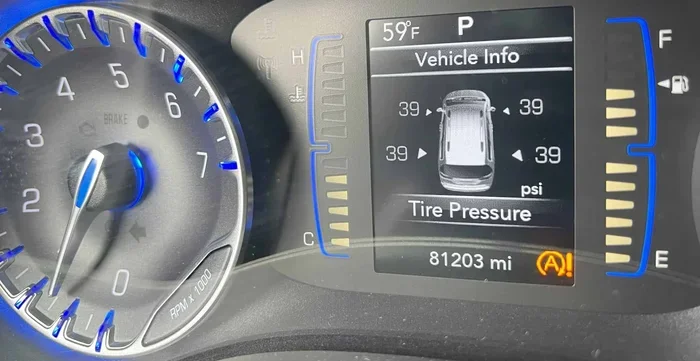
Many newer vehicles, especially luxury and SUV models, display actual pressure numbers. You can see the PSI (pounds per square inch) for each tire right on the screen. This is incredibly convenient. You know exactly which tire needs attention and by how much.
To access these readings, you usually press a button on the steering wheel. You navigate to the vehicle information menu. From there, you select tire pressure or TPMS. The screen then shows the current readings for all four tires. Some vehicles also show the recommended tire pressure right next to the current reading.
Warning Lights Only
Other vehicles use a simpler approach. They show a TPMS warning light on the dashboard. This light looks like a horseshoe shape with an exclamation point in the center. When you see this dashboard warning light, it means one or more tires are outside the safe pressure range.
The light might be yellow or red. A yellow light usually means the pressure is slightly off. A red light often signals a more serious problem. Either way, you should check your tire pressure as soon as it is safe to do so.
Why Dashboard Tire Pressure Monitoring Matters
You might wonder why all this fuss about tire pressure. The answer is simple. It affects almost every part of your driving experience. Let us break down the reasons why dashboard monitoring is so important.
Driving Safety
Underinflated tires are dangerous. They can overheat on long drives. This increases the risk of a blowout. Overinflated tires, on the other hand, reduce the contact area with the road. This means less grip and longer stopping distances. Your dashboard tire pressure alerts help you catch these problems early.
Think about it. Your tires are the only part of your car that touches the road. Keeping them at the right pressure level is one of the easiest ways to stay safe on the road. If you ever need to check your tire pressure manually, here is what you should do.
- Find the recommended PSI on the driver’s side door jamb.
- Use a reliable tire pressure gauge to check each tire.
- Compare the reading to the recommended number.
- Add air or release some to match the target.
If you ever find yourself wondering about other common car questions, you might enjoy reading about can I do my own car diagnostics. It is a great companion topic to understanding your dashboard.
Fuel Efficiency
Did you know that low tire pressure can hurt your gas mileage? Tires with insufficient air create more rolling resistance. Your engine has to work harder. This means you burn more fuel. Studies show that underinflated tires can reduce fuel efficiency by up to 3 percent.
That might not sound like much. But over months of driving, it adds up. Keeping your tire pressure at the right level saves you money at the pump. Your dashboard TPMS helps you catch pressure drops before they cost you too much.
Tire Wear and Longevity
Tires are expensive. Nobody wants to replace them sooner than necessary. Wrong pressure levels cause uneven tire wear. Underinflated tires wear out the outer edges of the tread faster. Overinflated tires wear down the center of the tread. Both situations shorten the life of your tires.
By monitoring your tire pressure readings on the car dashboard, you can extend the life of your tires significantly. This saves you money and keeps your ride smoother.
Common Dashboard Tire Pressure Symbols and What They Mean
Every driver should recognize the common dashboard symbols related to tire pressure. Here is a quick guide to help you understand what your car is trying to tell you.
| Symbol | Meaning | Action Needed |
|---|---|---|
| Yellow horseshoe with exclamation mark | TPMS warning – pressure issue detected | Check tire pressure soon |
| Red horseshoe with exclamation mark | Severe pressure problem | Stop safely and check immediately |
| Numeric PSI display | Exact pressure reading for each tire | Compare to recommended PSI |
| TPMS sensor warning light | Sensor malfunction or battery issue | Visit a service center |
These symbols appear on your vehicle dashboard when the system detects a problem. Sometimes the light stays on constantly. Other times it flashes. A flashing light often indicates a sensor issue rather than an actual pressure problem. Either way, you should investigate.
How to Check Tire Pressure Using Your Dashboard
Checking your tire pressure on the dashboard is straightforward. Here is a step-by-step guide that works for most vehicles.
Step 1: Start the Engine
Turn on your ignition. Some vehicles display tire pressure information immediately. Others need the engine running to show live data. Wait for the dashboard to fully initialize.
Step 2: Navigate to the TPMS Menu
Use the steering wheel controls or the infotainment system to find the tire pressure section. On some cars, you press a dedicated button. On others, you scroll through the menu options. Look for labels like Vehicle Info, Tires, or TPMS.
Step 3: Read the Pressure Values
Once you find the screen, you will see the pressure readings for each tire. Compare these numbers to the recommended PSI listed on your driver’s door jamb or owner’s manual. The recommended pressure is usually between 30 and 35 PSI for most passenger vehicles.
Step 4: Take Action if Needed
If any tire shows a pressure below the recommended level, add air. If it is above the recommended level, release some air. You can find air pumps at most gas stations. After adjusting the pressure, drive for a few minutes. The dashboard indicator should turn off once the system confirms the pressure is correct.
If you are dealing with other common car situations, you might want to check out can I drive 10 miles on empty for another helpful maintenance tip.
Quick Tips for Accurate Dashboard Readings
- Check tire pressure when tires are cold. Driving heats up the air inside tires and can give false high readings.
- Reset TPMS after adjusting pressure. Most vehicles have a reset button or menu option for this.
- Check all four tires plus the spare. The spare tire sometimes gets overlooked.
- Note seasonal changes. Cold weather causes pressure to drop. Hot weather causes it to rise.
- Do not ignore the warning light. Even if the tires look fine, a sensor issue could be present.
When Dashboard Readings Are Not Enough
Your dashboard TPMS is a great tool. But it is not perfect. There are times when you need to go beyond what the screen tells you. Understanding these situations helps you stay ahead of problems.
TPMS Sensor Failures
Sometimes the TPMS sensors themselves fail. Battery life in these sensors typically lasts 5 to 10 years. When the battery dies, the sensor cannot send accurate data. You might see a TPMS warning light even when your tire pressure is perfectly fine. In this case, you need a tire pressure gauge to manually verify the pressure.
Temperature Changes and False Warnings
Cold weather is the biggest enemy of accurate dashboard tire pressure readings. When temperatures drop, the air inside your tires contracts. This can lower the pressure by 1 to 2 PSI for every 10-degree drop. Your TPMS light might come on even though your tires are fine. Simply driving for a while can warm up the tires and raise the pressure back to normal.
On the flip side, hot summer days can cause pressure to rise above the recommended level. This is usually not a concern unless the pressure is significantly over the limit. Always check your tire pressure readings when the tires are cold for the most accurate baseline.
After Replacing or Rotating Tires
If you have recently replaced tires or rotated them, your TPMS system might need recalibration. The sensors sometimes need to relearn the position of each tire. Most vehicle manuals include instructions for resetting the TPMS after tire changes. If you are unsure about any car maintenance procedures, you could explore can I install splash guards myself for more DIY confidence.
How to Reset Your TPMS After Checking Tire Pressure
Once you have checked and corrected your tire pressure, you should reset the TPMS system. This clears the warning light and tells the system that the issue is resolved. The reset process varies by vehicle, but here are the most common methods.
- Use the reset button: Many cars have a TPMS reset button under the steering column. Press and hold it until the warning light blinks three times.
- Use the infotainment menu: Some vehicles let you reset TPMS through the dashboard screen. Go to Settings, then Vehicle, then TPMS Reset.
- Drive at a steady speed: Some systems reset automatically after you drive at or above 50 mph for about 10 minutes.
- Disconnect the battery: As a last resort, disconnecting the car battery for 15 minutes can reset the system. But this method should be used carefully.
After resetting, drive your car for a few miles. The dashboard indicator should stay off if the pressure levels are correct. If the light comes back on, there may be a deeper issue. Visit a mechanic or tire shop for a professional check.
For more information about maintaining your vehicle, you might also want to read about can I put too much weight in my car. It covers another important aspect of vehicle load management that works hand in hand with proper tire care.
Common Mistakes People Make with Tire Pressure Dashboards
Even the best drivers make mistakes when it comes to tire pressure monitoring. Here are the most common errors and how to avoid them.
- Ignoring the warning light: Many drivers see the TPMS light and simply ignore it. This is risky. Low pressure can lead to blowouts and accidents.
- Assuming all tires have the same pressure: Each tire can have a different reading. Always check each one individually.
- Relying only on the dashboard: The dashboard display is helpful but not a substitute for a manual check with a tire pressure gauge.
- Overinflating to compensate: Some drivers add too much air after seeing a low reading. This causes its own set of problems, including reduced traction.
- Forgetting to check the spare tire: The spare tire also has a sensor in many vehicles. Do not forget about it.
- Not checking pressure regularly: Monthly checks are recommended. Do not wait for the dashboard indicator to tell you something is wrong.
Avoiding these mistakes keeps your tires in great shape. It also keeps you and your passengers safe on every trip.
The Connection Between Tire Pressure and Overall Vehicle Health
Tire pressure is not just about tires. It connects to many other aspects of your vehicle. Understanding this connection gives you a bigger picture of car maintenance.
When your tires are at the right pressure level, your suspension system works better. Your steering responds more accurately. Your brakes perform more predictably. All of these factors contribute to driving safety. Your dashboard TPMS is really a window into the overall health of your vehicle.
Also, properly inflated tires last longer. This means fewer trips to the tire shop. It also means less rubber ending up in landfills. Proper tire care is good for your wallet and the environment.
If you are curious about other aspects of vehicle ownership, you might enjoy reading what types of vehicles a local Chevrolet dealership carries for insights into choosing the right car for your needs.
Expert Insights on Dashboard Tire Pressure Monitoring
Automotive experts agree on one thing. The TPMS dashboard display is a valuable tool but should not be your only source of tire pressure information. Regular manual checks with a quality tire pressure gauge remain essential. Here is what the pros recommend.
Check tire pressure at least once a month. This is the industry standard recommendation. Also check before long road trips. Temperature changes of more than 20 degrees can trigger false warnings. Always verify with a manual gauge if you are unsure.
Invest in a good digital tire pressure gauge. They are inexpensive and far more accurate than the pencil-style gauges. A quality gauge costs under $20 and can save you hundreds in tire replacement costs.
Know your vehicle’s recommended PSI. This information is printed on a sticker inside the driver’s door. Never use the number printed on the tire sidewall. That number is the maximum pressure the tire can handle, not the recommended pressure for your vehicle.
Key Takeaways
- Dashboard TPMS displays: Most newer vehicles show tire pressure readings directly on the dashboard or info screen.
- Warning lights alert you: A TPMS warning light tells you when pressure is too low or too high.
- Manual checks still matter: Dashboard readings are helpful but a physical tire pressure gauge gives the most accurate results.
- Low pressure affects safety: Driving on underinflated tires can reduce fuel efficiency and increase blowout risk.
- Resetting TPMS is simple: You can often reset the system yourself after fixing tire pressure issues.
- Temperature affects readings: Cold weather can cause temporary pressure drops that trigger dashboard warnings.
- Regular monitoring saves money: Keeping tires at the right pressure extends tire life and improves driving safety.
Frequently Asked Questions
Can I see exact tire pressure numbers on my dashboard?
Yes, many modern vehicles display exact PSI numbers for each tire on the dashboard screen. You can usually access this through the infotainment system or steering wheel controls. Look for a “Tire Pressure” or “TPMS” option in the vehicle information menu. If your car does not show exact numbers, it likely uses a warning light system instead.
Why does my tire pressure light come on even when my tires look fine?
This usually happens because of temperature changes. Cold weather causes air inside tires to contract, lowering the pressure temporarily. It can also mean a TPMS sensor battery is dying. In rare cases, there is a slow leak that is not yet visible. If the light stays on, use a tire pressure gauge to verify the actual pressure.
How often should I check my tire pressure manually?
Experts recommend checking your tire pressure at least once a month. You should also check before long trips and during major seasonal temperature changes. Even if your dashboard TPMS works perfectly, a manual check catches issues that sensors might miss. It only takes about five minutes and can save you from costly repairs.
What is the recommended tire pressure for most cars?
Most passenger vehicles recommend a tire pressure between 30 and 35 PSI. However, the exact number varies by vehicle. Always check the sticker on the driver’s side door jamb or your owner’s manual. Never use the number on the tire sidewall, as that is the maximum pressure, not the recommended pressure.
Can I reset the TPMS light myself?
Yes, in most cases you can reset the TPMS light yourself. The reset button is usually located under the steering column or in the infotainment menu. After resetting, drive at a steady speed for about 10 minutes. If the light comes back on, there may be an actual pressure issue or a sensor problem that needs professional attention.
Does checking tire pressure on the dashboard replace the need for a tire pressure gauge?
No, it does not. The dashboard TPMS is a convenient monitoring tool, but it is not as precise as a dedicated tire pressure gauge. Sensors can malfunction, and temperature changes can affect readings. A manual gauge gives you the most accurate measurement and should be part of your regular car maintenance routine.
=== CONCLUSION ===
You can definitely check tire pressure on the dashboard right now if your vehicle has a TPMS system. It is one of the simplest and most effective ways to stay on top of your car maintenance. The dashboard gives you real-time tire pressure readings that help you catch problems early. This keeps you safe, saves fuel, and extends the life of your tires.
But remember, your dashboard display is a guide, not a replacement for regular manual checks. Use both tools together for the best results. Keep a quality tire pressure gauge in your glove box. Check your pressure levels monthly. And never ignore a TPMS warning light.
Taking care of your tires is one of the easiest things you can do as a car owner. It takes just a few minutes but pays off in driving safety, better fuel economy, and longer-lasting tires. Start today. Check your tire pressure on the dashboard and make it a habit your future self will thank you for.