Can You Fit a 4×8 Sheet in a Transit Connect Today
Yes, you can fit a 4×8 sheet in a Transit Connect, but it depends on the model year and how you arrange your cargo. The Ford Transit Connect offers surprising cargo space for a compact van, making it a popular choice for contractors and DIYers. With the rear seats folded down, the cargo floor length reaches up to 104 inches, which is close to the 96-inch length of a standard 4×8 sheet. You may need to use a roof rack or angle the sheet diagonally to make it work. Let us walk you through every option so you can haul with confidence.
So, you need to move a full sheet of plywood, drywall, or MDF. You have a Ford Transit Connect parked in your driveway. The big question is simple: can you fit a 4×8 sheet in a Transit Connect? The answer is yes, but there is a bit more to it than just tossing the sheet in the back. Let us break it all down for you in plain language.
The Ford Transit Connect is one of the most popular cargo vans on the road today. It is compact, fuel-efficient, and easy to park. But many people wonder whether it can handle full-size building materials. A standard 4×8 sheet of plywood, drywall, or hardwood measures 96 inches long and 48 inches wide. That is a big flat piece of material. And fitting it into a van that is not exactly a full-size cargo truck takes some planning.
In this guide, we will cover everything you need to know. We will look at the exact cargo dimensions of the Transit Connect. We will share practical tips for loading and securing a 4×8 sheet. We will also talk about roof racks, seat configurations, and common mistakes to avoid. By the end, you will know exactly how to haul a full-size sheet safely and confidently.
Key Takeaways
- Yes, a 4×8 sheet fits: The Transit Connect cargo area can hold a full-size sheet with proper positioning.
- Fold the rear seats: This is the single most important step to gain enough length.
- Use a roof rack: Extending the sheet on a roof rack solves length and width issues at once.
- Diagonal placement works: Angling the sheet diagonally can free up valuable floor space.
- Know your model year: Different years and trims have slightly different cargo dimensions.
- Weight matters too: A 4×8 sheet of plywood can weigh 50-60 pounds, so check your payload limit.
- Tie-downs are essential: Secure the sheet properly to avoid dangerous driving conditions.
📑 Table of Contents
- Understanding the Transit Connect Cargo Space
- Can You Fit a 4×8 Sheet Without a Roof Rack?
- Using a Roof Rack to Haul a 4×8 Sheet
- Comparing Transit Connect Models for Sheet Hauling
- Common Mistakes When Hauling a 4×8 Sheet
- Expert Tips for DIYers and Contractors
- Final Thoughts on Fitting a 4×8 Sheet in a Transit Connect
Understanding the Transit Connect Cargo Space
Before we answer the big question, let us talk about the cargo area itself. The Ford Transit Connect comes in two main body styles: the cargo van and the passenger van. The cargo van has no rear seats, which gives you maximum floor space. The passenger van has second-row seats that can be folded down to create a flat cargo floor.
The cargo area length is the most important measurement for hauling a 4×8 sheet. Here is what you need to know about the different model years and trims.
Cargo Length by Model Year
The Transit Connect has been sold in the United States since 2014. The cargo floor length varies slightly depending on the year and configuration.
- 2014-2023 Transit Connect Cargo Van: The cargo floor length is approximately 104 inches from the front bulkhead to the rear tailgate. This is the most important number for our discussion.
- 2014-2023 Transit Connect Passenger Van: With the rear seats folded flat, the usable floor length is similar, around 100 to 104 inches depending on the seat folding mechanism.
- High Roof Option: The high-roof version adds vertical clearance, which helps when you need to stand the sheet up or angle it diagonally.
A standard 4×8 sheet is 96 inches long. So on paper, the 104-inch cargo floor should be enough. But there is a catch. The width of the cargo area is only about 48 to 50 inches between the wheel wells. And the sheet itself is 48 inches wide. That means the sheet sits right at the edge of the available width. You need to be very careful about how you position it.
Interior Width and Height
The interior width of the Transit Connect cargo area is roughly 48 inches at the widest point. The height from the floor to the roof is about 47 inches in the low-roof model and up to 55 inches in the high-roof model. These dimensions matter when you are trying to fit a large, rigid sheet inside the van.
The good news is that a 4×8 sheet is thin. A single sheet of 1/2-inch drywall or plywood is only about half an inch thick. So height is usually not a problem. The real challenge is finding enough floor space to lay the sheet flat without it sticking out dangerously.
Can You Fit a 4×8 Sheet Without a Roof Rack?
This is the question most people ask first. And the honest answer is: it depends on your setup. Let us walk through the two main scenarios.
Scenario 1: Sheet Sitting Flat on the Floor
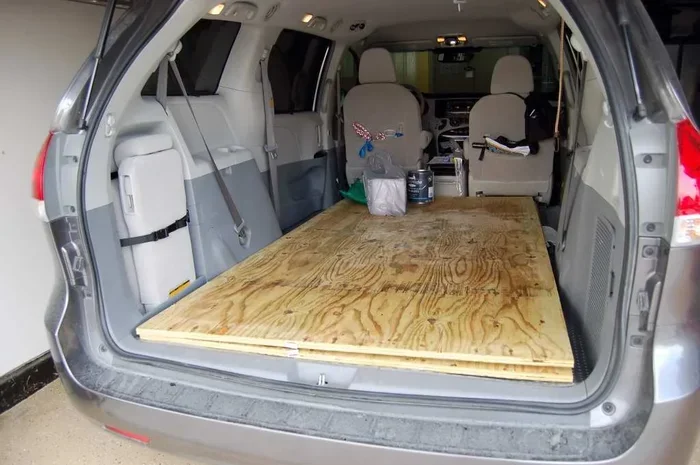
If you lay the 4×8 sheet flat on the cargo floor, the 96-inch length will fit within the 104-inch floor space. But the 48-inch width is a tight squeeze. The sheet will sit right up against the wheel wells on both sides. There will be very little room left for anything else in the cargo area.
Here is the bigger problem. If the sheet sticks out even one inch past the rear tailgate, it becomes a safety hazard. Many states have laws about how far cargo can extend beyond a vehicle. In most cases, cargo can extend no more than three feet beyond the rear of the vehicle without special markings. A 4×8 sheet that sticks out by even a small amount needs to be properly marked and secured.
Scenario 2: Sheet Angled Diagonally
Another option is to angle the sheet diagonally across the cargo floor. This can work if you have the high-roof model. The extra vertical clearance gives you room to tilt the sheet at an angle without it touching the roof.
To do this, you place one corner of the sheet near the front of the cargo area and the opposite corner near the rear. The diagonal of a 4×8 sheet is about 107 inches, calculated using the Pythagorean theorem (96 squared plus 48 squared, then square rooted). This means the sheet will not lie flat on the floor in a diagonal position. You will need to prop it up against the seats or use a ramp-like setup.
This method works best for short trips. It is not ideal for highway driving because the sheet can shift. Always use ratchet straps or bungee cords to secure the sheet firmly.
Using a Roof Rack to Haul a 4×8 Sheet
The easiest and safest way to haul a full 4×8 sheet in a Transit Connect is by using a roof rack. A roof rack sits on top of the van and carries the sheet above the cargo area. This frees up the entire inside of the van for other items.
Ford offers factory roof rack options for the Transit Connect. Aftermarket roof rack systems are also widely available from brands like Yakima, Thule, and Rhino-Rack. A basic roof rack system can cost anywhere from 150 to 400 dollars depending on the brand and features.
How to Set Up a Roof Rack for Sheet Hauling
Setting up a roof rack is straightforward. Here are the steps to follow:
- Choose the right rack system: Look for a roof rack that fits the Transit Connect specifically. Universal racks can work but may not be as stable.
- Install the rack according to the manufacturer instructions: Most rack systems use the factory mounting points on the roof.
- Place the sheet on the rack: Lay the 4×8 sheet flat on the crossbars. Use padding between the sheet and the rack to prevent scratches.
- Secure the sheet with straps: Use at least two ratchet straps, one near the front and one near the rear of the sheet.
- Check the height: Make sure the sheet does not make the van too tall to fit under parking garages or low bridges.
One important tip: the Transit Connect roof can support about 150 pounds on a factory rack. A single 4×8 sheet of 1/2-inch plywood weighs around 50 to 60 pounds. So you have plenty of weight capacity. Just make sure the total weight on the roof does not exceed the manufacturer’s limit.
Quick Tips for Roof Rack Hauling
- Always use soft straps: Hard straps can scratch the sheet surface.
- Check the load before every trip: Vibrations from driving can loosen straps over time.
- Drive slower with a roof load: A high center of gravity affects handling, especially in wind.
- Use a helper: Lifting a 4×8 sheet onto a roof rack is much easier with two people.
Comparing Transit Connect Models for Sheet Hauling
Not all Transit Connects are the same when it comes to hauling a 4×8 sheet. Let us compare the key models and configurations so you can choose the right one for your needs.
| Model / Configuration | Cargo Floor Length | Interior Width | Interior Height | 4×8 Sheet Fits Flat? |
|---|---|---|---|---|
| Transit Connect Cargo Van (Low Roof) | 104 inches | 48 inches | 47 inches | Yes, tight fit |
| Transit Connect Passenger Van (Low Roof, seats folded) | 100-104 inches | 48 inches | 47 inches | Yes, tight fit |
| Transit Connect Cargo Van (High Roof) | 104 inches | 48 inches | 55 inches | Yes, diagonal option available |
| Transit Connect with Roof Rack (any model) | N/A (sheet on roof) | N/A | N/A | Yes, sheet on roof rack |
As you can see from the comparison table, every Transit Connect configuration can handle a 4×8 sheet. The cargo van with the low roof is the most straightforward option. The high-roof model gives you more flexibility with diagonal placement. And a roof rack makes the process the easiest of all.
Common Mistakes When Hauling a 4×8 Sheet
Even experienced DIYers make mistakes when loading a full-size sheet into a van. Here are the most common errors and how to avoid them.
Mistake 1: Not Measuring Before You Buy
Always measure your specific Transit Connect before you assume a 4×8 sheet will fit. Model years can differ slightly, and aftermarket modifications can change the cargo dimensions. A quick five-minute measurement can save you a lot of headaches.
Mistake 2: Forgetting to Fold the Seats
If you are driving a passenger van, do not forget to fold the rear seats flat. Many people try to load a sheet with the seats up and wonder why it does not fit. The seats fold down to create a continuous flat floor, which is essential for sheet hauling.
Mistake 3: Skipping Tie-Downs
A loose 4×8 sheet in a moving van is extremely dangerous. It can shift during turns, block your rear visibility, or fly out of the cargo area. Always use at least two tie-down points. Ratchet straps are the best option. Bungee cords work in a pinch but are less reliable.
Mistake 4: Overloading the Cargo Area
The Transit Connect has a maximum payload capacity of around 1,500 to 1,800 pounds depending on the model. A 4×8 sheet of plywood weighs about 50 pounds. But if you pile other materials on top of it, you can quickly approach the weight limit. Always check your owner’s manual for the exact payload rating.
Mistake 5: Ignoring Local Laws
Every state and municipality has its own rules about cargo overhang. In many places, cargo cannot extend more than three feet beyond the rear of the vehicle. If your 4×8 sheet sticks out, you may need to mark it with a red flag or cloth. Ignoring these laws can lead to fines and, more importantly, unsafe driving conditions.
Expert Tips for DIYers and Contractors
We talked to a few experienced contractors and DIY enthusiasts who regularly haul sheet goods in their Transit Connects. Here is what they had to say.
Use a sheet carrier or grab tool. A simple sheet carrier makes it much easier to load and unload heavy panels by yourself. You can pick one up for under 30 dollars at most hardware stores.
Keep the sheet clean. Lay a moving blanket or cardboard on the cargo floor before placing the sheet down. This prevents scratches and keeps the sheet in good condition for your next project.
Plan your load order. If you are hauling multiple sheets, stack them carefully. Place the heaviest sheets on the bottom and secure them first. Then add lighter sheets on top. This keeps the load stable and balanced.
Consider a slide-out cargo tray. Some Transit Connect owners install a sliding cargo tray in the back. This makes it easy to load sheets and keeps them from sliding around during transport. A basic tray costs around 100 to 200 dollars and is a worthwhile investment if you haul materials frequently.
Check your tire pressure. A loaded Transit Connect is heavier than an empty one. Make sure your tires are inflated to the proper pressure before you hit the road. This improves fuel economy and keeps you safe on the highway.
Final Thoughts on Fitting a 4×8 Sheet in a Transit Connect
The bottom line is clear: Can You Fit a 4×8 Sheet in a Transit Connect? Absolutely yes. The Ford Transit Connect is a capable little cargo van that handles full-size sheet materials with ease. Whether you lay the sheet flat on the folded seats, angle it diagonally in the high-roof model, or strap it to a roof rack, you have multiple options to get the job done.
The key is preparation. Measure your van, choose the right method for your sheet type, and always secure your load properly. A little planning goes a long way toward safe and successful hauling.
Whether you are a contractor hauling plywood to a job site or a DIYer picking up materials for a weekend project, the Transit Connect proves that size does not always matter. This compact van can handle big tasks when you know how to use its cargo space wisely. So next time you need to move a full 4×8 sheet, do not worry. Your Transit Connect has you covered.
Take the time to set up your van properly. Invest in a roof rack if you haul often. Use quality straps and tie-downs. And always drive safely with a heavy or oversized load. Happy hauling!
Frequently Asked Questions
Can a 4×8 sheet of plywood fit flat in a Transit Connect cargo van?
Yes, it can. The cargo floor length is about 104 inches, and a standard 4×8 sheet is 96 inches long. You will have about 8 inches of extra space in the front. The width is a tight fit at 48 inches, so make sure the sheet sits flush against the wheel wells. Use a moving blanket to protect the sheet from scratches.
Do I need a roof rack to haul a 4×8 sheet in a Transit Connect?
No, you do not need one, but it makes the process much easier. Without a roof rack, you can lay the sheet flat on the folded seats or angle it diagonally. A roof rack frees up the entire cargo floor and keeps the sheet secure during transport. It is especially helpful if you haul sheet goods regularly.
What is the maximum weight the Transit Connect roof rack can hold?
Most factory-installed roof racks on the Transit Connect can support around 150 pounds. A single 4×8 sheet of 1/2-inch plywood weighs between 50 and 60 pounds. So you have plenty of capacity for one or two sheets. Always check your specific rack’s weight rating in the owner’s manual or product manual.
Can I haul two 4×8 sheets at once in a Transit Connect?
Hauling two full 4×8 sheets at the same time is very difficult in a Transit Connect. The cargo floor is not wide enough to stack two sheets side by side. You could potentially stack two sheets on the roof rack if the weight limit allows it, but this is risky and not recommended for highway driving. One sheet at a time is the safest approach.
Is it legal to have a 4×8 sheet sticking out of the back of my Transit Connect?
It depends on your local laws. In most states, cargo can extend no more than three feet beyond the rear bumper without a red flag or visible marking. If your sheet sticks out even a little, use a bright red cloth or flag to mark it. Always check your state’s specific regulations before hauling oversized loads.
What is the best way to secure a 4×8 sheet in a Transit Connect?
The best method is to use ratchet straps anchored to the cargo tie-down points in the van. Place one strap near the front edge of the sheet and one near the rear. Make sure the straps are tight but not so tight that they damage the sheet surface. For roof rack loads, use at least two straps and check them before every trip.
=== CONCLUSION ===
Can You Fit a 4×8 Sheet in a Transit Connect? The answer is a resounding yes. The Ford Transit Connect offers versatile cargo space that can accommodate a full-size 4×8 sheet of plywood, drywall, or any other sheet material. Whether you choose to lay it flat on the folded seats, angle it diagonally in the high-roof model, or secure it to a roof rack, you have practical options that work for real-world hauling needs.
Remember to measure your specific van, secure your load with quality straps, and always follow local traffic laws. A little preparation makes every trip safer and easier. With the right setup, your Transit Connect becomes a reliable workhorse for any project, big or small. Happy hauling, and good luck with your next build!