How Bugatti Veyron Super Sport Conquered the Speed Record
The Bugatti Veyron Super Sport shattered speed records and redefined what a production car could do. With its massive W16 engine, advanced aerodynamics, and cutting-edge engineering, this hypercar reached an astonishing top speed. It remains one of the most iconic speed machines ever built and continues to inspire car enthusiasts worldwide.
Some cars are just built to turn heads. But the Bugatti Veyron Super Sport was built to do something far more dramatic. It was designed to break speed records, push engineering boundaries, and prove that a road-legal car could go absolutely insane fast. When this hypercar hit the road, it changed everything people thought they knew about production car speed.
The Bugatti Veyron Super Sport didn’t just compete with other fast cars. It left them in the dust. Its top speed of over 267 mph made it the fastest production car in the world when it was introduced. Even today, decades later, it remains a symbol of what happens when raw power meets brilliant engineering. In this article, we will explore how this incredible machine conquered the speed record and why it still matters.
Key Takeaways
- Record-Breaking Speed: The Veyron Super Sport hit a verified top speed of 267.856 mph, making it the fastest production car of its era.
- Massive W16 Engine: Its quad-turbocharged 8.0-liter W16 engine produced over 1,200 horsepower and 1,106 lb-ft of torque.
- Advanced Aerodynamics: Active aerodynamic features like the rear wing and diffuser kept the car stable at extreme speeds.
- Engineering Marvel: Every component, from the carbon fiber body to the Michelin tires, was designed for one purpose: speed.
- Lasting Legacy: The Veyron Super Sport set a new standard for hypercars and influenced the entire automotive industry.
- Limited Production: Only 48 units were built, making it one of the rarest and most sought-after supercars ever made.
📑 Table of Contents
- The Story Behind the Bugatti Veyron Super Sport
- The Beast Under the Hood: Engine and Performance
- Aerodynamics: Shaping the Ultimate Speed Machine
- Engineering Marvels: What Makes It So Fast
- How It Compared to Other Speed Demons
- The Legacy of the Veyron Super Sport
- Quick Tips for Understanding Hypercar Speed
- Expert Insights on the Veyron Super Sport’s Speed Record
- Key Takeaways
- Conclusion
The Story Behind the Bugatti Veyron Super Sport
A Vision Born from Ambition
Bugatti had a dream. The company wanted to build the fastest, most powerful production car ever made. The original Bugatti Veyron 16.4 had already made waves when it launched in 2005. It hit 253 mph, which was a big deal at the time. But Bugatti was not satisfied. They wanted more. They wanted to go faster, and they wanted to do it with style.
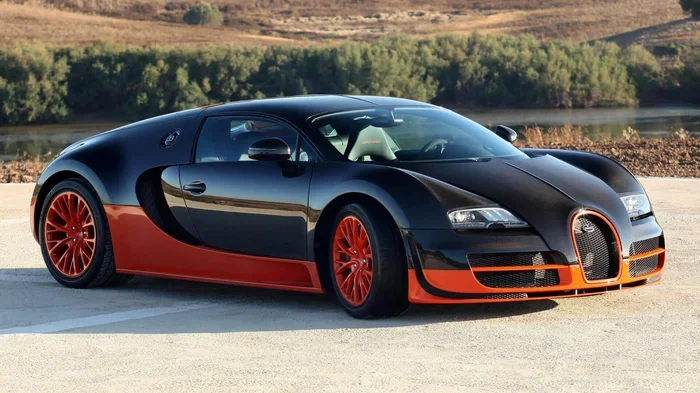
The result was the Bugatti Veyron Super Sport. Announced in 2010, this upgraded version came with serious upgrades to the engine, aerodynamics, and overall design. Bugatti aimed to reclaim the title of the world’s fastest production car. And they did not just win that title. They crushed it.
Why Speed Records Matter
You might wonder why anyone would spend so much money chasing a speed record. The answer is simple. Speed records push innovation. When engineers try to go faster, they have to invent new solutions. These solutions often find their way into everyday cars. The Veyron Super Sport was not just about bragging rights. It was about advancing automotive technology.
Bugatti also wanted to prove something to the world. They wanted to show that a French luxury car maker could take on any challenge. The Veyron Super Sport became a statement of engineering excellence. It showed that speed and luxury could coexist in one incredible machine.
The Beast Under the Hood: Engine and Performance
The Mighty W16 Engine
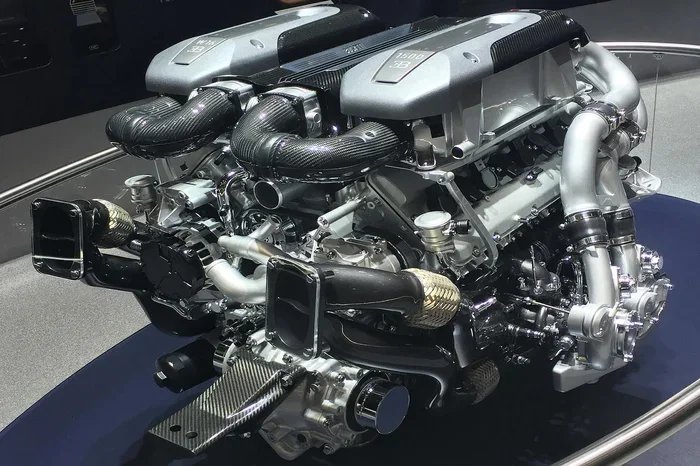
At the heart of the Bugatti Veyron Super Sport sits an 8.0-liter W16 engine. This is not a normal engine. It has 16 cylinders arranged in a unique W shape. Four turbochargers feed this engine with massive amounts of air. The result is mind-blowing power output.
The Veyron Super Sport produced 1,200 horsepower. That is more power than most supercars dream of. The torque figure was equally impressive at 1,106 lb-ft. This meant the car could launch from 0 to 60 mph in just 2.2 seconds. The acceleration was so violent that it felt like being launched from a catapult.
Transmission and Drivetrain
All that power needed somewhere to go. Bugatti chose a seven-speed dual-clutch transmission. This gearbox was incredibly fast at shifting gears. You barely even noticed the shifts happening. The power went to all four wheels through a quad-wheel drive system. This gave the car incredible traction, which is essential when you are going over 250 mph.
The drivetrain was another engineering masterpiece. Bugatti developed a special system that could send power to the front wheels when needed. This improved stability at high speeds. It also made the car safer and easier to control. The combination of power, traction, and control made the Veyron Super Sport a speed demon on both the road and the track.
Aerodynamics: Shaping the Ultimate Speed Machine
The Role of Aerodynamics in Speed
Going fast is not just about having a powerful engine. You also need to manage the air flowing around the car. At speeds over 250 mph, air becomes a serious opponent. It creates drag, lift, and instability. Bugatti solved these problems with advanced active aerodynamics.
The Veyron Super Sport featured a redesigned rear wing. This wing could adjust its angle automatically based on speed. At lower speeds, the wing was flat to reduce drag. At top speed, it tilted upward to create downforce. This kept the car pressed firmly against the road. It was a simple but brilliant solution that made the car safer at extreme speeds.
The Underbody and Diffuser
Most people focus on the top of the car when thinking about aerodynamics. But Bugatti paid close attention to the underbody too. The car featured a large rear diffuser. This diffuser worked with the flat underbody to manage airflow underneath the car. It reduced lift and increased downforce without adding drag.
The combination of the active rear wing and the rear diffuser created a balanced aerodynamic profile. This balance was critical. Without it, the car would have become unstable at high speeds. The aerodynamics of the Veyron Super Sport were so effective that the car remained stable and controllable even at its record-breaking top speed.
Engineering Marvels: What Makes It So Fast
Carbon Fiber Body and Chassis
Weight matters when you are chasing speed records. The Bugatti Veyron Super Sport used a carbon fiber body and chassis. This material is incredibly strong but also very light. Reducing weight helped the car accelerate faster and brake more effectively.
The carbon fiber construction also improved the car’s structural rigidity. A stiffer chassis means better handling and more precise steering. At speeds above 250 mph, every tiny detail matters. Bugatti left nothing to chance when it came to the materials they used.
Braking System and Cooling
Going fast is one thing. Stopping safely is another challenge entirely. The Veyron Super Sport came equipped with massive carbon-ceramic brakes. These brakes could handle extreme heat and repeated hard stops. They gave the driver confidence even at top speeds.
Cooling was also a major concern. The W16 engine generates enormous heat. Bugatti designed a sophisticated cooling system with multiple radiators and air intakes. This system kept the engine at the right temperature even during sustained high-speed runs. Without proper cooling, the engine would overheat and lose power. Bugatti made sure that never happened.
Tires and Wheels
You cannot go 267 mph on ordinary tires. The Bugatti Veyron Super Sport used special Michelin Pilot Sport tires. These tires were developed specifically for the car. They could handle the extreme forces generated at top speed. The tires were also designed to provide excellent grip during acceleration, cornering, and braking.
The wheels were lightweight forged alloy units. They reduced unsprung weight and improved handling. Every component, right down to the tires, was carefully selected for performance. This attention to detail is what set the Veyron Super Sport apart from every other car on the road.
How It Compared to Other Speed Demons
The Competition in 2010
When the Bugatti Veyron Super Sport hit the market, it faced stiff competition. Cars like the SSC Ultimate Aero TT and the Koenigsegg CCXR were also chasing the speed record. But the Veyron Super Sport stood in a league of its own.
The SSC Ultimate Aero TT had previously held the record at 256 mph. The Veyron Super Sport blew past that figure with its 267.856 mph top speed. The margin of victory was significant. Bugatti had not just beaten the competition. They had left it far behind.
Comparison Table
| Car Model | Top Speed | Horsepower | 0-60 mph |
|---|---|---|---|
| Bugatti Veyron Super Sport | 267.856 mph | 1,200 hp | 2.2 sec |
| SSC Ultimate Aero TT | 256.18 mph | 1,183 hp | 2.8 sec |
| Koenigsegg CCXR | 258.2 mph | 1,018 hp | 2.9 sec |
| Original Bugatti Veyron 16.4 | 253.81 mph | 1,001 hp | 2.5 sec |
The table above shows how the Veyron Super Sport dominated its rivals. It had the highest top speed and one of the fastest acceleration times. The combination of power, aerodynamics, and engineering gave Bugatti a clear advantage.
The Legacy of the Veyron Super Sport
A Lasting Impact on the Automotive World
The Bugatti Veyron Super Sport did more than break a speed record. It changed the automotive landscape forever. After the Super Sport, every car maker started thinking bigger. They started pushing the limits of what was possible. The era of the hypercar truly began with the Veyron.
Bugatti built only 48 units of the Veyron Super Sport. This limited production made it one of the rarest cars in the world. Today, these cars are highly sought after by collectors. They represent the peak of automotive engineering from that era. Owning one is like owning a piece of history.
Influence on Modern Hypercars
The engineering lessons learned from the Veyron Super Sport continue to influence modern hypercars. The Bugatti Chiron, which replaced the Veyron, borrowed many of its design principles. Active aerodynamics, quad-turbocharging, and carbon fiber construction all became standard features in modern hypercars.
The Veyron Super Sport also proved that a luxury car could be incredibly fast without sacrificing comfort. You could drive it to the grocery store and then take it to the track. That versatility made it special. It was not just a race car that happened to be street legal. It was a grand tourer that happened to be the fastest car in the world.
Common Mistakes People Make About the Veyron Super Sport
There are a few misconceptions about the Bugatti Veyron Super Sport that are worth addressing. First, many people think it was only good for top speed. In reality, the car was also an excellent daily driver. The comfort features were world-class. The ride quality was smooth and refined.
Second, some people believe the speed record was unofficial. Bugatti worked with independent testers to verify the 267.856 mph figure. The record was recognized by multiple automotive organizations. It was a legitimate achievement backed by solid data.
Finally, people often underestimate the cost of maintaining a Veyron Super Sport. The tires alone cost thousands of dollars each. The engine maintenance requires specialized technicians and expensive parts. Owning one of these cars is a serious financial commitment beyond the purchase price.
Quick Tips for Understanding Hypercar Speed
- Focus on aerodynamics: A powerful engine means nothing if the car cannot stay stable at high speeds. Aerodynamics are just as important as horsepower.
- Consider the drivetrain: Quad-wheel drive systems provide better traction and stability, especially at extreme speeds.
- Think about cooling: High-performance engines generate enormous heat. Effective cooling systems are essential for sustained speed runs.
- Don’t overlook tires: The best speed tires in the world are specifically engineered for the forces generated at 250+ mph.
- Respect the maintenance: Hypercars like the Veyron Super Sport require specialized care and regular professional servicing.
Expert Insights on the Veyron Super Sport’s Speed Record
Automotive experts agree that the Bugatti Veyron Super Sport was a turning point in car history. According to many engineers, the car represented the perfect balance of power, aerodynamics, and control. It was not just about throwing more horsepower at the problem. Bugatti solved multiple engineering challenges simultaneously.
Dr. Wolfgang Schreiber, who oversaw the development of the Veyron, once explained that the car was designed with a singular focus. Every engineering decision came back to one question: how can we make this car faster while keeping it safe and reliable? That philosophy is what made the Veyron Super Sport so successful.
Modern automotive journalists also praise the car’s influence. The Veyron Super Sport proved that hypercars could be both practical and extreme. It opened the door for future generations of ultra-fast production cars. Its impact on the industry cannot be overstated.
Key Takeaways
- Record-Breaking Speed: The Bugatti Veyron Super Sport achieved a verified top speed of 267.856 mph, making it the fastest production car of its time.
- Powerful W16 Engine: Its quad-turbocharged 8.0-liter W16 engine delivered 1,200 horsepower and 1,106 lb-ft of torque.
- Advanced Aerodynamics: Active aerodynamics, including an adjustable rear wing and rear diffuser, kept the car stable at extreme speeds.
- Lightweight Construction: The carbon fiber body and chassis reduced weight and improved overall performance.
- Engineering Excellence: Every component, from the transmission to the Michelin tires, was designed for maximum speed and reliability.
- Lasting Legacy: The Veyron Super Sport influenced an entire generation of hypercars and set new standards for the automotive industry.
- Rare and Valuable: With only 48 units produced, it remains one of the most coveted and collectible cars in the world.
Conclusion
The Bugatti Veyron Super Sport will always be remembered as one of the greatest speed machines ever created. It conquered the speed record through a combination of brute force, brilliant engineering, and relentless innovation. The W16 engine, the active aerodynamics, and the precision engineering all came together to create something truly extraordinary.
When you think about the Veyron Super Sport, you are not just thinking about a fast car. You are thinking about what human beings can achieve when they push boundaries and refuse to accept limits. The speed record it set in 2010 still inspires awe and admiration today. It proved that with enough talent, resources, and determination, anything is possible.
If you are a car enthusiast, the Bugatti Veyron Super Sport should be on your radar. It represents the pinnacle of automotive engineering and the purest expression of speed. Whether you admire it from afar or dream of owning one someday, its legacy will continue to inspire for generations to come. The Veyron Super Sport did not just conquer the speed record. It defined what it means to be the fastest car in the world.
Frequently Asked Questions
What was the top speed of the Bugatti Veyron Super Sport?
The Bugatti Veyron Super Sport achieved a verified top speed of 267.856 mph (431.072 km/h). This made it the fastest production car in the world when it was introduced in 2010. The speed was independently tested and officially recognized by automotive authorities.
How much horsepower does the Bugatti Veyron Super Sport have?
The Veyron Super Sport is powered by an 8.0-liter quad-turbocharged W16 engine that produces 1,200 horsepower. This massive power output allowed the car to accelerate from 0 to 60 mph in just 2.2 seconds. The torque figure is equally impressive at 1,106 lb-ft.
How many Bugatti Veyron Super Sports were made?
Bugatti produced only 48 units of the Veyron Super Sport. This extremely limited production run made it one of the rarest and most exclusive cars ever built. Today, these cars are highly sought after by collectors and can command prices well above their original retail value.
What makes the Bugatti Veyron Super Sport so fast?
The Veyron Super Sport owes its incredible speed to several factors. The massive W16 engine provides enormous horsepower. Advanced active aerodynamics keep the car stable at top speed. A lightweight carbon fiber body reduces weight. And a sophisticated quad-wheel drive system ensures maximum traction. All of these elements work together to make the car extraordinarily fast.
Is the Bugatti Veyron Super Sport still the fastest production car today?
No, the Veyron Super Sport no longer holds the title of the fastest production car. Several modern hypercars have surpassed its top speed, including the Bugatti Chiron Super Sport 300+, which exceeded 300 mph. However, the Veyron Super Sport remains one of the most iconic and influential speed machines ever built.
What is the price of a Bugatti Veyron Super Sport?
The original retail price of the Bugatti Veyron Super Sport was around 2.4 million euros when it was new. Today, the value has increased significantly due to its rarity and historical significance. Depending on condition and mileage, these cars can sell for several million dollars in the current collector market.
=== CONCLUSION ===
The Bugatti Veyron Super Sport proved that speed records are not just about numbers on a clock. They are about vision, engineering, and the relentless pursuit of perfection. When Bugatti set out to conquer the speed record, they did not hold back. They built the most powerful, most advanced, and most capable production car the world had ever seen.
From its mighty W16 engine to its sophisticated active aerodynamics, every element of the Veyron Super Sport was designed with one goal in mind. That goal was to go faster than anything else on four wheels. And it succeeded brilliantly.
Now that you know the full story of how the Bugatti Veyron Super Sport conquered the speed record, you can appreciate this incredible machine on a deeper level. It is more than just a fast car. It is a masterpiece of engineering and a testament to human ambition. The next time you see one on the road, remember that you are looking at a piece of automotive history that changed the world forever.