How Do You Escalate a Customer Service Complaint Effectively
Knowing how to escalate a customer service complaint can save you time, money, and frustration. Whether you are dealing with a car dealership, an insurance claim, or any service provider, the escalation process gives you a clear path to resolution. This guide walks you through every step, from your first contact to reaching a senior manager. You will learn proven complaint handling strategies that actually work in real-world situations.
Dealing with a bad customer service experience is never fun. You call a company, explain your problem, and somehow end up going in circles. Maybe the representative seems unhelpful, or perhaps the solution they offer does not even fix the issue. At some point, you need to know how to escalate a customer service complaint the right way. This skill can make all the difference between a frustrating dead end and a real resolution.
Escalation is not about being aggressive or rude. It is about using the right process to get your problem noticed by someone with the authority to fix it. Whether you are dealing with a car dealership, an insurance company, or any service provider, the steps are surprisingly similar. This guide breaks down the entire escalation process into simple, actionable steps you can follow today.
We will cover everything from preparing your case to writing a formal complaint letter. You will also learn common mistakes to avoid and expert tips that professionals use every day. By the end, you will feel confident walking into any customer service interaction knowing exactly what to do if things do not go as planned.
Key Takeaways
- Start with the basics: Always try the first-level support team before escalating to save time for both sides.
- Document everything: Keep records of conversations, dates, and reference numbers to strengthen your case.
- Know the hierarchy: Understanding the customer service escalation structure helps you reach the right person faster.
- Use multiple channels: Phone, email, social media, and written letters each have different escalation speeds and effectiveness.
- Stay calm and factual: Emotional appeals work less than clear, documented evidence and polite persistence.
- Follow up consistently: Tracking your complaint and following up prevents it from falling through the cracks.
- External options exist: When internal escalation fails, regulatory bodies and consumer protection agencies can help.
📑 Table of Contents
- What Does It Mean to Escalate a Complaint?
- Step-by-Step Guide to Escalating a Complaint
- Channels for Escalating a Complaint
- Common Mistakes When Escalating Complaints
- When to Consider External Escalation Options
- Expert Tips for a Successful Escalation
- Real-World Examples of Successful Complaint Escalation
- Key Takeaways
- Conclusion
What Does It Mean to Escalate a Complaint?
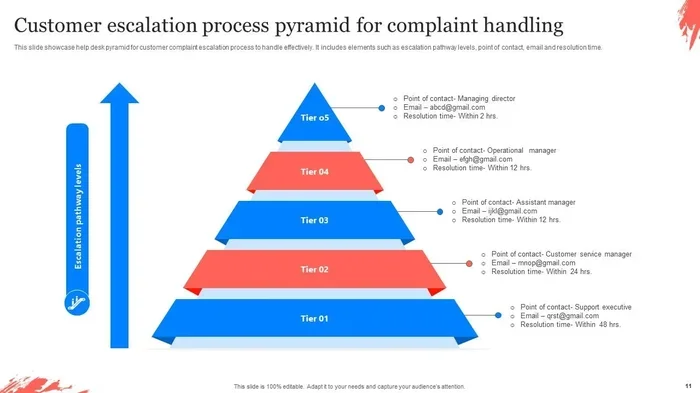
Escalation means moving your complaint up the customer service chain. When the first person you speak with cannot or will not resolve your issue, you ask for someone with more authority. Think of it like climbing a ladder. Each rung represents a higher level of decision-making power.
The customer service escalation process usually follows a clear path. You start with a frontline representative. If they cannot help, you move to a supervisor. If the supervisor cannot resolve it, you go to a manager or a dedicated complaints team. Some companies also have a dedicated customer advocacy or ombudsman role for the most serious issues.
Understanding this hierarchy is the first step in learning how to escalate a customer service complaint effectively. You do not want to skip levels unnecessarily, because that can slow things down. But you also do not want to stay stuck at the bottom when the person in front of you clearly cannot help.
Why Escalation Matters
Escalation matters because most frontline representatives have limited power. They can offer standard solutions, but they cannot override company policies or approve unusual compensation. When you escalate, you hand your problem to someone who has the authority to make real decisions. This is especially true in industries like automotive maintenance and repair, where complex issues often require senior input.
For example, if you are trying to get a service warranty honored after a repair, the first technician you speak with might not have access to those records or the authority to approve a redo. Escalating to a service manager changes everything. The same applies when you are dealing with a car diagnostic issue that the initial support team cannot properly address.
Step-by-Step Guide to Escalating a Complaint
The process of escalating a complaint does not have to be complicated. Follow these steps in order, and you will give yourself the best chance of a successful resolution.
Step 1: Try to Resolve It at the First Level
Before you escalate, give the first representative a fair chance. Clearly explain your problem. State exactly what went wrong and what outcome you expect. Sometimes the first person can fix things right away. Skipping this step can actually hurt your case later, because companies often require proof that you tried to resolve the issue first.
Keep your tone calm and professional. Be specific about the problem. Instead of saying “your service is terrible,” say “my vehicle was returned with the same issue after three repair attempts.” Specific details make a much stronger impression.
Step 2: Gather All Your Documentation
Before you escalate, gather every piece of evidence you have. This includes receipts, contracts, emails, chat logs, phone call records, and reference numbers. Write down the names and dates of every conversation you have had with customer service.
Documentation is your strongest weapon in any complaint escalation. When you can show a clear paper trail, it becomes much harder for the company to ignore your issue. For instance, if you are dealing with a car damage claim, having photos, repair estimates, and correspondence on hand makes your case much more compelling.
Here is a quick checklist of what to gather before escalating:
- Receipts and invoices
- Contracts or service agreements
- Email and chat transcripts
- Phone call dates and representative names
- Photos or videos of the problem
- Reference or case numbers
- Any written promises made by representatives
Step 3: Ask for the Supervisor or Manager
When the first representative cannot resolve your issue, politely ask to speak with their supervisor or manager. Use phrases like “I would like to speak with someone who has more authority to help me with this” or “Can I speak with a manager about this issue?”
Do not be demanding or aggressive. Simply state that you need a higher level of support. Most companies train their supervisors specifically to handle escalated complaints, so this is a natural and expected step in the process.
Step 4: Clearly State Your Desired Outcome
When you reach a supervisor or manager, be very clear about what you want. Do not leave room for guesswork. Say something like, “I would like a full refund for the diagnostic fee,” or “I need this repair redone at no additional cost.”
Having a specific, reasonable outcome in mind shows that you are serious and organized. It also makes it easier for the person you are speaking with to actually help you. Vague complaints like “fix this” are much harder to act on than clear, specific requests.
Step 5: Follow Up in Writing
After any escalation conversation, follow up with a written summary. Send an email that confirms what was discussed, what promises were made, and what the next steps are. This creates a paper trail and holds the company accountable.
Writing things down also protects you if the company later claims nothing was agreed upon. Keep a copy of every email you send and receive. This is especially important when dealing with warranty issues or service guarantees related to vehicle maintenance.
Channels for Escalating a Complaint
Not all escalation channels are created equal. The method you choose can affect how quickly and effectively your complaint gets resolved. Here are the most common channels and when to use each one.
Phone Escalation
Phone calls are the most direct way to escalate a complaint. You can explain your issue in real time and get immediate answers. When you call, ask for a supervisor right away if the first person cannot help. Keep your emotions in check and stick to the facts.
Phone escalation works well for urgent issues, especially when you need a quick decision. If you are dealing with a time-sensitive matter like a vehicle breakdown or a warranty expiration, calling is usually your best bet.
Email Escalation
Email gives you a written record of your complaint. It is perfect for detailed explanations and for attaching supporting documents. When you email, address it to a specific department or manager if you can find their contact information.
Use a clear subject line like “Formal Complaint Escalation: [Your Issue].” In the body, summarize the problem, list the steps you have already taken, and state your desired resolution. Email escalation is especially useful for complex issues that require you to share multiple documents.
Social Media Escalation
Many companies now monitor social media closely. A public complaint on platforms like X (formerly Twitter) or Facebook can sometimes get faster results than a phone call. Companies want to avoid negative public attention, so they often prioritize social media complaints.
However, social media escalation has its downsides. Your complaint becomes public, which may not be ideal for sensitive issues. Use this channel for problems where a public push could help, but move to private channels for personal or confidential matters.
Written Letter Escalation
A formal letter is the most powerful escalation tool for serious complaints. It shows that you are willing to invest time and effort, which signals that your issue is important. Address the letter to the highest relevant authority, such as the regional manager or the corporate customer service director.
Include all relevant details, dates, reference numbers, and a clear statement of what you want. Send the letter via certified mail so you have proof of delivery. This method works especially well when dealing with automotive service centers or dealership complaints.
Common Mistakes When Escalating Complaints
Even with the best intentions, people often make mistakes that hurt their escalation efforts. Avoiding these common pitfalls can significantly improve your chances of success.
Being Emotional or Aggressive
Losing your temper might feel satisfying in the moment, but it rarely helps your case. Customer service representatives and managers are more likely to help someone who is calm, respectful, and factual. Anger can actually cause the other person to become defensive and less willing to help.
Stay focused on the problem, not the person. Remember that the representative is not the one who caused your issue. They are simply the person in front of you who can help fix it. A polite and firm approach almost always works better than an aggressive one.
Skipping the First Level
Jumping straight to a manager or executive might seem like a shortcut, but it can actually backfire. Many companies require that you attempt resolution at the first level before they will formally escalate your case. Skipping this step can also make you seem unreasonable to the people you are trying to reach.
Always try the frontline team first. Document your attempt. If they cannot help, then move up. This shows that you have followed the proper process, which makes your escalation more credible.
Not Following Up
One of the biggest mistakes people make is escalating a complaint and then just waiting. If you do not follow up, your complaint can easily get lost in the system. Companies handle thousands of complaints every day, and yours might slip through the cracks without regular check-ins.
Set a timeline for yourself. If you do not hear back within a few days, follow up. Keep track of every interaction. Persistence is one of the most powerful tools in the complaint escalation process.
Being Vague About Your Problem
Fuzzy complaints lead to fuzzy results. If you tell a representative “your service is bad,” they will not know what to do. But if you say “I was charged $200 for a diagnostic that did not identify the actual problem, and I have the receipt to prove it,” now you have a clear, actionable issue.
Always be as specific as possible. Include dates, amounts, names, and exact descriptions of what went wrong. The more detail you provide, the easier it is for the escalation team to help you.
When to Consider External Escalation Options
Sometimes, internal escalation does not work. The company may refuse to help, or their resolution may not be satisfactory. In these cases, you have options outside the company itself. Knowing when and how to use these options is a key part of the escalation process.
Filing a Complaint with Regulatory Bodies
Many industries have regulatory agencies that oversee customer complaints. For automotive services, this might include state consumer protection offices or the Better Business Bureau. For financial services, there are specific regulatory bodies that handle disputes. Filing a complaint with these agencies puts pressure on the company to resolve your issue.
These external bodies often have the authority to investigate and mediate disputes. They can also impose penalties on companies that violate consumer protection laws. This is a powerful option when all internal escalation has failed.
Using Social Media and Review Platforms
Writing a detailed, factual review on platforms like Google, Yelp, or Trustpilot can sometimes prompt a company to take your complaint more seriously. Companies monitor these platforms closely because negative reviews directly affect their business.
Be careful with this approach. Keep your review factual and avoid exaggeration or personal attacks. Stick to the facts of your experience and what resolution you sought. A well-written, honest review is far more effective than an emotional rant.
Seeking Legal Assistance
For serious disputes involving large amounts of money or significant harm, legal action may be an option. Small claims court is designed for exactly these situations and does not require a lawyer in most cases. Before going legal, however, make sure you have exhausted all other escalation channels.
Legal action should always be a last resort. It takes time, money, and energy. But for cases where a company has clearly violated your rights or refused to honor a legitimate claim, it can be the final step in the escalation process.
Expert Tips for a Successful Escalation
Here are some proven tips from customer service professionals that can help you get better results when you escalate a complaint.
Use the Name of the Person You Are Speaking With
Using someone’s name creates a personal connection. It also makes the interaction feel more like a conversation and less like a confrontation. When a representative hears their name used respectfully, they tend to be more engaged and helpful.
Ask “What Can You Do for Me?” Instead of Complaining
This simple reframe shifts the conversation from blame to problem-solving. Instead of focusing on what went wrong, you focus on what the person in front of you can do to fix it. This approach is far more effective at getting results.
Know Your Rights
Familiarize yourself with consumer protection laws in your area. Knowing your rights gives you confidence and provides a factual basis for your complaint. For example, if you are dealing with a vehicle warranty issue, knowing what the warranty covers and for how long gives you a strong foundation for your escalation.
Be Patient but Persistent
Escalation is rarely a one-step process. You may need to contact the company multiple times, speak with several people, and follow up repeatedly. Patience and persistence go hand in hand. Keep detailed records of every interaction and stay organized throughout the process.
Real-World Examples of Successful Complaint Escalation
Let us look at a few real-world scenarios to see how the escalation process works in practice.
Example 1: The Overcharged Diagnostic Fee. A customer took their car to a local shop for a diagnostic. The shop charged $300 but could not identify the problem. The customer first called the shop and spoke with the service advisor, who offered a partial refund. The customer politely declined and asked to speak with the shop manager. The manager reviewed the case and offered a full refund plus a free re-diagnosis. The customer had documented the original estimate and the failed service, which strengthened their case significantly.
Example 2: The Denied Warranty Claim. A vehicle owner filed a warranty claim for a part that failed within the warranty period. The dealership denied the claim, saying the part was not covered. The owner escalated by sending a formal email to the dealership general manager, attaching the warranty document and repair records. The general manager reviewed the claim, found an error in the initial assessment, and approved the warranty repair at no cost to the owner.
Example 3: The Insurance Claim Dispute. A driver filed a claim after hitting a deer and totaling their vehicle. The insurance company offered a payout far below the vehicle’s actual value. The driver escalated by filing a formal complaint with the state insurance commission, providing independent appraisals and market value data. The insurance company revised their offer to a fair market value within two weeks of the external complaint being filed.
Key Takeaways
- Start at the first level: Always attempt resolution with the frontline team before escalating to higher authorities.
- Document everything: Keep detailed records of all interactions, including dates, names, and reference numbers.
- Be clear and specific: State your problem and desired outcome clearly to avoid confusion and delays.
- Use the right channel: Choose the escalation method that best fits your situation, whether phone, email, or formal letter.
- Stay calm and professional: Politeness and persistence are far more effective than anger and aggression.
- Know when to go external: Regulatory bodies, review platforms, and legal options exist when internal escalation fails.
- Follow up consistently: Do not let your complaint sit without checking on its status regularly.
Conclusion
Learning how to escalate a customer service complaint effectively is one of the most valuable skills you can develop. Whether you are dealing with an automotive service issue, an insurance dispute, or any other customer service problem, the escalation process gives you a clear path to resolution. The key is to be prepared, organized, and persistent.
Start with the basics. Document your issue. Follow the escalation chain. Use the right channels. And when all else fails, do not be afraid to explore external options. You deserve to have your concerns heard and resolved, and you have every right to push for a fair outcome.
The next time you find yourself stuck in a customer service loop, remember these steps. Take a deep breath, gather your evidence, and calmly work your way up the chain. With the right approach, you can turn a frustrating experience into a successful resolution.
Frequently Asked Questions
What is the first step in escalating a customer service complaint?
The first step is always to try resolving the issue with the frontline representative. Clearly explain your problem, provide any relevant details, and state what outcome you are looking for. If they cannot help, then you move to the next level in the escalation process.
How do I know when it is time to escalate my complaint?
It is time to escalate when the first representative cannot or will not resolve your issue after a reasonable effort. If you have been going in circles, received an unsatisfactory solution, or feel that your concern is not being taken seriously, it is time to ask for a supervisor or manager.
What should I include in a formal complaint escalation email?
Your email should include a clear subject line, a summary of the problem, dates and names of all previous interactions, copies of any supporting documents, and a specific statement of the outcome you want. Keep the tone professional and factual throughout.
Can escalating a complaint damage my relationship with a company?
Not if you do it correctly. Companies expect customers to escalate when they are unhappy. Escalation through proper channels shows that you are serious about resolving the issue. As long as you remain polite and factual, escalation will not harm your relationship with the company.
How long should I wait before following up on an escalated complaint?
Follow up within three to five business days if you have not heard back. If a specific timeline was given during your escalation conversation, respect that deadline. Regular follow-ups show that you are engaged and serious about finding a resolution.
What external options are available if internal escalation fails?
If internal escalation does not work, you can file a complaint with consumer protection agencies, regulatory bodies, or the Better Business Bureau. You can also leave factual reviews on platforms like Google or Yelp. For serious disputes, small claims court or legal consultation may be appropriate options.