How Long Can Frozen Food Stay in Your Car Without Spoiling
Frozen food should never stay in your car longer than two hours in warm weather and ideally less than 24 hours in cool conditions. The car interior temperature plays a huge role in determining food safety, and proper insulation can extend the safe window significantly. Understanding temperature danger zones helps you prevent foodborne illness and reduce food waste during transport.
Have you ever loaded up groceries and then gotten distracted by a phone call, a detour, or a sudden errand? Maybe you bought a big haul of frozen food and thought, “I’ll just leave it in the car for a few minutes.” Those few minutes can turn into an hour, and suddenly you are wondering if your frozen meals are still safe to eat.
The truth is, how long frozen food can stay in your car depends on several factors. The outside temperature, the type of car you drive, whether the windows are cracked open, and the kind of food all matter. Getting this wrong can lead to food spoilage, wasted money, or even foodborne illness. This guide breaks down everything you need to know about frozen food storage in vehicles so you can keep your groceries safe and your family healthy.
Whether you are a busy parent juggling errands, a college student stocking up on frozen goods, or someone who loves a good road trip food haul, understanding car interior heat and its effects on frozen items is essential. Let us dive into the details and give you practical answers you can actually use.
Key Takeaways
- Two-Hour Rule: Frozen food should not sit in a warm car for more than two hours before being transferred to a freezer or refrigerator.
- Insulation Matters: Using a cooler bag or insulated container can extend the safe storage time for frozen goods significantly.
- Temperature Is Everything: A car’s interior can reach 140°F or more in summer, which rapidly accelerates thawing and spoilage.
- Ice Packs Help: Adding reusable ice packs to your frozen food setup keeps items colder for longer periods.
- Know the Danger Zone: The temperature range between 40°F and 140°F is where bacteria grow fastest, making food unsafe quickly.
- Plan Your Trips: Making frozen food the last item you buy and going straight home minimizes risk.
- Refreezing Has Limits: Not all thawed frozen foods are safe to refreeze, so understanding the rules matters.
📑 Table of Contents
- Understanding How Cars Affect Frozen Food
- The Two-Hour Rule: The Golden Standard for Frozen Food Safety
- Best Practices for Transporting Frozen Food in Your Car
- Seasonal Considerations: Summer vs. Winter
- Common Mistakes People Make with Frozen Food in Cars
- Quick Tips for Keeping Frozen Food Safe in Your Car
- Expert Insights on Frozen Food Transport
- Key Takeaways
- Conclusion
Understanding How Cars Affect Frozen Food
Your car might feel like a safe place to stash groceries, but the reality is quite different. A parked car is essentially a metal box that heats up fast. Even on a mild day, the car interior temperature can rise dramatically in a short amount of time.
The Greenhouse Effect Inside Your Vehicle
Sunlight passes through your car windows and heats up the seats, dashboard, and air inside. This creates a greenhouse effect. On a 70°F day, the interior of a car can reach 100°F within 20 minutes. On a 90°F day, it can climb to 140°F or higher in under an hour. That is not a freezer. That is not even a refrigerator. That is the temperature danger zone where bacteria multiply rapidly.
Here is what happens to frozen food in these conditions:
- The outer layer of frozen food starts thawing within minutes.
- As the surface thaws, moisture creates the perfect breeding ground for bacteria.
- The center may still be frozen, but the edges become a risk zone.
- Ice crystals form and melt, changing the texture and taste of your food.
- Refreezing thawed food can cause freezer burn and reduce quality.
Why Car Type Matters
Not all cars heat up at the same rate. A car with tinted windows or a sunroof might trap more heat. A car parked in direct sunlight will warm up faster than one in the shade. Even the color of your car plays a role. Dark-colored vehicles absorb more heat than lighter ones. All of these factors influence how quickly your frozen food starts to thaw.
Also consider the size of your car. A compact sedan has less air volume, so it heats up faster. An SUV or truck has more space but also more glass surface area in many cases. Neither is ideal for long-term frozen food storage.
The Two-Hour Rule: The Golden Standard for Frozen Food Safety
The United States Department of Agriculture (USDA) has a clear guideline for perishable foods left out of refrigeration. The two-hour rule states that perishable items should not be left at temperatures above 40°F for more than two hours. This rule applies directly to frozen food that has started to thaw in a warm car.
What Happens After Two Hours?
Once frozen food sits in the temperature danger zone (between 40°F and 140°F) for more than two hours, bacteria can reach unsafe levels. At this point, the food is no longer safe to eat, even if it still looks and smells fine. Some bacteria do not change the smell, taste, or appearance of food, which makes this rule especially important.
Here is a breakdown of safe timeframes based on conditions:
- Below 60°F outside: You may have up to two hours before the food becomes a concern.
- 60°F to 80°F outside: The two-hour rule applies strictly. Do not exceed it.
- Above 80°F outside: Reduce the safe window to one hour or less.
- Above 90°F outside: Frozen food becomes unsafe in as little as 30 minutes if left unprotected.
Is It Ever Safe to Refreeze Thawed Food?
This is a common question, and the answer depends on the situation. If frozen food has thawed but still contains ice crystals or feels refrigerator-cold (below 40°F), it is generally safe to refreeze. However, the quality will suffer. The texture may change, and freezer burn can develop faster.
If the food has fully thawed and been at room temperature for more than two hours, it should be thrown away. This applies to raw meat, poultry, seafood, and dairy-based frozen meals. Cooked frozen foods that have thawed fall into the same category. When in doubt, throw it out. No meal is worth the risk of foodborne illness.
Best Practices for Transporting Frozen Food in Your Car
Nobody wants to throw away a bag full of groceries. The good news is that with a few simple steps, you can significantly extend the safe window for frozen food in your car. These food safety tips are easy to follow and make a big difference.
Use a Cooler Bag or Insulated Container
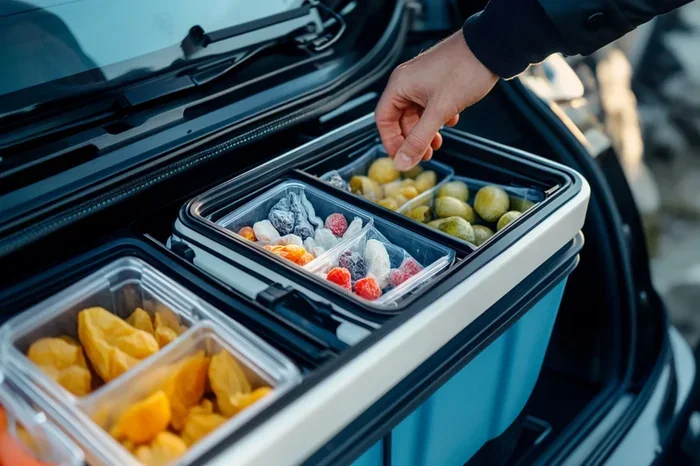
A cooler bag is the single best investment for anyone who regularly transports frozen or perishable items. Insulated bags help maintain cold temperatures by slowing down heat transfer. They are not as cold as a freezer, but they keep food much safer than a regular car seat or trunk.
Look for cooler bags with thick insulation and a secure zipper seal. Some options even come with built-in ice packs. Place your frozen items in the cooler bag immediately after checkout and keep it in the air-conditioned passenger area of your car, not in the trunk.
Add Reusable Ice Packs
Ice packs are a game-changer for frozen food storage in cars. They keep the temperature around your groceries much lower than the car’s ambient temperature. Gel-based ice packs are reusable and last for hours. You can also use frozen water bottles as a budget-friendly alternative.
Place ice packs on top of and below your frozen items. Cold air sinks, so layering ice packs strategically helps maintain a colder environment inside the cooler bag. The more ice packs you use, the longer your food stays frozen.
Make Frozen Food Your Last Purchase
This is one of the simplest and most effective tips. Always pick up frozen and refrigerated items at the very end of your shopping trip. The less time they spend outside of a freezer or refrigerator, the better. This single habit can reduce your risk of food spoilage significantly.
Plan your grocery route so that the frozen food aisle is your final stop. If you use a grocery delivery service, ask the driver to pack frozen items separately and use extra insulation. This way, your frozen goods arrive in the best possible condition.
Keep the Car Cool
If you must leave frozen food in the car for any reason, try to keep the car interior temperature as low as possible. Park in the shade. Crack the windows slightly to allow airflow. Use a sunshade on the windshield. Every little bit helps reduce the car interior heat that accelerates thawing.
Some people use a portable car thermometer to monitor the temperature inside their vehicle. This is a smart move, especially during summer months. If the temperature inside the car stays below 40°F, your frozen food has a longer safe window. But if it climbs above 40°F, the clock starts ticking on the two-hour rule.
Go Straight Home
The best practice is to go directly home after purchasing frozen food. Do not stop for coffee. Do not run other errands. Get the groceries into your freezer as quickly as possible. If you live more than 30 minutes away from the store, a cooler bag with ice packs becomes even more important.
Seasonal Considerations: Summer vs. Winter
The time of year has a massive impact on how long frozen food can safely stay in your car. Let us look at both scenarios so you are prepared no matter the season.
Summer Heat and Frozen Food Risks
Summer is the most dangerous season for frozen food transport. High outdoor temperatures mean the car interior temperature skyrockets. Even a 15-minute stop at a mailbox can push frozen food into the danger zone on a hot day.
During summer, follow these extra precautions:
- Always use a cooler bag with ice packs, no exceptions.
- Never leave frozen food in a parked car, even for “just a minute.”
- Place the cooler bag on the floor of the back seat where it is cooler.
- If you have air conditioning running, keep the cooler bag on the passenger side floor.
- Consider using a portable 12V car freezer for long road trips.
Winter Cold and False Security
You might think winter is safer for frozen food storage in cars, and to some extent it is. Cold outdoor temperatures can keep a car cooler. But here is the catch: a cold car can also freeze items that should not freeze. Liquid-based frozen meals, canned goods, and fresh produce can be damaged by extreme cold.
Also, if you park in a heated garage and then move the car to a cold driveway, the temperature swings can cause condensation. This moisture can affect food quality and packaging. In winter, the two-hour rule still applies if the food has thawed and warmed above 40°F.
Common Mistakes People Make with Frozen Food in Cars
We have all been guilty of some of these habits. Recognizing common mistakes is the first step toward better food safety practices.
Mistake 1: Thinking “Just a Few Minutes” Is Safe
Many people believe that a short stop will not matter. But a car can heat up incredibly fast. Five minutes in a hot car can be enough to start thawing the outer layer of frozen food, especially items with thin packaging.
Mistake 2: Leaving Frozen Food in the Trunk
The trunk of a car is not insulated. It is essentially a big metal box that heats up fast. Frozen food left in the trunk warms up much faster than food kept in the air-conditioned cabin. Always place frozen items in the passenger area or a cooler bag.
Mistake 3: Ignoring the Smell Test
Some people rely on their nose to determine if food is still good. But many harmful bacteria do not produce a noticeable smell. If frozen food has been in the car longer than the safe window, do not trust your nose. Follow the time guidelines instead.
Mistake 4: Overpacking the Cooler Bag
Stuffing too many items into a cooler bag reduces airflow and can create warm pockets. Leave some space so cold air can circulate around the items. A loosely packed cooler bag keeps food colder for longer than an overstuffed one.
Mistake 5: Forgetting About Thawed Raw Meat
Raw meat that has thawed in a warm car is a serious food safety concern. Bacteria like Salmonella and E. coli can grow rapidly on thawed raw meat. If raw meat has been in the car for more than two hours, it should be discarded immediately. Do not taste it to check.
Quick Tips for Keeping Frozen Food Safe in Your Car
Here is a quick-reference list you can save or share with family members:
- Use a cooler bag for every trip with frozen items.
- Add at least two reusable ice packs per bag of frozen food.
- Place frozen food in the passenger area, not the trunk.
- Go directly home after shopping.
- Follow the two-hour rule without exceptions.
- In summer, reduce the safe window to one hour or less.
- Never leave frozen food in a parked car overnight.
- Check your cooler bag seal for gaps or wear regularly.
- Use a car thermometer to monitor interior temperature.
- When in doubt, throw it out. No food is worth the risk.
Expert Insights on Frozen Food Transport
Food safety experts consistently emphasize that the cold chain is only as strong as its weakest link. The cold chain refers to the uninterrupted series of storage and distribution activities that maintain a safe temperature for perishable products. Your car is one link in that chain, and it is often the weakest one.
According to food safety professionals, the key to preventing foodborne illness from improperly stored frozen food is simple: minimize the time food spends outside of a controlled temperature environment. Every minute counts. The longer frozen food stays in the temperature danger zone, the higher the risk of bacterial contamination.
Experts also recommend labeling frozen items with the date and time they were removed from the freezer. This simple habit helps you track how long food has been out of safe storage conditions. It is especially helpful for families with busy schedules who may not always make it home immediately after grocery shopping.
Key Takeaways
- The Two-Hour Rule Is Non-Negotiable: Frozen food left in a warm car for more than two hours should be discarded to avoid foodborne illness.
- Insulation Extends Safe Storage: A good cooler bag with ice packs can double or triple the safe window for your frozen goods.
- Car Interior Heat Is the Enemy: A parked car can reach 140°F or more, turning your frozen food into a bacteria breeding ground within minutes.
- Season Changes Everything: Summer drastically shortens the safe time, while winter creates its own set of risks like over-freezing.
- Raw Meat Requires Extra Care: Thawed raw meat left in a warm car should never be refrozen or consumed after two hours.
- Plan Ahead for Success: Making frozen food your last purchase and going straight home is the easiest way to protect your groceries.
Conclusion
How long can frozen food stay in your car without spoiling? The honest answer is: not as long as most people think. The two-hour rule is your best friend when it comes to frozen food safety. In warm weather, that window shrinks even further. The good news is that with a little planning and the right tools like a cooler bag and ice packs, you can keep your groceries safe and reduce food waste at the same time.
Remember that your car is not a freezer. It is not even close. Treating it as a temporary storage solution with clear time limits will protect your health and your wallet. Every time you follow the two-hour rule and use proper frozen food storage practices, you are making a smart choice for your family.
Start implementing these tips on your next grocery run. You will feel more confident knowing your frozen food is safe, and you will waste less food in the process. Share this guide with friends and family who might benefit from these simple but life-changing food safety habits. Stay cool, stay safe, and keep your frozen food where it belongs: in the freezer.
Frequently Asked Questions
Can I leave frozen food in my car overnight?
No, you should never leave frozen food in your car overnight. The car interior temperature can fluctuate wildly, and even in winter, food can thaw and refreeze, creating a food safety risk. Always transfer frozen groceries directly to your freezer upon arriving home.
What is the temperature danger zone for food?
The temperature danger zone is between 40°F and 140°F. In this range, bacteria multiply rapidly, making food unsafe to eat. Frozen food that enters this zone should be returned to a freezer or refrigerator within two hours maximum.
How can I keep frozen food cold in my car during summer?
Use a well-insulated cooler bag with plenty of reusable ice packs. Place the cooler in the air-conditioned passenger area, not the trunk. Make frozen food your last purchase and go straight home to minimize exposure to car interior heat.
Is it safe to refreeze food that thawed in the car?
It depends on the situation. If the food still contains ice crystals or feels refrigerator-cold (below 40°F), it is generally safe to refreeze. However, if the food has been above 40°F for more than two hours, it should be discarded to prevent foodborne illness.
Does the type of frozen food matter for car storage safety?
Yes, it does. Items with higher water content like ice cream and frozen vegetables thaw faster than dense items like frozen meat blocks. Raw meat that has thawed poses a higher food safety risk than other items because of potential bacterial contamination.
How does parking location affect frozen food in a car?
Parking in direct sunlight can raise the car interior temperature by 20 to 40 degrees compared to parking in the shade. Always try to park in shaded areas or use a windshield sunshade to reduce heat buildup and protect your frozen food from thawing too quickly.