5 Safety Rules for a Forklift Every Operator Should Know
Forklift safety is not optional. It saves lives, prevents injuries, and keeps workplaces running smoothly. Every forklift operator should know the five core safety rules that protect them on the job. These rules cover inspections, load stability, speed control, protective gear, and pedestrian awareness. Following them can mean the difference between a safe shift and a serious accident.
Every day, thousands of workers operate forklifts in warehouses, construction sites, and factories. These powerful machines make jobs easier and faster. But they also come with real risks. Forklift accidents happen more often than most people think. And when they do, the consequences can be severe.
The good news is that most forklift injuries are preventable. How? By following a clear set of safety rules for a forklift. These rules exist for a reason. They protect the operator, the people nearby, and the workplace itself. In this article, we will walk you through the five most important safety rules every forklift operator should know.
Whether you are a seasoned forklift operator or just starting out, this guide has something for you. We will break down each rule in simple terms. You will learn practical tips, common mistakes, and expert insights. By the end, you will have a solid understanding of how to stay safe every single time you get behind the wheel.
Key Takeaways
- Pre-Operation Inspections: Always check your forklift before use to catch problems early.
- Load Capacity Matters: Exceeding weight limits causes tip-overs and deadly crashes.
- Speed Kills: Driving too fast is a leading cause of forklift injuries.
- Gear Up Properly: Wearing a seatbelt and protective equipment reduces injury severity.
- Pedestrian Awareness: Watch for people at all times and use horns and mirrors.
- Certification Is Non-Negotiable: Only trained and certified operators should drive a forklift.
- Maintenance Prevents Accidents: Regular upkeep keeps forklifts in safe working condition.
📑 Table of Contents
- Why Forklift Safety Rules Matter
- Rule 1: Always Conduct a Pre-Operation Inspection
- Rule 2: Understand Load Capacity and Stability
- Rule 3: Follow Speed Limits and Safe Driving Practices
- Rule 4: Wear Proper Safety Equipment
- Rule 5: Know Pedestrian Safety and Workplace Awareness
- Common Forklift Mistakes to Avoid
- The Role of Forklift Training and Certification
- Maintenance: Keeping Your Forklift in Safe Condition
- Conclusion
Why Forklift Safety Rules Matter
Forklifts are not like regular cars. They are heavier. They have different steering. They carry heavy loads at dangerous heights. Because of these differences, forklift workplace safety requires special attention. The rules exist because real dangers are present every time a forklift is in motion.
According to OSHA, forklift-related incidents cause dozens of deaths each year in the United States. Many more result in serious injuries. Broken bones, crushed limbs, and traumatic brain injuries are just a few examples. These incidents often happen because operators skip basic safety steps.
The Cost of Ignoring Safety
Ignoring forklift safety rules has a price. That price comes in many forms:
- Human cost: Injuries and fatalities affect real people and their families.
- Financial cost: Workplace accidents lead to medical bills, legal fees, and lost productivity.
- Operational cost: Accidents shut down work sites and delay projects.
- Reputation cost: Companies with poor safety records lose trust and face penalties.
Understanding why safety rules matter is the first step toward making them a habit. When you internalize the reasons behind the rules, following them becomes second nature.
Rule 1: Always Conduct a Pre-Operation Inspection
The first and most important rule is to inspect your forklift before every single shift. This is called a pre-operation inspection. It takes only a few minutes. But it can prevent major problems down the road.
What to Check During Your Inspection
A thorough pre-operation inspection covers several key areas:
- Tires: Look for damage, low pressure, or worn treads. Bad tires cause instability.
- Forks: Check for cracks, bends, or excessive wear. Damaged forks cannot hold loads safely.
- Hydraulics: Look for leaks around the hoses and cylinders. Leaks mean failure is possible.
- Brakes: Test both the foot brake and the parking brake. Brakes are your best friend in an emergency.
- Lights and Horns: Make sure the horn sounds and the lights work. These are your warning signals.
- Seatbelt: Check that the seatbelt is in good condition and retracts properly.
- Fluid Levels: Check the oil, coolant, and hydraulic fluid levels.
- Mast Chain: Inspect the chain for wear or damage.
Think of this inspection like a pilot checking their plane before takeoff. It is a routine that keeps everyone safe. If you find any problem during the inspection, do not operate the forklift. Report the issue to your supervisor immediately and wait for repairs.
Quick Tip for Inspections
Keep a checklist on your clipboard or phone. Going through a checklist ensures you never skip a step. Even experienced operators can forget something when they are in a rush. A checklist removes the guesswork.
Rule 2: Understand Load Capacity and Stability
Every forklift has a load capacity rating. This number tells you the maximum weight the forklift can safely carry. Exceeding this limit is one of the fastest ways to cause a tip-over accident.
How Load Capacity Works
The load capacity is not just about weight. It also depends on the load center. The load center is the distance from the forks to the center of gravity of the load. A longer load shifts the center of gravity forward. This reduces the forklift’s lifting capacity.
Here are some key points to remember:
- Never exceed the rated capacity: Even a small overload can cause a disaster.
- Check the data plate: Every forklift has a data plate that shows its capacity.
- Know the load center: If you are lifting an unusual load, the capacity may be lower.
- Secure the load: Make sure the load is balanced and stable before moving.
The Danger of Tip-Overs
Forklift tip-overs are one of the most common and deadly types of forklift accidents. They happen when the center of gravity shifts outside the forklift’s stability triangle. Speed, sharp turns, elevated loads, and uneven ground all increase the risk.
If a tip-over happens, your best protection is the seatbelt. Never jump out of a tipping forklift. Stay seated, lean away from the direction of the fall, and brace yourself.
Expert Insight on Load Stability
“Most tip-over incidents happen because operators are in a hurry or they underestimate the load,” says Mark Thompson, a certified forklift trainer with over 20 years of experience. “Take the extra 30 seconds to check your load. It will always be worth it.”
Rule 3: Follow Speed Limits and Safe Driving Practices
Speed is a major factor in forklift workplace safety. A forklift can weigh several tons when fully loaded. At high speeds, it takes much longer to stop. The risk of losing control increases dramatically.
Safe Speed Guidelines
While speed limits vary by facility, here are some general guidelines:
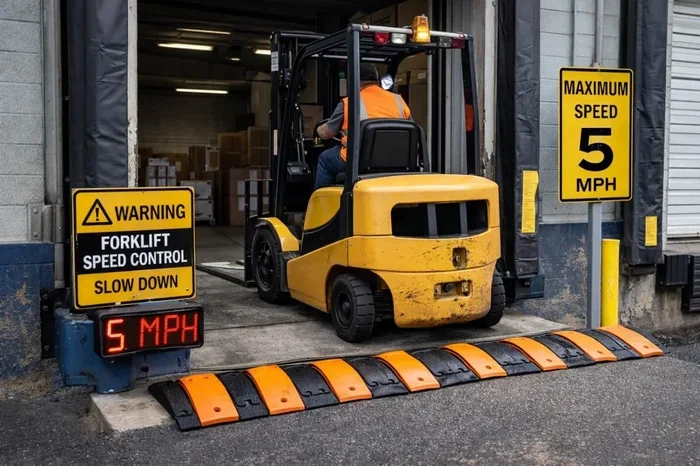
- Indoor areas: Keep your speed at walking pace (around 3 to 5 mph).
- Outdoor areas: Do not exceed 8 mph under normal conditions.
- Near intersections and corners: Slow down and sound the horn.
- Near pedestrian areas: Reduce speed to a crawl.
Always follow your workplace’s specific speed limits. These rules are posted for a reason. They are based on the layout of the facility and the types of hazards present.
Safe Driving Habits
Beyond speed, there are several other safe driving practices every operator should follow:
- Keep the load low: Drive with the forks no more than 4 to 6 inches off the ground. This keeps the center of gravity low and stable.
- Look in the direction of travel: When driving forward, face forward. When traveling in reverse, turn your body and head to look out the rear window.
- Use the horn at corners and doorways: Alert people to your presence.
- Slow down on wet or uneven surfaces: Slippery ground increases the chance of sliding or tipping.
- Never carry a passenger: Unless the forklift is designed for a second person, keep it solo.
- Keep a safe following distance: Leave enough room to stop behind the vehicle in front of you.
Quick Tips for Safe Driving
Here are a few quick habits that make a big difference:
- Do a 360-degree check before moving.
- Use mirrors when turning or backing up.
- Keep your vision clear at all times.
- Never use your phone while operating a forklift.
- Slow down at blind spots and intersections.
Rule 4: Wear Proper Safety Equipment
Protective gear is your last line of defense. Even the safest operator can encounter unexpected situations. Wearing the right safety equipment reduces the severity of injuries when accidents happen.
Essential Safety Gear for Forklift Operators
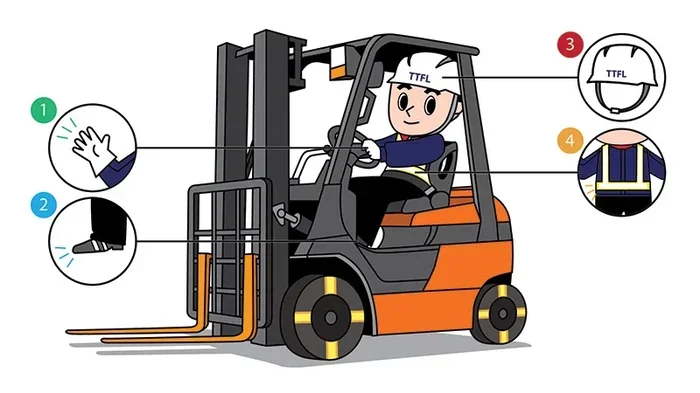
Every forklift operator should wear the following:
- Seatbelt: This is the single most important piece of safety equipment. It keeps you inside the protective frame during a tip-over.
- Hard hat: Protects your head from falling objects or overhead hazards.
- High-visibility vest: Makes you easy to spot for other workers and drivers.
- Safety shoes: Steel-toed boots protect your feet from heavy loads and rolling equipment.
- Gloves: Protect your hands when handling loads or during inspections.
- Eye protection: Shields your eyes from dust, debris, and liquids.
Why the Seatbelt Cannot Be Skipped
The seatbelt deserves special mention because it saves lives. Many operators skip it because it feels uncomfortable or slows them down. This is a dangerous habit. In a tip-over, the seatbelt keeps you inside the operator cage. Without it, you are thrown from the machine. And being thrown from a forklift during a rollover is often fatal.
Forklift certification programs always emphasize seatbelt use. If you have not completed a forklift training course, make it a priority. Proper training teaches you not just how to drive, but how to protect yourself.
Quick Tip on Gear Maintenance
Inspect your safety gear before every shift. A cracked hard hat or a frayed seatbelt belt is not doing its job. Replace damaged gear immediately. Do not wait until it is too late.
Rule 5: Know Pedestrian Safety and Workplace Awareness
Forklifts do not operate in a vacuum. Other people share the same spaces. Pedestrian safety is a critical part of forklift operation that many operators overlook.
The Shared Space Challenge
Warehouses and industrial facilities are busy places. Pedestrians walk through forklift zones every day. They carry boxes, push carts, and move between buildings. The operator has a responsibility to be aware of these people at all times.
Here are key practices for pedestrian safety:
- Always yield to pedestrians: They are more vulnerable than you are.
- Use the horn at blind corners: Give people time to move out of the way.
- Make eye contact: When possible, confirm that a pedestrian sees you before moving.
- Stay out of crosswalks: Do not block designated walking paths.
- Use spotters: When visibility is limited, have someone guide you.
Understanding Blind Spots
Forklifts have significant blind spots. The load itself can block your view entirely when driving forward. The rear of the forklift is also hard to see when backing up. Being aware of these blind spots helps you avoid collisions.
Some practical steps to manage blind spots include:
- Use mirrors on both sides of the forklift.
- Turn your head and look over your shoulder when backing up.
- Ask for help when moving through crowded areas.
- Keep the load low to improve forward visibility.
Creating a Culture of Safety
Pedestrian safety is not just the operator’s responsibility. Everyone in the workplace plays a role. Workers should follow designated walkways, wear high-visibility clothing, and stay alert around forklifts. When everyone buys into safety protocols, the entire workplace becomes safer.
Common Forklift Mistakes to Avoid
Even the best operators can fall into bad habits. Knowing the common mistakes helps you avoid them. Here are some of the most frequent errors that lead to forklift accidents:
- Skipping the pre-operation inspection: This is the number one mistake new operators make.
- Carrying loads too high: Elevated loads make the forklift top-heavy and unstable.
- Turning too fast: Sharp turns at high speed are a leading cause of tip-overs.
- Not wearing a seatbelt: This simple habit prevents the most serious injuries.
- Ignoring warning lights and alarms: These systems exist for a reason.
- Operating under the influence: Fatigue, alcohol, and drugs impair judgment and reaction time.
- Overloading the forklift: It is never worth the risk.
Each of these mistakes is preventable. The key is awareness and discipline. When you make safety your priority, these mistakes simply do not happen.
The Role of Forklift Training and Certification
No one should operate a forklift without proper forklift certification. Training teaches you the rules, the risks, and the best practices. It is not just a formality. It is a life-saving requirement.
What a Good Training Program Covers
A comprehensive forklift training program includes:
- Classroom instruction: Learning the rules, regulations, and safety principles.
- Practical driving: Hands-on experience operating the forklift under supervision.
- Evaluation and testing: Proving you can operate safely before going solo.
- Refresher courses: Regular updates to keep skills sharp and knowledge current.
OSHA requires all forklift operators to complete training and receive certification. This is not just a recommendation. It is the law. Employers must ensure every operator is properly trained and evaluated.
Ongoing Training Matters
Safety is not a one-time event. It is an ongoing process. Even certified operators benefit from regular refresher training. Over time, habits can slip. New equipment or changes in the workplace may introduce new risks. Staying current with forklift safety tips keeps everyone protected.
Maintenance: Keeping Your Forklift in Safe Condition
Regular forklift maintenance is essential for safe operation. A well-maintained forklift performs better and is less likely to fail during use. Maintenance also extends the life of the equipment, which saves money in the long run.
Key Maintenance Tasks
- Daily checks: Fluids, tires, brakes, lights, and horns.
- Weekly inspections: Hydraulics, mast chain, forks, and steering.
- Scheduled servicing: Oil changes, filter replacements, and battery maintenance.
- Record keeping: Document all inspections and repairs for compliance and tracking.
Do not ignore small problems. A minor leak today can become a major failure tomorrow. Address issues promptly and thoroughly. A well-maintained forklift is a safe forklift.
Conclusion
The 5 safety rules for a forklift are simple but powerful. Inspect your forklift before every shift. Respect load capacity and stability. Follow speed limits and drive safely. Wear all required safety equipment. And always be aware of pedestrians and people around you.
These rules are not just guidelines. They are essential practices that protect lives. Every forklift operator has a responsibility to follow them. Every employer has a responsibility to enforce them. When everyone takes safety seriously, the entire workplace benefits.
Start today. Make these rules part of your routine. Share this knowledge with your coworkers. A safe workplace is a productive workplace. And it all begins with the five simple rules you learned here.
Remember: no load is worth more than your life. Drive safely, stay alert, and go home in one piece every day.
Frequently Asked Questions
What are the top 5 forklift safety rules?
The top five forklift safety rules are: always conduct a pre-operation inspection, understand load capacity and stability, follow speed limits and safe driving practices, wear proper safety equipment, and maintain pedestrian awareness. These rules form the foundation of safe forklift operation and are recognized by OSHA as essential practices.
Why is pre-operation inspection so important for forklift safety?
A pre-operation inspection catches mechanical problems before they cause accidents. It ensures that brakes, lights, horns, tires, and hydraulics are all in working order. Skipping this step is the most common mistake operators make, and it leads to preventable incidents.
What happens if you exceed a forklift’s load capacity?
Exceeding the load capacity can cause the forklift to tip over. An overloaded forklift is unstable and difficult to control. Tip-overs are among the most dangerous forklift accidents and can result in serious injury or death.
Is forklift certification required by law?
Yes, OSHA requires all forklift operators to complete formal training and receive certification before operating a forklift. This includes classroom instruction, practical driving, and evaluation. Employers must ensure every operator is properly certified.
Why should forklift operators always wear a seatbelt?
A seatbelt keeps the operator inside the protective cage during a tip-over. Being thrown from a forklift during a rollover is often fatal. The seatbelt is the single most important piece of safety equipment on a forklift.
How can forklift operators improve pedestrian safety in the workplace?
Operators can improve pedestrian safety by always yielding to walkers, using the horn at blind corners, making eye contact when possible, staying out of crosswalks, and using spotters when visibility is limited. A shared safety culture benefits everyone on the job site.