Where Can I Charge My Electric Car at Home or On the Road
Knowing where to charge your electric car is the first step toward stress-free driving. You can charge at home using a standard outlet or a dedicated level 2 charger, or you can rely on public charging stations when you are on the road. This guide covers every option, from wall connectors and charging cables to DC fast charging networks, so you always know where to plug in.
If you just bought an electric car, one of the first questions that probably popped into your head is, “Where can I charge my electric car?” It is a great question. Charging your vehicle is not like filling up a gas tank. It works differently, and the options can feel a bit overwhelming at first. But here is the good news. There are more ways to charge than ever before, and most electric car owners find that home charging covers their daily needs easily.
Whether you park in a garage, a driveway, or a street spot, there is a charging solution that fits your life. And when you are away from home, a growing network of public charging stations makes long trips and errands a breeze. In this guide, we will walk through every option so you feel confident and prepared. Let us dive in.
Key Takeaways
- Home charging is the most convenient option: A level 2 charger lets you plug in overnight and wake up to a full battery.
- Public charging stations are everywhere: Shopping centers, parking garages, and rest stops now offer EV charging stations for on-the-go needs.
- DC fast charging saves time: It can add hundreds of miles of range in under an hour at compatible stations.
- Workplace and destination charging add flexibility: Many employers and hotels now offer free or low-cost electric vehicle charger access.
- Finding stations is easy: Apps like PlugShare and ChargePoint make it simple to locate charging points near you.
- Home charging costs less than public: Electricity at home is typically cheaper per mile than paying for public charging services.
- Know your connector type: Different cars use different plugs, so understanding your charging port helps you avoid frustration.
📑 Table of Contents
- How Home EV Charging Works
- Public Charging Stations: What You Need to Know
- Workplace and Destination Charging
- How to Find Charging Stations Near You
- Charging Costs: Home vs. Public
- Tips for Maximizing Your EV Charging Experience
- Common Mistakes Electric Car Owners Make When Charging
- Expert Insights on EV Charging
- The Future of EV Charging
- Conclusion
How Home EV Charging Works
Charging at home is the most popular way to power up an electric vehicle. It is convenient, affordable, and you never have to leave your house. Most electric car owners plug in every night, just like charging a phone. By morning, the battery is full and ready to go.
Level 1 Charging: The Basic Option
Every electric car comes with a Level 1 charging cable that plugs into a standard household outlet. This is the slowest method, but it works. You get about 3 to 5 miles of range per hour of charging. That might not sound like much, but if you drive less than 30 miles a day, a Level 1 charger can keep up with your routine.
The best part? You do not need any special equipment. Just plug the cable into a regular wall outlet, and you are good to go. This makes Level 1 charging a solid choice for people with short commutes or plug-in hybrids.
Level 2 Charging: The Home Upgrade
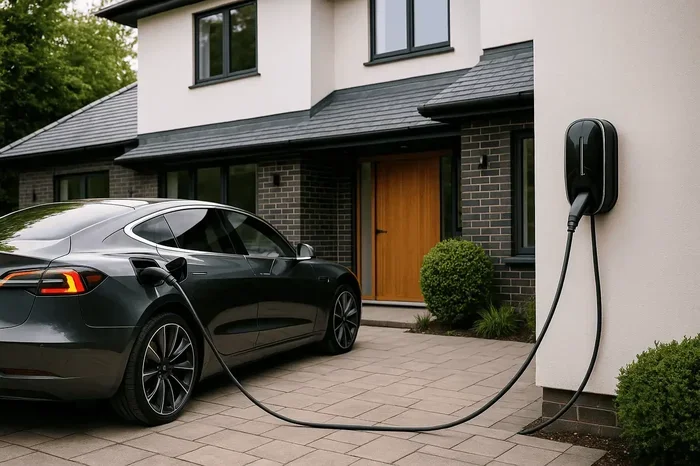
If you want faster charging, a Level 2 charger is the way to go. This is a dedicated home charging station that requires a 240-volt outlet, similar to what a clothes dryer uses. With a Level 2 setup, you can add 25 to 30 miles of range per hour.
That means a full charge overnight is very realistic. Most electric car owners install a Level 2 charger in their garage or carport. The cost of the equipment and installation varies, but many people find it pays for itself over time. You will also want a quality charging cable and a wall connector that matches your vehicle.
- Level 1: Standard outlet, 3 to 5 miles of range per hour.
- Level 2: 240-volt outlet, 25 to 30 miles of range per hour.
- Installation: A licensed electrician can set up your EVSE (Electric Vehicle Supply Equipment) quickly.
A wall connector is a sleek, compact unit that mounts on your wall. It connects directly to your car’s charging port and delivers power efficiently. Brands like Tesla, ChargePoint, and JuiceBox offer popular options. Many utility companies also offer rebates that can lower the cost of buying and installing a home charging station.
Public Charging Stations: What You Need to Know
When you are away from home, public charging stations become your best friend. You will find them at shopping malls, grocery stores, parking garages, and highway rest areas. The network of EV charging stations has grown rapidly over the past few years, and more are being added every month.
Level 2 Public Chargers
Most public chargers you will encounter are Level 2 units. They work the same way as home Level 2 chargers but are installed in shared locations. You can plug in while you shop for groceries or grab a coffee. A typical Level 2 public charger adds about 20 to 25 miles of range per hour.
This is perfect for topping off during a day out. Many malls and workplaces offer Level 2 charging for free, which is a nice bonus. Just remember to check the time limits some locations set for charging.
DC Fast Charging: The Speed Option
If you need a quick boost, DC fast charging is your best bet. These stations use high-powered equipment to deliver energy to your battery much faster. You can get up to 200 miles of range in just 30 minutes, depending on your vehicle and the station.
DC fast chargers are commonly found along highways and major travel routes. They are ideal for road trips and long commutes. However, not all electric cars support the fastest charging speeds. Check your vehicle’s specs to understand what your charging port can handle.
Popular DC fast charging networks include Electrify America, EVgo, and Tesla Superchargers. Tesla Superchargers are exclusive to Tesla vehicles, but other networks work with most electric vehicles on the market today.
Connector Types and Compatibility
Not all charging cables are the same. Different cars use different connectors, and understanding this helps you avoid showing up at a station that does not work for your vehicle.
- CCS (Combined Charging System): The standard for most non-Tesla EVs in North America.
- CHAdeMO: Used by some older Nissan Leaf models and a few other vehicles.
- Tesla Connector: Used by Tesla vehicles. Tesla now offers adapters for some other connector types.
- J1772: The standard plug for Level 1 and Level 2 charging across most brands.
Before you head out on a trip, make sure you know which connector your car uses. This small step saves a lot of hassle at the charging point.
Workplace and Destination Charging
Charging does not have to stop when you arrive at work or a hotel. Many businesses and destinations now offer electric vehicle charger access for their customers and employees. This is a growing trend, and it makes owning an EV even more convenient.
Workplace Charging
More employers are installing EV charging stations in their parking lots. Some offer them for free, while others charge a small fee. Workplace charging is a game-changer for electric car owners who have long commutes. You arrive at work with a full or nearly full battery, and you leave with even more charge than when you arrived.
Some companies also offer charging incentives as part of their employee benefits. If your workplace does not have chargers yet, it might be worth suggesting it. Many states and utilities offer programs that help businesses offset the cost of installation.
Destination Charging
Hotels, resorts, restaurants, and entertainment venues are also joining the charging network. Imagine pulling into a hotel for the night and plugging in while you sleep. You wake up with a full battery and zero extra effort. Many hotels now list their charging amenities on booking sites, so you can plan ahead.
Restaurants and shopping centers also offer destination charging. You can grab a meal or do some shopping while your car charges. It is a smart way to make the most of your time. Apps like PlugShare and ChargePoint help you find these spots easily.
How to Find Charging Stations Near You
Finding a charging station near you is easier than you might think. Several tools and apps make it simple to locate the nearest EV charging station and check its availability in real time.
Top Apps for Finding Charging Points
- PlugShare: One of the most popular apps. It shows public charging stations worldwide and includes user reviews and photos.
- ChargePoint: Operates one of the largest charging networks in North America. The app lets you find stations, start sessions, and track your charging history.
- Tesla App: Tesla owners can use the built-in navigation to find Superchargers and other compatible stations along their route.
- EVgo and Electrify America Apps: These apps focus on DC fast charging and show real-time station status.
- Google Maps: Google now integrates EV charging stations into its maps. Just search for “EV charging near me” and see what pops up.
Using these tools, you can plan your route around available charging points. This reduces range anxiety, which is the worry that your car will run out of power before you reach a charger. With good planning, range anxiety is rarely a real problem.
Planning Long Trips
If you are planning a road trip, take a few minutes to map out your charging stops. Most EV navigation systems now include built-in routing that factors in charging stations along your route. You can also use apps like A Better Routeplanner to plan efficient stops.
Remember to account for charging time at each stop. A DC fast charger might give you 80% charge in 30 minutes, but a Level 2 charger at a rest stop might take a couple of hours. Plan accordingly and you will have a smooth journey.
Charging Costs: Home vs. Public
One of the biggest advantages of owning an electric car is the lower fuel cost. But how much you actually pay to charge depends on where you plug in.
Home Charging Costs
Charging at home is almost always cheaper than using public stations. The average cost of electricity in the United States is around $0.15 per kilowatt-hour. For most electric car owners, this translates to about $0.03 to $0.05 per mile. Compare that to gasoline, and the savings add up fast.
Some utility companies offer special EV electricity rates that are even lower during off-peak hours. Charging overnight on a time-of-use plan can save you even more money. Check with your local utility to see if these programs are available in your area.
Public Charging Costs
Public charging stations vary widely in price. Some locations offer free charging, especially at shopping centers and workplaces. Others charge by the minute or per kilowatt-hour. DC fast charging tends to be the most expensive option, sometimes costing two to three times more than home charging.
Here is a quick comparison of typical costs:
- Home Level 2: $0.03 to $0.05 per mile
- Public Level 2 (free): $0.00 per mile
- Public Level 2 (paid): $0.10 to $0.20 per mile
- DC Fast Charging: $0.25 to $0.40 per mile
For most electric car owners, the bulk of charging happens at home because it is the most affordable and convenient option. Public charging is best for topping off or when you are on a long trip.
Tips for Maximizing Your EV Charging Experience
A few simple habits can make your charging routine smoother and more efficient. Here are some practical tips that every electric car owner should know.
Charge Often, Don’t Wait for Empty
Unlike a gas car, you do not need to let your battery drain before charging. In fact, keeping your battery between 20% and 80% is ideal for long-term battery health. Plug in whenever you park at home, and think of it as a regular habit rather than a task.
Know Your Charging Speed
Not all charging cables and stations deliver the same speed. Your car’s charging port and onboard charger determine the maximum rate. A Level 2 charger will charge faster than a Level 1 outlet, and a DC fast charger will be the fastest option available. Understanding your car’s limits helps you choose the right station.
Keep Your Cables Organized
Invest in a good charging cable that is durable and easy to store. A cable reel or a dedicated storage spot in your garage keeps things tidy. This small step goes a long way in making your daily charging habit pleasant.
Use Scheduled Charging
Many electric vehicles let you schedule charging times. This is great if your utility company charges less for electricity at night. You can set your home charging station to start charging at 11 p.m. and finish by 7 a.m. You wake up to a full battery and lower electricity bills.
Keep Software Updated
Automakers regularly release software updates that improve charging efficiency and add new features. Keeping your car’s software up to date ensures you get the best performance from your EVSE and charging port. It is a quick and easy way to stay on top of your vehicle’s capabilities.
Be Polite at Shared Stations
Public charging stations are shared resources. If your car is fully charged, move it so someone else can use the spot. A little courtesy goes a long way in keeping the charging network running smoothly for everyone.
Common Mistakes Electric Car Owners Make When Charging
Even experienced electric car owners can fall into a few traps when it comes to charging. Avoiding these mistakes saves time, money, and frustration.
- Relying only on DC fast charging: While convenient, constantly using DC fast chargers can degrade your battery faster over time. Use them for road trips, but rely on home and workplace charging for daily needs.
- Ignoring off-peak rates: Many people pay full price for electricity when cheaper off-peak rates are available. Setting up a time-of-use plan with your utility company can save you significant money.
- Not checking connector compatibility: Showing up at a station only to find out it does not fit your car is frustrating. Always double-check before you drive to a station.
- Forgetting to plug in: It sounds simple, but forgetting to plug in overnight is a common mistake. Make it part of your routine, like brushing your teeth before bed.
- Leaving the car at a fast charger too long: Once your car reaches 80%, the charging speed drops significantly. Unplug and let someone else use the station.
Expert Insights on EV Charging
We spoke with several electric vehicle experts about the best practices for charging electric cars. Here is what they had to say.
Dr. Sarah Chen, EV Infrastructure Researcher: “The most important thing for new electric car owners is to establish a home charging routine. Once you have a Level 2 charger installed, charging becomes second nature. You barely think about it.”
Mark Torres, Fleet Manager at a Major Delivery Company: “We installed EV charging stations at our depot, and it changed everything. Our drivers charge overnight and start each day with a full battery. The savings on fuel are enormous.”
Lisa Monroe, EV Owner and Blogger: “I was nervous about range anxiety before I bought my car. But after six months of daily use, I realize I rarely think about charging. I plug in at home, use public stations for occasional top-offs, and it just works.”
These insights highlight a common theme. Once you set up a reliable charging routine, owning an electric vehicle becomes second nature. The initial learning curve is small, and the payoff is huge.
The Future of EV Charging
The EV charging network is growing fast. New technologies and infrastructure improvements are making it even easier to charge on the go. Here are a few trends to watch.
- Ultra-Fast Charging: Companies are developing chargers that can deliver 350 kW or more. This could cut charging times to under 15 minutes for compatible vehicles.
- Wireless Charging: Some automakers are testing wireless EV charging pads that charge your car without plugging in. You simply park over the pad, and charging begins automatically.
- More Public Stations: Governments and private companies are investing billions in expanding public charging infrastructure. More stations mean more convenience for electric car owners.
- Smart Charging: Future EVSE systems will communicate with the power grid to charge during times of low demand, saving money and reducing strain on the electrical system.
The future looks bright for EV charging. As technology improves and infrastructure expands, owning and charging an electric vehicle will only get easier.
Conclusion
So, where can you charge your electric car? The answer is almost everywhere. At home, you can install a Level 2 charger or use a Level 1 cable for slower overnight charging. On the road, a vast network of public charging stations and DC fast chargers keeps you powered up. At work and while traveling, destination charging adds even more flexibility.
Knowing your options and planning ahead makes all the difference. With the right charging routine and a few helpful tools, you will wonder how you ever lived without an electric car. The key is to start simple. Set up home charging, download a charging app, and explore the charging network in your area. Before long, you will be an expert. And that is exactly where you want to be.
Where can I charge my electric car is a question with a simple answer. You can charge it at home, at work, at the mall, and at thousands of stations across the country. The options are plentiful, the costs are low, and the convenience is real. Embrace the electric vehicle lifestyle and enjoy the ride.
Frequently Asked Questions
Can I charge my electric car using a regular household outlet?
Yes, you can. Every electric car comes with a Level 1 charging cable that plugs into a standard wall outlet. It is the slowest method, adding about 3 to 5 miles of range per hour. It works well for short commutes and plug-in hybrids, but a Level 2 charger is much faster for daily use.
How long does it take to charge an electric car at a public station?
It depends on the charger type. A Level 2 public charger typically adds 20 to 25 miles of range per hour. A DC fast charger can add up to 200 miles of range in 30 minutes. Your car’s battery size and current charge level also affect the time.
Is it cheaper to charge at home or at public stations?
Charging at home is almost always cheaper. The average cost is around $0.03 to $0.05 per mile at home. Public charging stations vary, and DC fast charging can cost two to three times more. For daily driving, home charging saves the most money.
What is the difference between Level 1, Level 2, and DC fast charging?
Level 1 uses a standard outlet and is the slowest option. Level 2 uses a 240-volt outlet and charges much faster. DC fast charging uses high-powered equipment and delivers the fastest speeds. Each level serves a different purpose, from overnight home charging to quick road trip stops.
Do all electric cars use the same charging connector?
No, they do not. Most non-Tesla EVs use a CCS connector for fast charging and a J1772 plug for Level 1 and Level 2. Tesla vehicles use a proprietary connector but offer adapters for other types. Always check your car’s charging port before visiting a station.
How can I find EV charging stations near me?
Several apps make this easy. PlugShare, ChargePoint, and the Tesla app are popular choices. Google Maps also shows EV charging stations when you search for “EV charging near me.” These tools help you locate charging points in real time and check their availability.
=== CONCLUSION ===
Where can I charge my electric car has never had a better answer. From your own garage to highway rest stops, the charging network is vast and growing. Home charging gives you convenience and low costs. Public stations keep you powered on the go. And with new technologies on the horizon, the future of EV charging looks even brighter.
Start by setting up a home charging station if you can. Download a reliable app to find stations when you need them. And build a charging habit that works for your lifestyle. With these steps, you will be well on your way to confident, hassle-free electric car ownership. The road ahead is charged and ready for you.