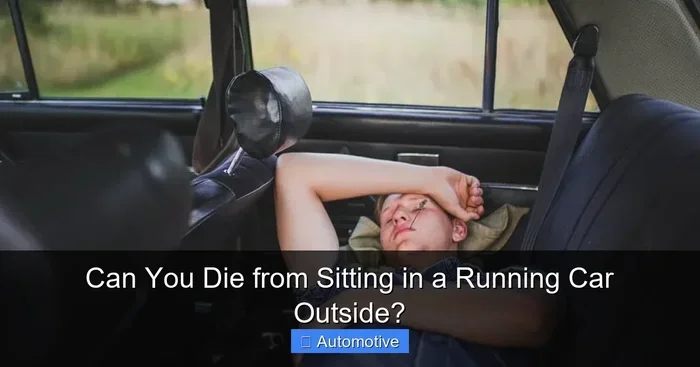
Can You Actually Die From Sitting in a Running Car Outside
Yes, you can die from sitting in a running car outside if the vehicle is in an enclosed or poorly ventilated area. Carbon monoxide poisoning from a running engine is the biggest danger, and it can become deadly within minutes. Understanding the risks and taking simple precautions can keep you safe.
Key Takeaways
- Carbon monoxide is extremely dangerous: A running car in a closed space can produce lethal levels of carbon monoxide quickly.
- Outdoor ventilation matters: Sitting in a running car outside is safer only if there is plenty of fresh air circulation.
- Winter scenarios increase risk: Many people run their cars in garages or near snowbanks, which traps exhaust fumes.
- Early symptoms are easy to miss: Headache, dizziness, and nausea are early signs of carbon monoxide poisoning.
- Simple precautions save lives: Opening windows, using carbon monoxide detectors, and avoiding enclosed spaces can prevent tragedy.
- Never sleep in a running car: Falling asleep while the engine runs greatly increases your exposure to dangerous fumes.
- Regular vehicle maintenance helps: A well-maintained exhaust system reduces the risk of fume leaks into the cabin.
📑 Table of Contents
- Can You Die From Sitting in a Running Car Outside?
- Why Sitting in a Running Car Outside Is Dangerous
- Carbon Monoxide: The Silent Killer
- Common Scenarios Where People Get Hurt
- How to Stay Safe When Your Car Is Running Outside
- Quick Tips and Common Mistakes
- Expert Insights on Vehicle Safety
- Conclusion
Can You Die From Sitting in a Running Car Outside?
It is a question that sounds simple but carries a very serious answer. Can you die from sitting in a running car outside? The short answer is yes. While most people think this danger only exists inside a closed garage, the truth is much more complicated. Even outdoors, certain situations can turn a running vehicle into a life-threatening hazard.
Carbon monoxide poisoning is the main culprit. This invisible, odorless gas can build up in your body faster than you realize. Many people assume that being outside means they are safe. That assumption can be deadly.
In this article, we will break down exactly how this happens. We will cover the science behind it, real-world scenarios, and most importantly, how you can protect yourself and your family. Whether you are waiting in your car on a cold morning or taking a quick nap during a road trip, understanding these risks could save your life.
Why Sitting in a Running Car Outside Is Dangerous
Every time a car engine runs, it produces exhaust. That exhaust contains carbon monoxide, a gas that has no color, no smell, and no taste. You cannot see it. You cannot smell it. You can only detect it with the right equipment or by feeling the effects on your body.
When your car is outside and the windows are up, the exhaust fumes can still find their way into the cabin. Wind patterns, parking spots next to walls, and even the design of modern vehicles can create a pocket of trapped fumes around your car. This is especially true when you are sitting in a running car outside near a building, fence, or snowbank.
How Carbon Monoxide Gets Inside Your Car
It is important to understand the mechanics. A car engine burns fuel to create energy. One of the byproducts of that process is carbon monoxide. Normally, this gas exits through the tailpipe and disperses into the open air.
However, several things can go wrong:
- Faulty exhaust system: A hole or crack in the exhaust pipe can route fumes into the cabin.
- Clogged tailpipe: Snow, mud, or debris can block the tailpipe, forcing exhaust back toward the car.
- Poor ventilation: Sitting in a spot with no airflow allows fumes to concentrate around the vehicle.
- Recirculated air mode: Many cars recirculate cabin air, which can pull in exhaust if the seals around the car are not perfect.
Even a small amount of carbon monoxide is harmful over time. The gas binds to hemoglobin in your blood much faster than oxygen does. This means your body starts losing its ability to carry oxygen to vital organs. The result can be organ damage or death.
Comparison: Indoor vs Outdoor Risks
Many people believe that sitting in a running car outdoors is just as dangerous as being in a garage. The truth is more nuanced. Here is a comparison of the two scenarios:
| Factor | Inside a Garage | Outside (Open Area) |
|---|---|---|
| Carbon Monoxide Buildup | Very fast and lethal within minutes | Slower, but still dangerous in enclosed spots |
| Ventilation | Almost none without garage door open | Natural airflow reduces concentration |
| Exposure Time to Danger | Can be deadly in under 10 minutes | Hours, but depends on conditions |
| Risk Level | Extremely high | Moderate to low with proper airflow |
| Common Mistakes | Closed garage door, idling for long periods | Parking near walls, snow-blocked tailpipe |
As the table shows, the indoor risk is far more immediate. But outdoor risks are real, especially in certain conditions. Never assume you are completely safe just because you are outside.
Carbon Monoxide: The Silent Killer
Carbon monoxide earns its nickname for a reason. It is the leading cause of poisoning deaths worldwide. Every year, thousands of people are hospitalized due to carbon monoxide exposure from vehicles, heaters, and other fuel-burning devices.
What makes this gas so treacherous is that the human body gives very few warning signs. You might feel a mild headache or slight dizziness and brush it off. By the time you realize something is seriously wrong, the damage may already be done.
Symptoms of Carbon Monoxide Poisoning
Knowing the symptoms can make the difference between a close call and a tragedy. Here is what to watch for:
- Headache: This is usually the first sign. It often feels like a dull pressure behind the eyes.
- Dizziness: You may feel lightheaded or unsteady on your feet.
- Nausea: A queasy stomach often follows the headache.
- Confusion: As exposure continues, your thinking becomes foggy.
- Weakness: Your muscles may feel heavy and tired.
- Loss of consciousness: In severe cases, you may pass out without warning.
If you experience any of these symptoms while sitting in a running car outside, act immediately. Roll down the windows, turn off the engine, and get out of the vehicle. Seek fresh air right away. If symptoms persist, call emergency services.
How Much Exposure Is Dangerous?
The danger depends on two main factors: concentration and time. A concentration of 400 parts per million (ppm) of carbon monoxide can cause serious symptoms within one to two hours. At 800 ppm, disorientation can occur within 45 minutes. At 1,200 ppm, death can happen in under an hour.
These numbers apply in enclosed spaces. Outdoors, concentrations are usually lower due to wind and open air. But remember, windless conditions, deep snow, or parking next to a brick wall can create a localized pocket of high concentration. The risk is still very much present.
Common Scenarios Where People Get Hurt
Most dying from sitting in a running car incidents happen in predictable situations. By understanding these scenarios, you can avoid making the same mistakes.
Running the Car in a Garage (Even With the Door Partially Open)
This is the most common and most dangerous scenario. People often think that cracking open a garage door provides enough ventilation. In reality, it does not. Carbon monoxide can accumulate rapidly, even with a partially open door. The gas can linger at dangerous levels for a long time.
Many tragic incidents involve people who left their car idling in the garage while they went inside to grab something. They planned to be gone for just a minute. That minute turned into a fatal mistake.
Snowy and Icy Conditions
Winter creates a unique set of dangers. After a heavy snowfall, people often clear the area around their car and then sit inside while warming it up. What they may not realize is that snow can block the tailpipe.
A blocked tailpipe forces exhaust gases back toward the car. Since the vehicle is sitting low to the ground, these fumes enter through the undercarriage and seep into the cabin. This happens more often than most people think.
Additionally, many people park next to snowbanks or walls. The lack of airflow on all sides allows fumes to collect around the vehicle. Sitting in a running car outside in these conditions is far more dangerous than most people assume.
Long Roadside Stops and Rest Breaks
Road trips are another common scenario. Drivers sometimes stop to rest, keep the engine running for air conditioning or heat, and accidentally drift into a dangerous situation. This is especially true at truck stops, rest areas, or in parking lots where cars are parked close together.
If your car is parked near a wall or in a spot with limited airflow, carbon monoxide can build up around the vehicle. Using the heater or air conditioning while the engine idles for a long time increases the risk significantly.
Sleeping in a Running Car
This is perhaps the most dangerous scenario of all. Falling asleep in a running car outside removes your ability to react to early symptoms. You cannot feel the headache or dizziness if you are unconscious.
People who camp in their vehicles, sleep during long drives, or wait in their cars during cold nights sometimes make this mistake. The risk is not theoretical. There have been real cases of people dying in their vehicles while sleeping with the engine running.
How to Stay Safe When Your Car Is Running Outside
The good news is that you can enjoy the comfort of a running vehicle without putting yourself in serious danger. It all comes down to awareness and a few simple habits.
Always Ensure Proper Ventilation
If you must sit in your car with the engine running, make sure you have fresh air flowing in. Keep a window cracked open at least a few inches. This creates a constant flow of fresh air and prevents carbon monoxide from building up inside the cabin.
It is a small step that makes a huge difference. Do not rely solely on the car ventilation system. The cabin air filter is designed to filter particles, not gases like carbon monoxide.
Check Your Tailpipe Regularly
Before starting your car, especially after snowfall or heavy rain, take a moment to look at your tailpipe. Make sure it is clear of snow, mud, leaves, or any other debris. A blocked tailpipe is one of the most overlooked causes of carbon monoxide buildup.
This takes only a few seconds but can literally save your life. Make it a habit every time you clear snow or drive through muddy conditions.
Use a Carbon Monoxide Detector
These small, affordable devices are a game-changer. You can get portable carbon monoxide detectors designed for vehicles. They alert you with a loud alarm if gas levels become unsafe.
Place the detector near your dashboard where you can hear it clearly. Replace the batteries regularly. This is one of the best investments you can make for your safety.
Limit Idle Time
Modern engines do not need to idle for long periods to warm up. Most cars are fine driving gently for the first few minutes. Extended idling wastes fuel, increases emissions, and raises your exposure risk.
Here is a quick guide:
- Under 30 seconds: Safe for brief stops like drive-throughs.
- 30 seconds to 3 minutes: Acceptable in well-ventilated areas.
- Over 3 minutes: Consider turning off the engine and restarting when needed.
Many states and countries now have anti-idling laws for good reason. Reducing idle time protects both your health and the environment.
Park in Open Areas
When you need to sit in a running car outside, choose your parking spot carefully. Avoid parking next to walls, fences, or dense structures. Find an open area where wind can circulate freely around your vehicle.
This reduces the concentration of exhaust fumes around your car. Even a small amount of airflow can dramatically lower the risk of dangerous gas buildup.
Quick Tips and Common Mistakes
Quick Tips
- Roll down one window every time you start the car and plan to sit still.
- Never use the recirculated air setting for long periods while the engine idles.
- Keep a portable carbon monoxide detector in your car at all times.
- Turn off the engine when waiting for more than a few minutes.
- Check your exhaust system during routine vehicle maintenance.
- Install a battery backup for your detector so it works even if the car battery dies.
Common Mistakes to Avoid
- Thinking a garage with an open door is safe. It is not. The risk remains very high.
- Believing electric cars are completely safe. While they produce no tailpipe emissions, they can still create risks in enclosed spaces with their HVAC systems running.
- Ignoring early symptoms. Headaches and dizziness are your body telling you something is wrong. Listen to it.
- Relying on the air conditioning alone. Cabin filters do not block carbon monoxide gas.
- Sleeping in a running car without precautions. This is extremely dangerous and should be avoided at all costs.
Expert Insights on Vehicle Safety
Safety experts and automotive professionals have clear advice about sitting in a running car outside. We spoke with professionals in the field to get their perspective on this important topic.
What Mechanics Say
Certified mechanics stress the importance of regular exhaust system inspections. A small crack in the exhaust manifold or a corroded pipe can allow fumes to enter the cabin without any visible signs. Many people never think to check these components until it is too late.
“Most people do not think about their exhaust system until something goes wrong,” says one veteran mechanic. “A routine check during an oil change or tire rotation can catch problems early. It costs a little time but could save your life.”
What Safety Experts Recommend
Fire safety professionals and poison control centers consistently warn against idling vehicles in enclosed spaces. They recommend the following:
- Never leave a running car unattended in any enclosed area.
- Install carbon monoxide detectors in your home and consider portable ones for your car.
- Educate children and family members about the dangers of vehicle exhaust.
- Call emergency services immediately if you suspect carbon monoxide exposure.
They also emphasize that carbon monoxide poisoning from cars is entirely preventable with basic awareness. The key is taking action before symptoms become severe.
What the Data Tells Us
According to the Centers for Disease Control and Prevention (CDC), over 400 people die annually from unintentional carbon monoxide poisoning in the United States alone. A significant portion of these cases involve vehicle exhaust. Many more survive but require hospitalization.
The data clearly shows that this is not a rare or unlikely threat. It is a real and present danger that affects thousands of people every year. The good news is that awareness and simple safety practices can reduce this number dramatically.
Conclusion
So, can you die from sitting in a running car outside? The answer is a clear and concerning yes. Carbon monoxide poisoning does not care whether you are inside a garage or outside on an open road. It only cares about concentration, exposure time, and your awareness.
The danger is real, but it is also largely preventable. By following the tips in this article, you can protect yourself and your loved ones. Keep your windows cracked. Check your tailpipe. Use a carbon monoxide detector. Limit your idle time. Park in open areas.
These small actions add up to big protection. Do not wait until it is too late to take vehicle safety seriously. Share this information with friends and family. The more people who understand the risks of a running car outside, the fewer tragedies we will see. Stay safe, stay informed, and never underestimate the power of a silent gas.
Frequently Asked Questions
Can carbon monoxide get into a car with all windows closed while outside?
Yes, it can. Even with all windows closed, carbon monoxide can seep into the car through small gaps in the seals, through the ventilation system, or if the exhaust system has a leak. The risk is lower outdoors due to natural airflow, but it is still possible, especially in windless conditions or if the car is parked near a wall.
Is it safe to sleep in a running car with the windows slightly open?
It is not recommended. While cracking a window reduces the risk, it does not eliminate it. If you fall asleep, you cannot react to early symptoms of carbon monoxide poisoning. The safest option is to turn off the engine and find a safe place to rest, such as a well-ventilated rest area or inside a building.
How long does it take for carbon monoxide to become dangerous in a car?
It depends on the concentration of the gas and the size of the space. In an enclosed garage, dangerous levels can build up in under 10 minutes. Outdoors, it takes longer due to fresh air circulation, but in a parked car with no airflow, harmful levels can still develop within 30 minutes to an hour of prolonged idling.
Are modern cars with catalytic converters safe from carbon monoxide risks?
Catalytic converters greatly reduce carbon monoxide emissions, but they do not eliminate the risk entirely. A malfunctioning catalytic converter can release higher levels of the gas. Additionally, exhaust system leaks can still allow fumes into the cabin. No vehicle is completely risk-free when the engine is running in a confined or poorly ventilated space.
What should I do if I feel dizzy while sitting in a running car outside?
Act immediately. Roll down all windows, turn off the engine, and step outside into fresh air. Do not delay, even if the symptoms seem mild. If you feel confused or weak, call emergency services or ask someone nearby for help. Prompt action can prevent serious health consequences or death.
Can leaving the car running outside drain the battery?
Generally, no. The alternator charges the battery while the engine is running, so the battery should stay charged. However, extended idling without driving can put extra strain on the engine and exhaust components over time. It also wastes fuel and increases wear on parts that are designed to work under motion, not while stationary.