Can a Bad Starter Drain Your Car Battery Overnight
Yes, a bad starter can drain your car battery overnight. A faulty starter motor may keep drawing power even after the engine shuts off, leaving you stranded in the morning. In this guide, we break down exactly how this happens, what warning signs to watch for, and how to fix it before it leaves you stuck.
There is nothing worse than walking out to your car in the morning, turning the key, and hearing nothing but silence. Your battery is dead. You did not leave any lights on. So what happened? More often than not, the real villain is a bad starter motor that quietly drains your battery overnight while you sleep.
Can a bad starter drain a battery? The short answer is yes, and it happens more often than most drivers realize. A starter that is worn out, corroded, or electrically faulty can keep pulling power from your battery long after the engine has been turned off. This parasitic draw may be small, but over several hours it can completely kill a healthy battery.
In this article, we will walk you through everything you need to know. We will explain how your starter works, why a bad one drains your battery, the warning signs to watch for, and exactly what you can do to fix the problem. Whether you are a hands-on DIYer or just someone who wants to understand their car better, this guide has you covered.
Key Takeaways
- A faulty starter motor can create a parasitic draw that slowly drains your car battery while the vehicle sits overnight.
- Common warning signs include clicking noises, slow cranking, and a battery that dies after sitting for a few hours.
- Worn starter brushes, a bad solenoid, or corroded wiring are the most common culprits behind starter-related battery drain.
- A simple multimeter test can help you check for parasitic draw and confirm whether your starter is the problem.
- Regular maintenance like cleaning terminals and inspecting wiring can prevent most starter-related battery issues.
- Replacing a faulty starter early saves you from costly battery replacements and unexpected breakdowns.
📑 Table of Contents
- What Exactly Does a Starter Do?
- Can a Bad Starter Drain Your Battery Overnight?
- Warning Signs Your Starter Is Killing Your Battery
- Common Causes of Starter-Related Battery Drain
- How to Diagnose a Starter Draining Your Battery
- What to Do When Your Battery Dies
- Protecting Your Battery From Starter Damage
- Final Thoughts
What Exactly Does a Starter Do?
Before we dive into battery drain, let us quickly cover what your starter actually does. Understanding the basics makes everything else much easier to follow.
How the Starter Motor Works
Your starter motor is a small but powerful electric device. Its one job is to crank your engine so it can start running. When you turn your key or push the start button, a signal goes to the starter solenoid. The solenoid pushes the starter gear into your engine’s flywheel. The motor then spins, turning the engine over until it fires up.
Once your engine is running, the starter should immediately release and stop drawing power. This is where things can go wrong. If the starter does not release properly, or if internal parts are worn, it can continue to pull electricity from your battery even when the engine is off.
The Connection Between Starter and Battery
Your starter needs a lot of power to work. We are talking about a big burst of electricity, sometimes over 200 amps. Your battery supplies this power. When everything works correctly, the battery gives a short burst and then gets recharged by your alternator while you drive.
But when your starter is faulty, the relationship breaks down. Instead of drawing power only during startup, a bad starter may create a continuous electrical path. This means your battery keeps feeding current into the starter circuit with no way to stop it. Over time, especially overnight, this slowly drains the battery to nothing.
Can a Bad Starter Drain Your Battery Overnight?
The simple answer is yes. But the full explanation is a little more nuanced. Let us look at exactly how this happens and why overnight drain is so common.
The Parasitic Draw Problem
Every car has a small amount of parasitic draw. This is normal. Your clock, your radio memory, your alarm system, and your onboard computer all use a tiny bit of power even when the car is off. A healthy parasitic draw is usually between 25 and 50 milliamps. At that rate, your battery can sit for days without going dead.
However, a faulty starter can increase that draw dramatically. Instead of 50 milliamps, you might be looking at 5 to 10 amps or more. That is a huge difference. At that rate, a fully charged battery can be completely drained in just a few hours. This is why many drivers wake up to a dead battery after their car sat in the driveway overnight.
When a Starter Keeps Drawing Power
There are a few specific situations where a bad starter causes overnight drain. One common scenario is a starter solenoid that sticks in the closed position. The solenoid acts like a switch. When it sticks, the electrical circuit stays open, and current keeps flowing to the starter motor even when you are not trying to start the car.
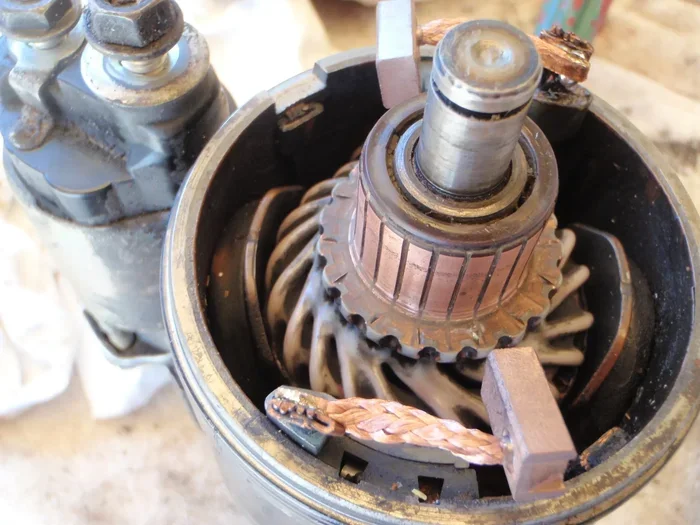
Another situation involves worn starter brushes. Inside your starter motor, brushes transfer electricity to the spinning armature. When these brushes wear down, they can create a partial electrical connection that does not fully break when the engine starts. This means your starter is essentially always slightly engaged, pulling power from your battery around the clock.
Warning Signs Your Starter Is Killing Your Battery
Catching a bad starter early can save you a lot of trouble. Here are the most common warning signs that your starter is draining your battery.
Clicking Noise When You Turn the Key
This is probably the most recognizable sign. You turn the key and hear a rapid clicking sound, but the engine does not turn over. The clicking comes from the starter solenoid trying to engage but failing. This often means your battery does not have enough charge because something has been draining it. A clicking noise combined with a dead battery is a strong clue that your starter may be the problem.
Slow Cranking or No Crank at All
When you turn the key and the engine cranks very slowly, or does not crank at all, your battery may be too weak to power the starter properly. But here is the catch: the battery might be weak because the starter has been draining it overnight. It becomes a cycle. The bad starter weakens the battery, and the weak battery makes the starter work even harder when you do try to start the car.
Battery Dies After Sitting Overnight
If your battery was fine yesterday but is completely dead this morning, that is a red flag. A healthy battery should hold its charge for days, even weeks, when the car is not being driven. If your battery dies after just a few hours of sitting, something is drawing too much power. A faulty starter is one of the most common reasons for this specific symptom.
Burning Smell Near the Starter
A burning smell coming from the engine area is never a good sign. If you smell something like burning insulation or hot metal near the starter, the starter may be overheating due to an internal electrical fault. This overheating can cause the starter to stay partially engaged, which creates a constant draw on your battery.
Common Causes of Starter-Related Battery Drain
Not all starter problems are the same. Different issues cause different levels of battery drain. Here are the most common causes you should know about.
Worn Starter Brushes
Starter brushes are small carbon pieces that transfer electricity inside the motor. Over time, they wear down from friction. When they become too short, they cannot make proper contact or break contact as they should. This creates a partial circuit that keeps your starter drawing power even when the engine is off. Worn brushes are one of the most common reasons a starter drains a battery.
Faulty Starter Solenoid
The solenoid is the electromagnetic switch that activates your starter. When it works correctly, it closes the circuit only when you turn the key. But a faulty solenoid can stick closed, leaving the circuit permanently engaged. This creates a constant electrical path from your battery to the starter, causing a slow but steady drain that can kill your battery overnight.
Corroded Connections and Wiring
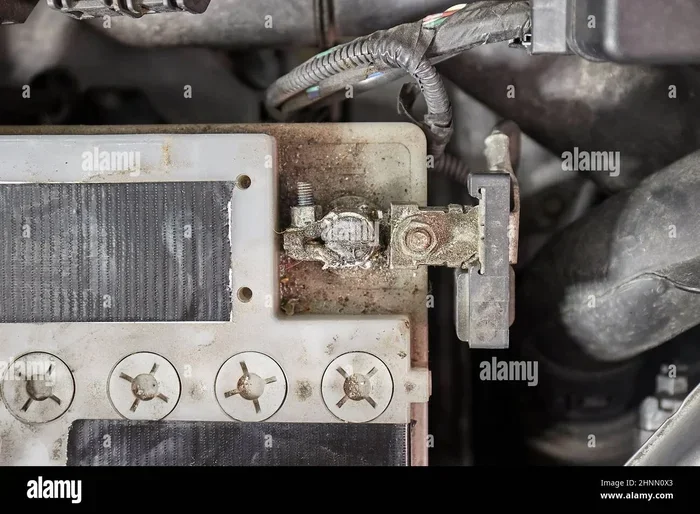
Corrosion on your battery terminals or starter wiring can cause all kinds of electrical problems. When connections are corroded, electricity does not flow cleanly. This can cause resistance, heat, and in some cases, a partial circuit that keeps the starter engaged. Corroded ground wires are especially problematic because they can create unintended electrical paths that drain your battery.
Damaged Starter Drive Gear
The starter drive gear, also called a pinion gear, connects to your engine’s flywheel to crank it. If this gear is damaged or worn, it may not fully disengage after the engine starts. A gear that stays partially meshed with the flywheel keeps the starter spinning, which keeps drawing power from your battery.
How to Diagnose a Starter Draining Your Battery
If you suspect your starter is killing your battery, you can run a few tests to confirm. You do not need to be a professional mechanic to do most of these checks.
Using a Multimeter to Test for Draw
A multimeter is your best friend for this kind of diagnosis. Here is how you can check for parasitic draw. First, make sure your car is completely off and all lights and accessories are turned off. Then, disconnect the negative battery cable. Set your multimeter to measure DC amps, placing the red probe on the battery terminal and the black probe on the disconnected cable end.
You should see a reading between 25 and 50 milliamps. If your reading is significantly higher, something is drawing too much power. To narrow it down, you can pull fuses one at a time while watching the multimeter. When the reading drops, you have found the circuit that is causing the drain. If pulling the starter fuse does not change the reading much, the issue may be elsewhere in your electrical system.
If you are not comfortable doing this yourself, that is perfectly okay. You can always check if doing your own car diagnostics is right for your situation. Many auto parts stores will also test your battery and charging system for free.
When to See a Professional
If you are not confident doing electrical tests on your own, there is no shame in visiting a mechanic. A professional can run a proper parasitic draw test, inspect your starter, and check your entire electrical system. Sometimes the problem is not the starter itself but wiring issues that mimic starter problems. A trained eye can spot things that are easy to miss.
What to Do When Your Battery Dies
So your battery is dead because of a bad starter. Now what? Here is what you should do step by step.
Jump Starting Your Car
The first step is usually to jump start your car. Use jumper cables and another vehicle with a working battery. Connect the red cable to your dead battery’s positive terminal, then to the good battery’s positive terminal. Connect the black cable to the good battery’s negative terminal, then to an unpainted metal surface on your car’s engine block. Start the working car first, let it run for a few minutes, then try starting your car.
Once your car starts, do not turn it off right away. Let it run for at least 15 to 20 minutes so the alternator can recharge your battery. However, if the starter is still faulty, your battery may die again soon after you turn the car off.
If you find yourself in a situation where your battery keeps dying and you need to get somewhere quickly, you might wonder whether driving on a low fuel level will cause additional problems. The good news is that fuel level does not directly affect your starting system, but running on empty for too long can lead to other issues you do not want to deal with.
Replacing the Starter
If you have confirmed that your starter is the problem, replacement is usually the best fix. The cost of a starter replacement varies depending on your car. The part itself can range from 100 to 400 dollars, and labor typically adds another 100 to 200 dollars. Some car owners with mechanical experience can replace a starter themselves, which saves on labor costs.
Before you replace the starter, have the mechanic or yourself double-check that the battery is not already damaged from the prolonged drain. A deeply discharged battery may not hold a charge even after the starter is fixed. In some cases, you will need to replace both the starter and the battery.
Protecting Your Battery From Starter Damage
Prevention is always better than repair. Here are some practical steps you can take to protect your battery from starter-related drain.
Regular Maintenance Tips
- Clean your battery terminals every few months. Use a wire brush and a baking soda and water solution to remove corrosion.
- Inspect your starter wiring during routine maintenance. Look for frayed wires, loose connections, or signs of heat damage.
- Check your battery voltage regularly with a multimeter. A fully charged battery should read around 12.6 volts when the car is off.
- Drive your car regularly to keep the battery charged. A car that sits for weeks at a time is more vulnerable to battery drain issues.
- Turn off all accessories before shutting off the engine. This reduces the load on your electrical system when you start the car next.
Knowing When to Replace Your Starter
Starters do not last forever. Most starters last between 100,000 and 150,000 miles, but they can fail earlier depending on driving conditions and vehicle age. If you notice any of the warning signs we discussed, do not ignore them. A small starter problem can quickly turn into a dead battery, a tow truck, and an expensive repair if you let it go too long.
It is also worth noting that extra weight in your vehicle puts additional strain on your entire electrical system. While carrying heavy items in your trunk does not directly cause starter failure, it does mean your battery and charging system work harder overall. If you are curious about how much weight is too much for your vehicle, check out this guide on how much weight is too much for your car.
Final Thoughts
A bad starter can absolutely drain your car battery overnight, and it happens more often than most people think. The key is catching the problem early before it leaves you stranded. If you notice clicking noises, slow cranking, or a battery that dies after sitting for just a few hours, do not wait. Get it checked out.
Taking care of your starter is really about taking care of your entire electrical system. A healthy starter means a healthy battery, a reliable alternator, and a car that starts every single time. Keep up with regular maintenance, pay attention to warning signs, and you will save yourself a lot of headaches and unexpected expenses down the road.
The bottom line is simple. Your starter is a small part that plays a huge role. Treat it well, and it will treat you well in return. Your battery will stay charged, your engine will start reliably, and you will never have to deal with that awful morning silence again.
Frequently Asked Questions
How long can a bad starter drain a car battery?
A faulty starter can drain a car battery in as little as a few hours, depending on how much power it is drawing. A starter with a stuck solenoid or worn brushes can create a parasitic draw of several amps, which is enough to kill a fully charged battery overnight. The exact time depends on the severity of the fault and the condition of the battery itself.
What are the signs that my starter is draining my battery?
The most common signs include a clicking noise when you turn the key, slow or no cranking, a battery that dies after sitting overnight, and a burning smell near the engine. If you notice any of these symptoms, especially combined with a dead battery, your starter is a likely culprit. A parasitic draw test can confirm the diagnosis.
Can a bad starter solenoid drain the battery?
Yes, a faulty starter solenoid can absolutely drain your battery. If the solenoid sticks in the closed position, it keeps the electrical circuit to the starter engaged even when the engine is off. This creates a continuous draw of power that will slowly drain your battery over several hours, often leaving you with a dead battery in the morning.
Will a new starter stop my battery from draining?
In most cases, yes. Replacing a faulty starter eliminates the parasitic draw that was draining your battery. However, if the old starter drained your battery for a long time, the battery itself may already be damaged and unable to hold a charge. In that situation, you may need to replace both the starter and the battery.
How can I test for parasitic draw at home?
You can test for parasitic draw using a multimeter set to measure DC amps. Disconnect the negative battery cable, place the multimeter probes between the cable and the battery terminal, and observe the reading. A normal reading is between 25 and 50 milliamps. Anything significantly higher indicates excessive draw. You can then pull fuses one at a time to isolate the problematic circuit.
Is it safe to drive with a bad starter?
Once your car is running, a bad starter usually does not affect your ability to drive. The starter disengages once the engine starts. However, the real risk is that the faulty starter continues to drain your battery while the car is off. This means you may not be able to restart the car after turning it off, even if the engine was running fine moments earlier.