How Many O2 Oxygen Sensors Does Your Car Actually Have
Most cars have between two and four O2 oxygen sensors, but the exact number depends on your engine type, number of cylinders, and exhaust setup. These sensors play a critical role in monitoring the air-fuel mixture, protecting your catalytic converter, and keeping emissions in check. Understanding how many sensors your vehicle has helps you diagnose problems, save money on repairs, and maintain peak engine performance.
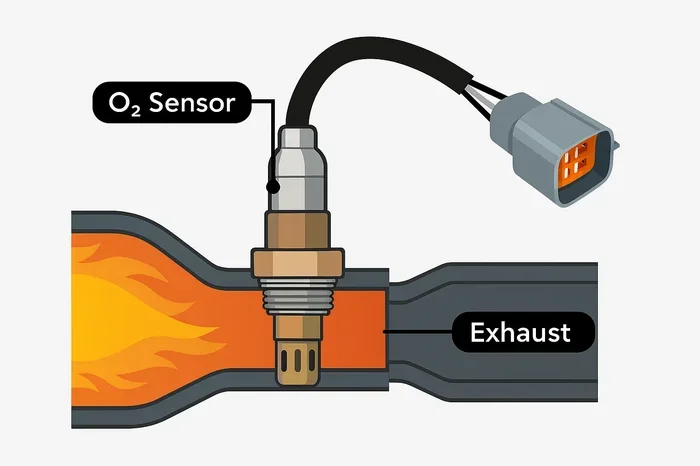
Your car relies on a network of small but mighty components to run efficiently, and O2 oxygen sensors are among the most important ones. These tiny devices sit in your exhaust system and continuously measure how much oxygen is present in your car’s exhaust gases. Based on that data, your engine’s computer adjusts the fuel mixture to keep everything running smoothly.
But here is the thing most car owners overlook: how many O2 oxygen sensors does your car actually have? The answer is not always two. Depending on your engine type, the number of exhaust banks, and whether you have a catalytic converter, your vehicle could have anywhere from two to six or even more sensors. Understanding this helps you troubleshoot problems, save money on repairs, and keep your car running at its best.
In this guide, we will walk through everything you need to know about O2 sensor count, where they are located, what happens when they fail, and how to maintain them. Whether you drive a compact sedan or a powerful V8 truck, this article has you covered.
Key Takeaways
- Most vehicles have 2 to 4 O2 sensors: The standard setup includes one upstream and one downstream sensor per catalytic converter.
- Engine type determines sensor count: Inline-4 engines typically have two sensors, while V6, V8, and twin-exhaust setups can have four or more.
- Upstream sensors measure exhaust before the catalytic converter: They help the ECU adjust the air-fuel mixture in real time.
- Downstream sensors monitor emissions after the converter: They ensure your catalytic converter is working properly and help pass emissions tests.
- A failing O2 sensor causes poor fuel economy, rough idling, and a check engine light: Catching it early saves you from costly repairs.
- Replacement costs range from $100 to $300 per sensor: DIY replacement is possible with basic tools and mechanical knowledge.
- Regular maintenance keeps sensors healthy: Avoiding leaded fuel and addressing exhaust leaks extends sensor life significantly.
📑 Table of Contents
Understanding What O2 Oxygen Sensors Do
Before we dive into sensor counts, let us quickly cover what O2 oxygen sensors actually do. These sensors are also called lambda sensors in many parts of the world. They measure the amount of unburned oxygen in your exhaust gases and send that information to your car’s Engine Control Unit, or ECU.
The ECU uses this data to adjust the air-fuel ratio in real time. If the mixture is too rich (too much fuel) or too lean (too much air), the sensor alerts the computer, which then makes corrections. This constant back-and-forth happens thousands of times per minute and keeps your engine running at peak efficiency.
How O2 Sensors Monitor Your Engine
Here is a simple way to think about it. Imagine you are baking a cake. Too much flour and it dries out. Too little and it falls apart. Your engine works the same way. The air-fuel ratio needs to be just right, and O2 sensors are the ones telling your car exactly what that ratio is.
When the sensor detects high oxygen levels, it tells the ECU the mixture is too lean. The computer then adds more fuel. When oxygen levels are low, the mixture is too rich, and the computer reduces fuel delivery. This process is called closed-loop feedback control, and it is essential for modern fuel injection systems.
Why the Air-Fuel Mixture Matters
Getting the air-fuel mixture right affects almost everything about how your car drives and performs. A properly balanced mixture means:
- Better fuel economy — you get more miles per gallon
- Lower emissions — your car produces fewer harmful pollutants
- Smoother acceleration — no hesitation or stumbling
- Longer engine life — less stress on internal components
- Proper catalytic converter function — the converter can do its job effectively
When an O2 sensor goes bad, all of these things suffer. Your car runs rich or lean, and over time, that causes real damage. This is why knowing how many sensors your car has and keeping them in good shape is so important.
How Many O2 Oxygen Sensors Does Your Car Actually Have
The number of O2 oxygen sensors in your vehicle depends on several factors. The most important ones are your engine configuration, the number of exhaust banks, and whether your car has one or two catalytic converters. Let us break this down by engine type so you can figure out exactly what your car has.
The Standard Setup: Two Sensors
Most standard cars with a four-cylinder engine and a single exhaust system have exactly two O2 sensors. One sensor sits upstream, meaning before the catalytic converter. This is the sensor that constantly feeds data to the ECU for fuel mixture adjustments.
The second sensor sits downstream, after the catalytic converter. Its job is to monitor the emissions coming out of the converter. If the downstream sensor shows the same oxygen levels as the upstream sensor, it means the catalytic converter is not working properly. This triggers a trouble code and often lights up your check engine light.
This two-sensor setup is the most common configuration you will find in compact cars, sedans, and smaller SUVs with inline-four engines. It is simple, effective, and relatively easy to maintain.
V6 and V8 Engines: More Sensors Needed
If your car has a V6 or V8 engine, the sensor count goes up. These engines have two separate exhaust banks, which means they need sensors on both sides. A typical V6 setup has four O2 sensors, and a V8 with a dual exhaust system can have four to six sensors.
Here is how it usually breaks down:
- V6 with single exhaust: 4 sensors (2 per bank, one upstream and one downstream)
- V6 with dual exhaust: 4 sensors (same as above, but each bank has its own converter)
- V8 with single exhaust: 4 sensors (2 upstream, 2 downstream)
- V8 with dual exhaust: 4 to 6 sensors depending on the setup
The key thing to remember is that each exhaust bank gets its own set of sensors. This allows the ECU to fine-tune the fuel mixture for each bank independently, which leads to better engine performance and more efficient emissions control.
Diesel and Turbocharged Vehicles
Diesel engines and turbocharged vehicles add another layer of complexity. Many modern diesel trucks and SUVs use multiple O2 sensors or specialized pressure sensors in addition to traditional oxygen sensors. Turbocharged cars often have sensors placed both before and after the turbo to monitor boost pressure and exhaust flow.
Some high-performance and luxury vehicles can have five or more sensors in total. These advanced setups allow for incredibly precise control over the air-fuel mixture, which is essential for meeting strict emissions standards and delivering top-tier performance.
Quick Comparison Table
| Engine Type | Typical O2 Sensor Count | Common Setup |
|---|---|---|
| Inline-4 (single exhaust) | 2 sensors | 1 upstream, 1 downstream |
| Inline-4 (twin exhaust) | 4 sensors | 2 upstream, 2 downstream |
| V6 (single exhaust) | 4 sensors | 2 per bank |
| V8 (dual exhaust) | 4 to 6 sensors | 2 per bank, upstream and downstream |
| Diesel engines | 2 to 6+ sensors | Varies widely by model |
Where Are O2 Sensors Located?
Knowing the oxygen sensor location in your car helps you understand how the system works and makes troubleshooting much easier. Sensors are placed at specific points in the exhaust system to get accurate readings at different stages of the exhaust process.
Upstream vs Downstream Placement
The upstream sensor, also called the pre-catalytic converter sensor, is the workhorse of the system. It measures the oxygen content in exhaust gases right after they leave the engine. This sensor provides the real-time data the ECU needs to adjust the fuel mixture constantly.
The downstream sensor sits after the catalytic converter. It measures what is left in the exhaust after it has been cleaned by the converter. The ECU compares readings from both sensors to determine whether the converter is functioning properly. If both sensors show similar readings, the converter is likely failing.
Sensor Locations by Engine Type
Here is a quick guide to where you can typically find sensors in different engine configurations:
- Inline-4 engines: One sensor in the exhaust manifold or downpipe before the converter, and one after the converter on the single exhaust pipe.
- V6 and V8 engines: Two sensors per exhaust bank, one before and one after the catalytic converter on each side.
- Turbocharged engines: Additional sensors may be placed in the downpipe after the turbo and before the intercooler.
- Dual exhaust systems: Each exhaust pipe gets its own set of upstream and downstream sensors.
Finding the exact location for your specific vehicle is easy. Just consult your owner’s manual or look up a sensor location diagram for your car’s make, model, and year online. The exhaust manifold and the pipe connecting to the catalytic converter are the two most common mounting points.
Signs Your O2 Sensors Are Failing
O2 sensors do not last forever. Over time, they get coated with carbon deposits, oil ash, and other contaminants that reduce their accuracy. When a sensor starts to fail, your car will usually give you several warning signs. Catching these early can save you from more expensive repairs down the road.
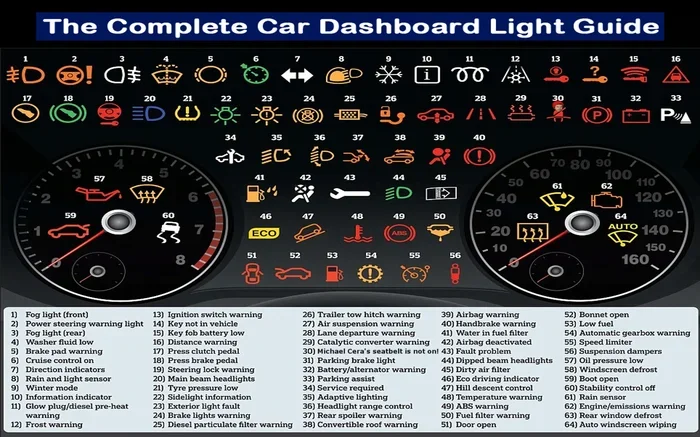
Warning Lights and Dashboard Alerts
The most obvious sign of a failing O2 sensor is the check engine light. When a sensor sends abnormal readings to the ECU, the computer stores a trouble code and illuminates the warning light on your dashboard. Common O2 sensor codes include P0130 through P0167, which cover a range of sensor circuit and performance issues.
If your check engine light comes on, do not ignore it. Even if the car seems to drive fine, a failing sensor can cause long-term damage if left unchecked. A simple vehicle diagnostics scan at an auto parts store can tell you whether an O2 sensor code is the culprit.
Drop in Fuel Economy
One of the first things you will notice with a bad O2 sensor is a drop in fuel economy. When the sensor cannot accurately read the oxygen levels in exhaust gases, the ECU cannot properly balance the air-fuel mixture. The result is your car burning more fuel than it needs to.
If you find yourself filling up more often than usual and your driving habits have not changed, a failing sensor could be the cause. This is one of those issues that quietly drains your wallet over time, so it is worth addressing as soon as you notice it.
Rough Idle and Poor Performance
A rough idle, hesitation during acceleration, and stalling at stoplights are all common symptoms of O2 sensor problems. When the air-fuel mixture is off, the engine does not run smoothly. You might also notice a lack of power when climbing hills or towing a load.
These symptoms can mimic other problems, which is why it is important to get a proper diagnosis. A mechanic can hook up a diagnostic scanner and read the live sensor data to determine whether the O2 sensor is the root cause or if something else is going on.
Failed Emissions Test
If your car fails an emissions test, a faulty O2 sensor is one of the most common causes. The sensor plays a direct role in emissions control, and when it fails, your car produces higher levels of harmful pollutants like carbon monoxide, nitrogen oxides, and unburned hydrocarbons.
Replacing a bad sensor is often all it takes to pass your emissions test. However, if the sensor has been failing for a long time, it may have already caused damage to your catalytic converter, which is a much more expensive repair.
Can You Drive With a Bad O2 Sensor?
Short-Term Risks
Technically, yes, you can drive with a bad O2 sensor. Your car will still start and run. But that does not mean you should ignore the problem. A failing sensor causes the ECU to make poor fuel mixture decisions, which affects how your car drives and how much fuel it wastes.
In the short term, you might experience rough idling, reduced power, and higher fuel costs. These issues may seem minor at first, but they tend to get worse as the sensor continues to deteriorate. The longer you drive with a bad sensor, the more damage it can cause to other parts of your exhaust system.
Long-Term Damage to Your Engine
Running with a bad O2 sensor for weeks or months can lead to serious problems. A chronically rich mixture (too much fuel) can foul your spark plugs and damage your catalytic converter. A lean mixture (too little fuel) can cause engine overheating and increased wear on internal components.
Replacing a catalytic converter costs anywhere from $500 to $2,500 or more, depending on your vehicle. Replacing an O2 sensor costs a fraction of that. The takeaway is clear: fix your O2 sensors promptly to avoid turning a small repair into a big expense.
How to Replace O2 Sensors
If your diagnostic scan confirms a bad O2 sensor, you have two options: replace it yourself or take it to a mechanic. The good news is that sensor replacement is one of the more straightforward repairs you can do on a car, and it does not require advanced mechanical skills.
DIY or Professional Help?
If you are comfortable working under your car and have basic tools like a socket set and an oxygen sensor wrench, you can replace most sensors yourself. The process typically involves locating the sensor, unplugging the electrical connector, unscrewing the old sensor, and threading in the new one.
However, some sensors are located in tight spaces that are difficult to reach, especially on V6 and V8 engines. If you are not confident in your ability to access the sensor safely, it is worth paying a professional to do the job. A mechanic will also have access to specialized tools like oxygen sensor sockets and penetrating oil for stubborn sensors.
Cost of Sensor Replacement
The cost of replacing an O2 sensor varies depending on your vehicle and where you live. On average, you can expect to pay between $100 and $300 per sensor for parts and labor. Sensors themselves typically cost between $20 and $100 each, with the rest going toward labor.
If your car has multiple sensors that need replacing, the total cost will go up accordingly. Some mechanics offer discounts when you replace multiple sensors at the same time. Always ask for a detailed estimate before authorizing any work.
Maintaining Your O2 Sensors for Longevity
You cannot prevent O2 sensors from eventually wearing out, but you can take steps to extend their lifespan and keep them working accurately for as long as possible. Regular maintenance and smart driving habits go a long way toward protecting these important components.
First, always use the recommended fuel grade for your vehicle. Low-quality or contaminated fuel can introduce harmful substances into your exhaust system that coat and damage O2 sensors. If your car requires premium fuel, do not skimp on it.
Second, address exhaust leaks as soon as you notice them. A leak near an O2 sensor can let fresh air into the exhaust stream, which skews the sensor readings and causes the ECU to make incorrect fuel adjustments. Over time, this constant bad data wears out the sensor prematurely.
Third, avoid using leaded fuel or additives that contain lead. Lead is one of the biggest enemies of O2 sensors. It coats the sensor element and prevents it from reading oxygen levels accurately. Most modern fuels are unleaded, but if you drive an older vehicle or use fuel from less common sources, double-check that it is lead-free.
Finally, have your exhaust system inspected regularly as part of your routine car maintenance. A mechanic can check sensor connections, look for exhaust leaks, and verify that all sensors are reading correctly. Catching a problem early saves you money and keeps your car running its best.
Key Takeaways
- Most vehicles have 2 to 4 O2 sensors: The standard setup includes one upstream and one downstream sensor per catalytic converter.
- Engine type determines sensor count: Inline-4 engines typically have two sensors, while V6, V8, and twin-exhaust setups can have four or more.
- Upstream sensors measure exhaust before the catalytic converter: They help the ECU adjust the air-fuel mixture in real time.
- Downstream sensors monitor emissions after the converter: They ensure your catalytic converter is working properly and help pass emissions tests.
- A failing O2 sensor causes poor fuel economy, rough idling, and a check engine light: Catching it early saves you from costly repairs.
- Replacement costs range from $100 to $300 per sensor: DIY replacement is possible with basic tools and mechanical knowledge.
- Regular maintenance keeps sensors healthy: Avoiding leaded fuel and addressing exhaust leaks extends sensor life significantly.
Conclusion
So how many O2 oxygen sensors does your car actually have? The answer depends on your engine type, but most vehicles have between two and four sensors. A standard four-cylinder car typically has two, while V6 and V8 engines can have four or more depending on the exhaust configuration.
These sensors are small but mighty. They keep your air-fuel mixture balanced, protect your catalytic converter, improve fuel economy, and reduce harmful emissions. When they fail, they cause a cascade of problems that affect how your car drives, how much it costs to operate, and whether it passes emissions testing.
The best thing you can do is stay proactive. Pay attention to warning signs like a check engine light, poor fuel economy, or rough idling. Get your sensors tested regularly, and replace them promptly when needed. A little attention to your O2 sensors goes a long way toward keeping your car reliable, efficient, and road-ready for years to come.
Whether you handle the replacement yourself or leave it to a professional, understanding how many sensors your car has and what they do puts you in a much better position as a car owner. Knowledge is power, and in this case, it also saves you money and headaches.
Frequently Asked Questions
What happens if I drive with a bad O2 sensor?
You can drive short distances with a bad O2 sensor, but doing so for extended periods causes poor fuel economy, rough idling, and potential damage to your catalytic converter. The ECU will compensate by guessing the fuel mixture, which is never as precise as the sensor’s real-time data.
How often should O2 sensors be replaced?
Most O2 sensors last between 60,000 and 100,000 miles, depending on your vehicle and driving conditions. Some high-quality sensors can last even longer, but it is a good idea to have them inspected around the 60,000-mile mark as part of routine maintenance.
Can a bad O2 sensor cause a catalytic converter to fail?
Yes, absolutely. A failing O2 sensor can cause the engine to run too rich or too lean for extended periods. This puts extra stress on the catalytic converter and can cause it to overheat or clog, leading to a much more expensive repair.
Is it hard to replace an O2 sensor yourself?
For most vehicles, replacing an O2 sensor is a straightforward job that takes about 20 to 45 minutes per sensor. You need a few basic tools, an oxygen sensor wrench, and access to the sensor location. If the sensor is in a tight or hard-to-reach spot, professional help may be the better option.
How much does it cost to replace all O2 sensors?
The total cost depends on how many sensors your car has and the make and model of your vehicle. For a standard four-cylinder car with two sensors, expect to pay between $200 and $500 total. V6 and V8 engines with four or more sensors will cost more, potentially $400 to $1,200 or more for all sensors combined.
Can cleaning an O2 sensor restore its function?
In some cases, a light cleaning with a specialized O2 sensor cleaner can restore partial function if the sensor is only mildly contaminated. However, if the sensor is heavily coated with carbon or oil ash, replacement is the only reliable fix. Cleaning is not a permanent solution for severely worn sensors.